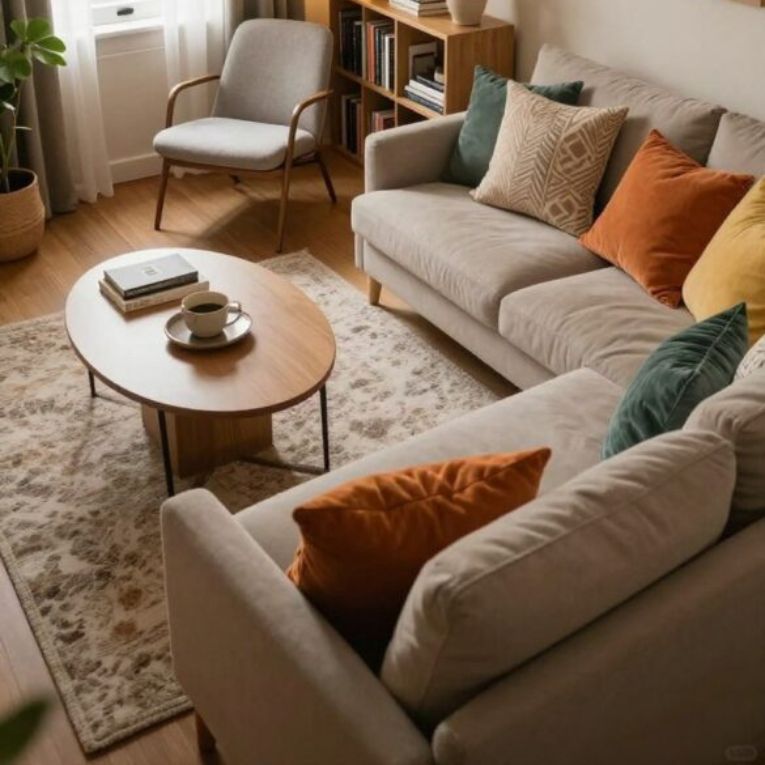
Learn how to make your living room cosy and stylish with these small living room design ideas and make your room into a luxury retreat.
One of the most satisfying design challenges that you can undertake is to make the small living room feel cozy and luxurious. It’s not about the square footage you have, it’s about how you make the most of every square inch. Even the smallest apartment can feel like a luxurious oasis with this set of living room ideas! From cozy and soft to sleek and elegant, this guide has got you covered when it comes to designing the perfect living room.
These Cozy & Stylish Small Living Room Design Ideas are a combination of space savvy design and classic styling to create a home you truly feel good coming back to.
The design process begins by understanding.The first step in the design process is understanding your space.
Take some time to reflect on your living room, and think about how you use it, before you ever move your furniture or start painting your walls. The key to all good design decisions is understanding how an individual moves through the space.
Go for natural walks in your room: door to sofa, sofa to kitchen, TV area to window. These are your traffic corridors and it is crucial to protect them. To make a small room feel cramped and frustrating one of the quickest ways is to block the walkways for the natural ones.
With an understanding of the flow, consider your own style! If you prefer a cosy living room with a rustic charm, of earthy colours and soft furnishings, you’ll love it. Or do you prefer the luxurious appearance of a gold accented luxury living room, velvet upholstery and fine art? You won’t end up purchasing items that don’t belong together, and you will make sure that all purchases fit the aesthetic you’ve established from the beginning.
The layout of your living room should not only do what is fashionable, it should do what works for your lifestyle. For those who have to work from home, you may need a nook that can serve as a workstation as well. Flexible seating and convertible furniture is a must if you entertain frequently.
Vertical is a small living room idea that is underutilized. If space is not available, your walls are your best friend.
Floor-to-Ceiling Shelving
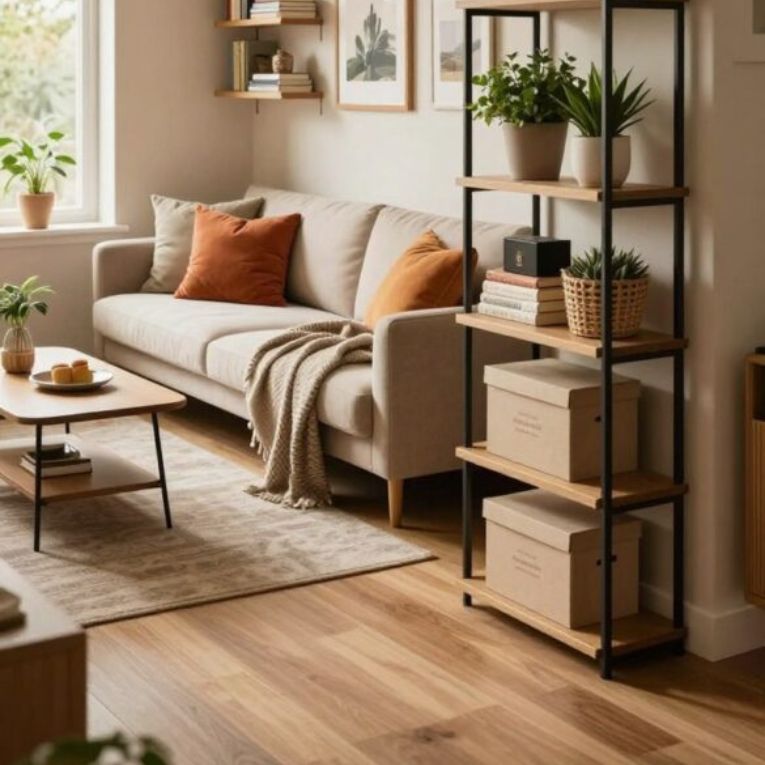
Ceiling to floor shelving can have two great benefits: it offers a massive amount of storage space without consuming space on the floor, and it makes the ceiling seem higher. Put books on top of books, place plants on display, store decorative baskets or showcase curated collectibles. The outcome is a room which is neat and personal.
This is a very popular feature for luxury living room design, which would line the sides of the fireplace or TV unit with built-in shelving for a dramatic look and function; it would also be very beautiful.
Get these floating shelves and wall mounted cabinets to keep your kitchen organized and well-stocked.
Whether floor to ceiling shelving is the right aesthetically heavy option, floating shelves are a lighter, more minimalist design. They offer storage without blocking the view of the floor, an essential element of maintaining an open and airy environment. Wall-mounted cabinets with closed doors are also highly functional – they provide hidden storage space and help to eliminate the clutter from your living room while keeping it looking neat.
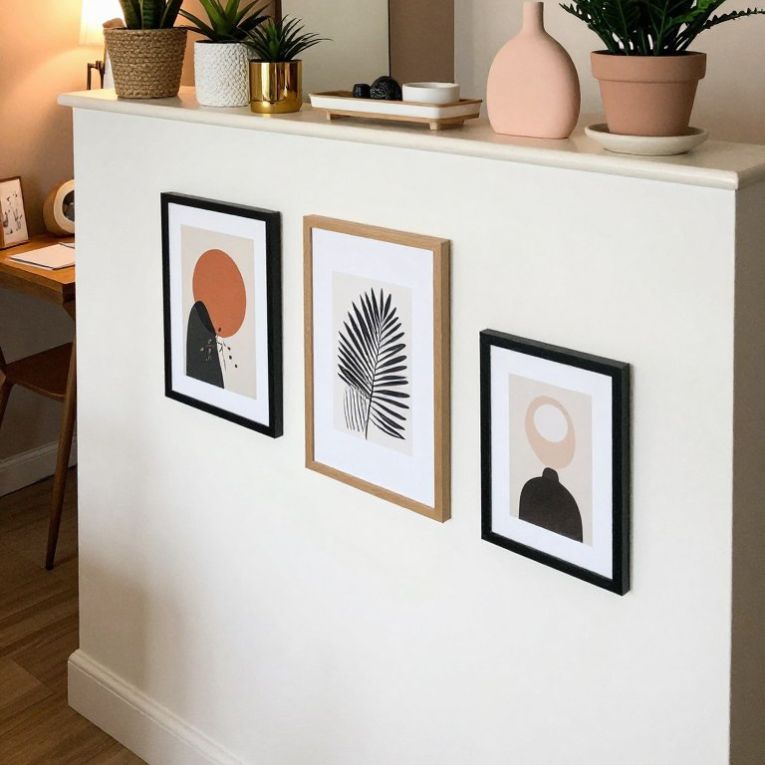
Another brilliant idea for a cosy living room effect using floating shelving is to combine books with personal items such as framed photos, candles, small potted plants and decorative objects that are meaningful to you.
Menus can be hidden behind decorative panels.Decorative panels can hide the menu.
If you’re looking for the cleanest and most elegant appearance, particularly for a luxury living room look, then consider concealing storage behind decorative panels. They can be made to fit your walls or your wallpaper and will be almost invisible, hiding cables, remotes, board games, even additional blankets!
If you need to fit the right furniture into your small living room, you’ll want to consider the following tips.
There’s not much room in a small space, and each furniture item has to prove its value. There is no compromising on scale, proportion and function.
Low-Level Sofas and Armchairs
The first of the living room ideas for small spaces is picking a low sofa. Low sofas give the illusion of height in the room. They prevent blocky, overpowering appearance that can be achieved if the couch is taller and stuffed into a room.
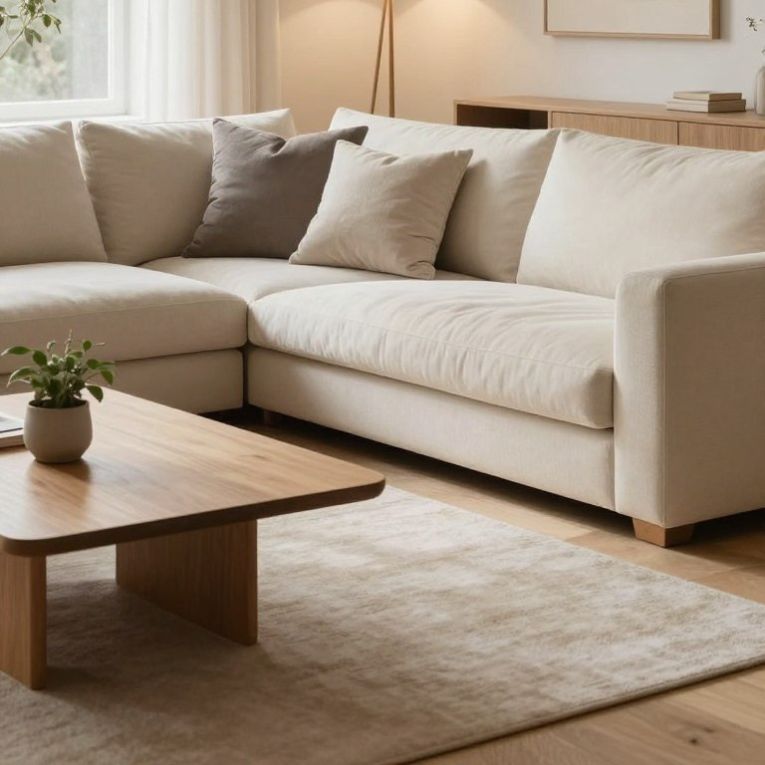
Seek simplicity in lines and silhouettes. The room features a slim, neutral-toned sofa that serves as the focal point while maintaining a balance of space.The sofa is a neutral-toned, slim sofa and is not dominating the room. Use with an armless accent chair, to maintain an open and light seating area. To create a cosy living room ambiance, place a soft throw blanket over one armrest and a few cushions that match the color of the blanket.
The Power of Leggy Furniture
The best thing that pro interior designers do in small space and lux living room is to use furniture with exposed legs. Tables, chairs and sofas with tapered or thin legs let light shine under the legs, giving a sense of continuity over the floor. This will make the room appear bigger without taking anything away.
This is perhaps the hallmark of mid century modern furniture, and it can be incorporated into so many styles, from minimal to bohemian to classic luxury.
Multi Functional Furniture Is Essential.
If space is limited, multi-function furniture is not an option, it’s a necessity. These are the essentials to invest in:
Storage Ottomans: A footrest, additional seating and secret storage in one. Organize blankets, magazines, remotes or even seasonal items with them. They are essential to any cozy living room design.
One of the most innovative ideas you can have for the living room is a convertible coffee table.One of the most ingenious spaces ideas you can have for living room is a convertible coffee table. In some cases, the models are designed to enter into full dining tables, which are great for homes where the living room and dining room are combined into a single room.
Sofa Beds: If you have to accommodate visitors from time to time, but you don’t have a separate guest bedroom, a chic sofa bed takes the conundrum of the space problem out of the equation. Even with the appearance they provide, today’s sofa beds are actually a far more comfortable and attractive addition to any small home; which is a smart move to do.
No Pathways are Clear, unless they are yours.
You may have a stunning piece of furniture, but if it impedes the natural flow of your room, then you’re handicapping your space. Don’t push furniture against the walls; try to keep it a little away. For softening the walking surfaces, use a round coffee table instead of a sharp-cornered rectangular table. Leave all entranceways to the home, especially the main entrance, as clear of clutter as possible.
How to maximize the size of small rooms with color and lighting.
There are few tools as effective as color and light when it comes to design. When used properly they can give an illusion of twice the size to a small living room.
Light and Neutral Base Tones
Lighter colors reflect more light and this helps to make rooms more open and airy. In small living rooms, soft whites, warm creams, pale grays and muted beige are classic colors to use as a base palette. These neutral hues are great for creating a neutral background that can be complemented by textured accents and accent colors.
However, neutrals can’t be dull. Layers of texture, from velvet cushions to a wool rug to linen curtains to a marble coffee table, all bring a sense of luxury to a cream and ivory living room.
For a touch of drama, paint one accent wall a darker color, such as dusty rose, sage green, navy or charcoal. This will provide a focal point without dominating the room.
Layered Lighting for Every Mood.
One of the most neglected aspects of planning small living room ideas is lighting, which can greatly help increase the space and atmosphere of a room. The secret to layering lights is to add three different kinds of lights.
Ambient Lighting: This is the overall lighting for the room, such as overhead lighting, recessed lighting or a statement chandelier.
Task Lighting: There are floor lamps near sofa/reading chairs, desk lamps for work areas, and under-shelf lighting for bookshelves.
Accent Lighting: These are the lights that set the mood — LED strip lights behind a TV unit, picture lights above art, candles and decorative lamps.
Dimmers are particularly useful in a cosy living room where they can help to set the mood – bright and functional during the day or warm and intimate at night.
Maximize Natural Light
A small living room is a room which is best served by natural light. One of the biggest design pitfalls for small spaces is having heavy dark curtains which prevent sunlight from entering and can make rooms feel too enclosed and dark.
In its place, consider sheer curtains, linen drapes in a light hue or simple roll-down blinds that can be opened all the way up in the day. Make windows as unblocked as possible to allow the room to invite the outdoors and make it feel open.
Mirrors and Reflective Surfaces The Illusion of Space Spaces that seem to extend beyond reality through the use of reflective surfaces.
One of the most traditional techniques in interior design – and one that’s no surprise – is mirrors. They genuinely work.
Strategic Mirror Placement
Opposite a window is placed a large mirror, which reflects the natural light and diffuses it in the whole room. This can transform even the darkest corner into a lovely bright space. A large mirror with a stunning frame is an aesthetic piece of art in a luxurious living room.
It’s not a rule that you have to stick to one mirror only. Differently shaped mirrors multiply light, yet also make for a gallery wall that creates visual interest.
Glass & Acrylic Furniture
Glass coffee tables, acrylic side tables, lucite chairs, transparent and semi-transparent furniture pieces are brilliant in small spaces, as the eye goes right through them. They create a sense of utility without being visually imposing, leaving the space open and inviting.
This is a very popular option for Cozy & Stylish Small Living Room Design Ideas which combine minimalism with a dash of glam.
Metallic Accents
Brass, gold, chrome and copper accents gently bounce off of a space. Utilize in bases, frames, decorative trays, cabinet hardware, and throw pillow trim. Metallic finishes are perfect for a luxury living room as they will help tie the whole look together and lend that polished editorial look.
Textiles and Textures: Creating a Warm Living Room
When it comes to a small living room, there’s one thing you should be lavish with: textiles. Layered fabrics are the easiest method to design a lovely warm, inviting and beautifully organized living space.
Layered Rugs
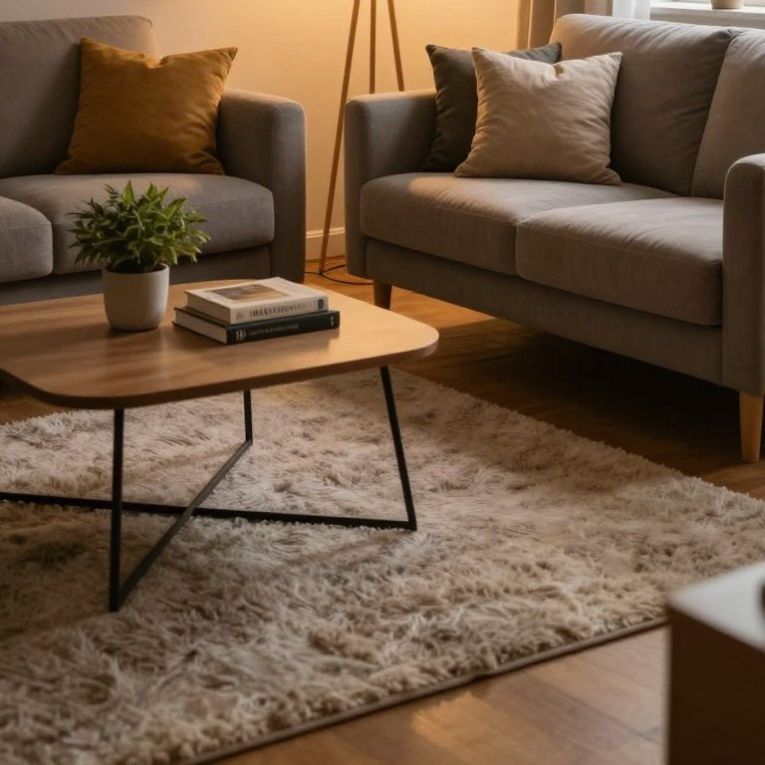
A large area rug is used to define a seating area and provide a focal point for your furniture. Consider adding a smaller rug, such as a vintage-style runner or a textured sheepskin, to add depth and interest. This is particularly helpful in an open-plan apartment where it is necessary to demarcate the living space.
To allow the front legs of all furniture to stand on a rug, it should be at least as big as they are. One of the most typical and most visible design mistakes in small living rooms is having the rug too small.
The use of throws, pillows and cushions.
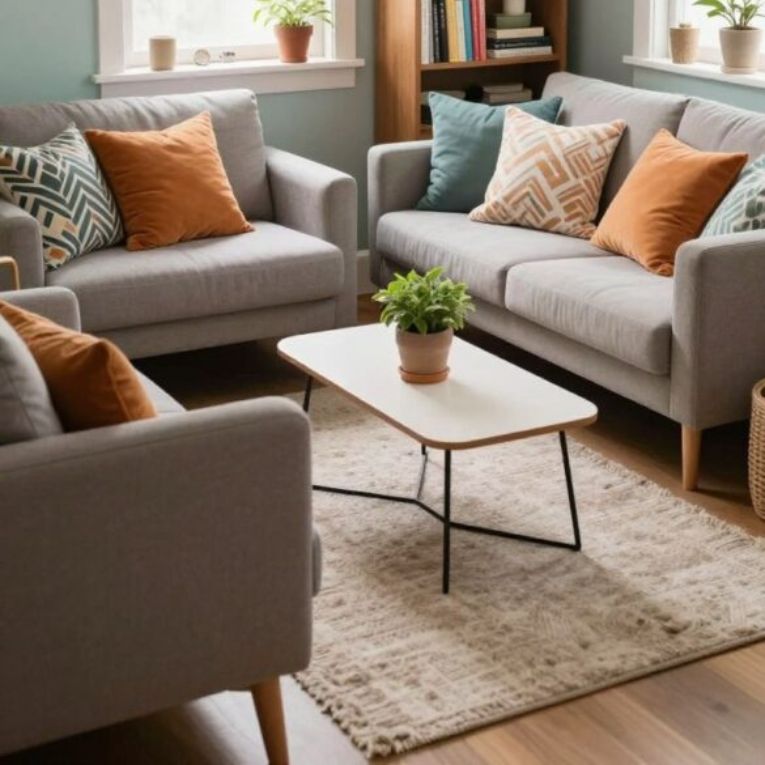
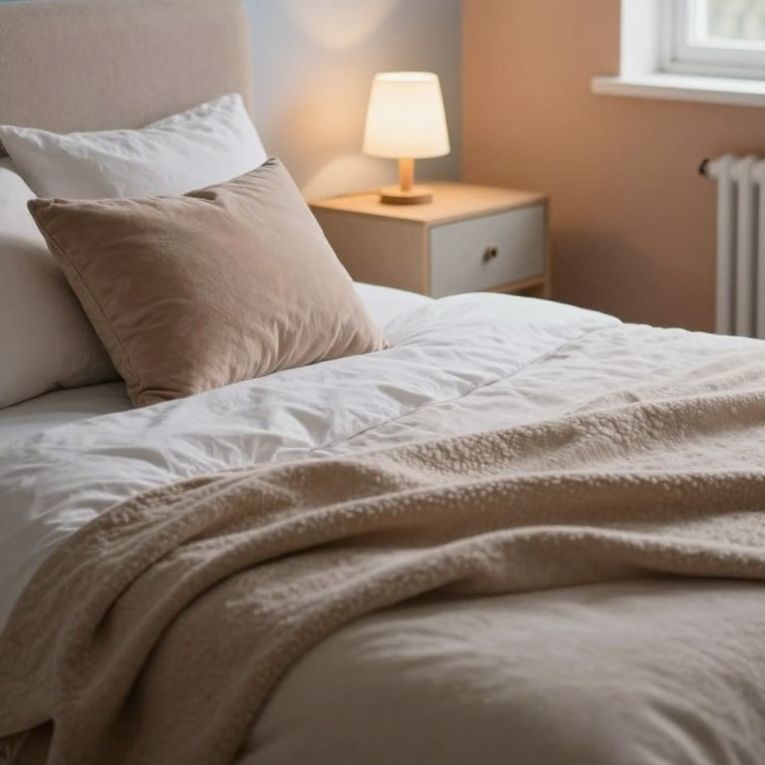
Warm hug from the home decor is soft throws and plush pillows. Wrap a chunky knit throw around the arm of your sofa. Use a variety of colors and prints in pillows of different sizes. This softness layering, in a cosy living room, makes you feel like you just want to sink in.
If you’re looking for a luxurious living room design, opt for pillows and throws made from a heavy duty fabric, such as velvet, faux fur, cashmere or linen. Jewel tones such as emerald, sapphire or burgundy add a royal touch even in a small area.
Mixing Textures
The key to a sophisticated textile palette is variation. Blend smooth and rough, shiny and matte, and heavy and light. A woven cotton cushion will look beautiful with a velvet sofa. A piece of silk lampshade will elegantly complement a chunky wool rug. These contrasts give depth and interest that photos can’t give which has to be felt in person.
Outlining open floor plans for Zones
In an open plan living room, it is key to define areas to ensure the space has a sense of purpose and organisation.
Area Rugs as Boundaries
The easiest and best way to establish a zone in an open floor plan in a living room is to use an area rug. The rug was used to create the sense of a start and an end to the living area, even though there was no wall or partition.
Use open bookshelves to create a partition or barrier.
Frequently Asked Questions (FAQs)