
21 Outdoor Kitchen Ideas to Transform Your Backyard
Introduction:
Picture this: golden evening light, the smell of something sizzling on the grill, and everyone gathered outside instead of crowded in the kitchen. That’s the magic a well-planned outdoor kitchen brings to a home. This roundup of outdoor kitchen ideas is built for exactly that moment, whether you’re working with a sprawling backyard or a narrow apartment patio. Inside, you’ll find layouts, materials, and small upgrades that fit almost any budget and skill level, from simple weekend DIY projects to fully built-in stone setups.
In my experience, the best outdoor kitchens rarely start big. They start with one small change, a mini fridge here, a shaded counter there, and grow from something people actually use into a space they can’t imagine the backyard without. I’ve noticed that readers searching for inspiration usually just need to see what’s possible before they realize how achievable it really is. That’s exactly what this list is here to show you, one idea at a time.
Built-In Grill Station
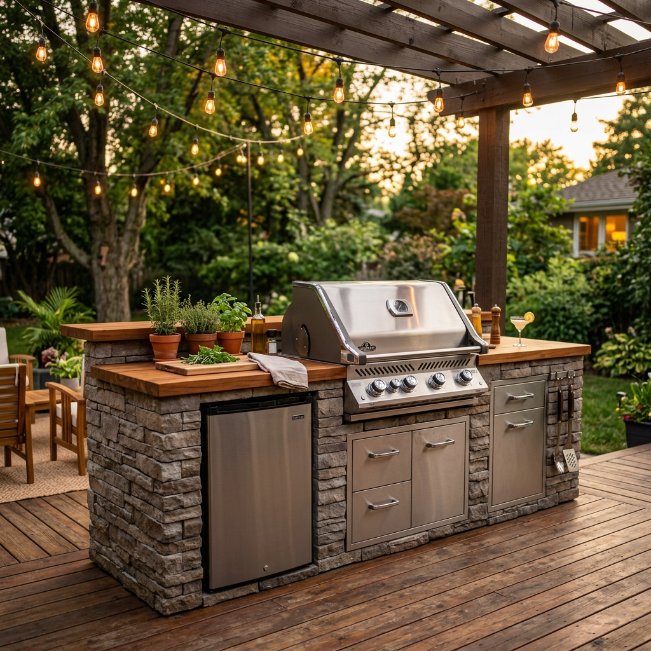
- Turns a plain patio corner into a real cooking zone
- Stainless steel holds up better than portable grills over time
- Stone or brick framing adds instant curb appeal
- Keeps smoke and mess away from your main seating area
- Works for casual weeknight dinners and weekend cookouts alike
A built-in grill station is often the very first upgrade people picture when planning outdoor kitchen ideas, and for good reason. It anchors the whole space, giving cooking a permanent home instead of dragging a grill in and out of the garage. In my experience, homeowners who install one use their backyard almost twice as often, simply because everything is ready to go. The setup feels intentional, not thrown together, and that alone changes how a family treats their outdoor space.
Beyond looks, a built-in station solves real daily problems. Countertop space next to the grill means no more balancing plates on porch railings. Storage underneath keeps tools, gloves, and skewers within arm’s reach. I’ve noticed that once people commit to a permanent station, they cook outside more in spring and fall too, not just peak summer. It stretches the usefulness of the whole yard. This single idea often becomes the anchor that every other outdoor kitchen decision gets built around.
Pergola-Covered Cooking Area
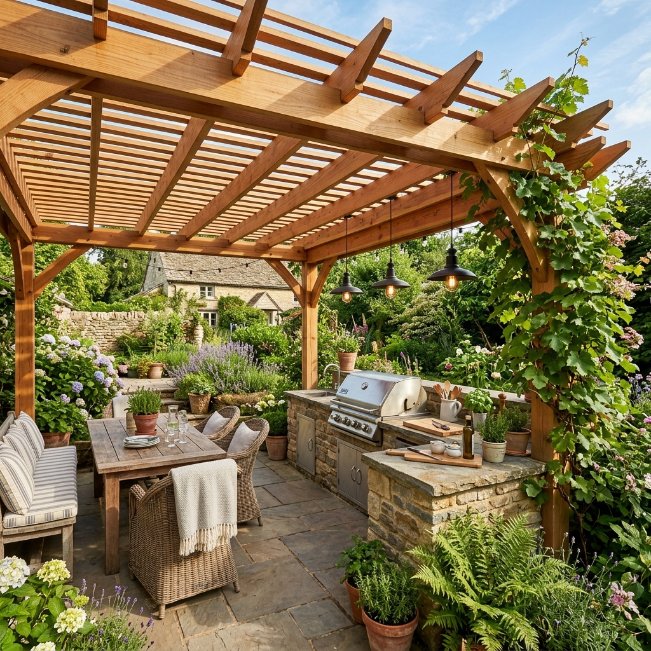
- Blocks direct sun so cooking stays comfortable in summer
- Adds architectural charm without fully enclosing the space
- Protects appliances from rain and harsh UV damage
- Creates a natural gathering spot underneath for guests
- Pairs well with string lights for evening ambiance
A pergola-covered layout is one of the most requested covered outdoor kitchen ideas because it solves comfort and protection at once. Standing over a hot grill in direct sun gets old fast, and a pergola fixes that without boxing in the space. The open slats still let light and air move through, so it never feels stuffy or closed off. I’ve tried both fully roofed structures and open pergolas, and for most climates, the pergola strikes the better balance between shade and airflow.
This idea also protects your investment. Appliances, cabinetry, and countertops last longer when they’re shielded from constant sun and rain exposure. That’s why many designers recommend a pergola as the starting shade structure before committing to a full roof. It’s less expensive, faster to install, and still delivers that finished, framed look Pinterest boards are full of. Add hanging lights or a ceiling fan, and the space works comfortably from breakfast prep through late-night gatherings.
Concrete Countertop Bar
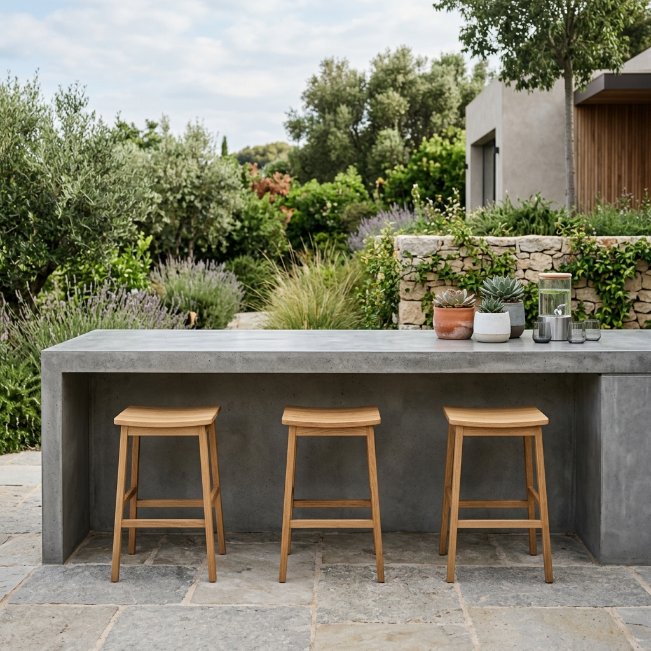
- Handles heat, weather, and spills without staining easily
- Gives a clean, modern edge to any backyard layout
- Doubles as seating space when stools are added
- Simple to customize with color tints or edge shapes
- Low maintenance compared to wood or tile surfaces
A concrete countertop bar brings a sharp, modern look to modern outdoor kitchen ideas without demanding constant upkeep. Concrete resists heat damage from hot pans, doesn’t warp like wood, and shrugs off spilled sauces or citrus juice that would stain other materials. The surface feels substantial and grounded, which is exactly the aesthetic many homeowners chase when they want their backyard to feel like a true extension of the house rather than an afterthought patio setup.
What makes this idea especially practical is flexibility. Concrete can be tinted, stamped, or polished to match almost any style, from industrial-chic to warm and earthy. I’ve seen this work well in tight side-yard kitchens where a bar counter doubles as the only seating option. Add a few stools underneath, and suddenly there’s a spot for morning coffee or casual dinners. It’s a straightforward upgrade that pays off in both daily function and long-term durability.
Compact L-Shaped Layout
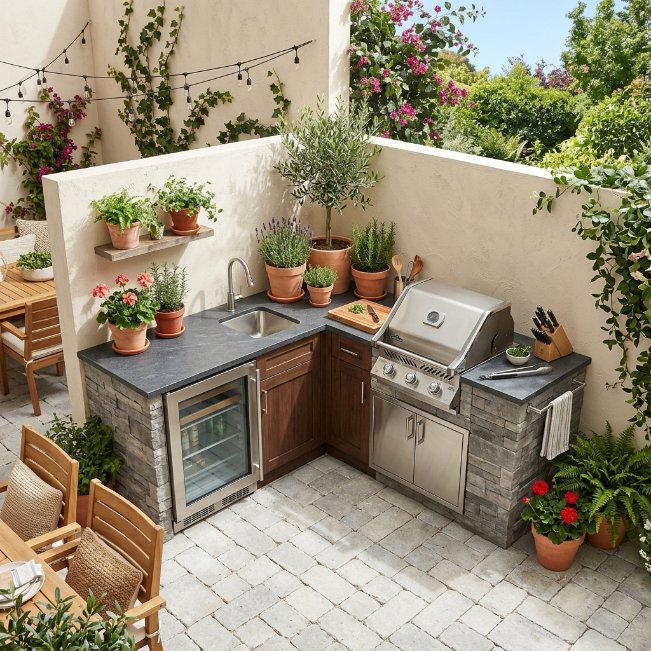
- Maximizes cooking space without needing a large yard
- Keeps grill, prep, and storage within easy reach
- Fits neatly into corners that would otherwise sit empty
- Works well for narrow patios or townhouse backyards
- Creates a natural walkway around the open side
An L-shaped layout is one of the smartest small outdoor kitchen ideas for anyone working with limited square footage. Instead of spreading appliances along one flat wall, the corner arrangement wraps the cook into a tighter, more efficient triangle. Everything sits within a step or two, so there’s no wasted movement while grilling or prepping. This shape also visually anchors a corner that might otherwise go unused, turning dead space into the most functional part of the entire yard.
In my experience, homeowners with smaller lots hesitate to build any outdoor kitchen at all, assuming they need sprawling space. An L-shape proves that wrong. It fits into corners as tight as six by eight feet and still holds a grill, counter, and storage cabinet. The open side keeps the layout from feeling boxed in, letting one or two people move freely while cooking. It’s proof that smart planning matters more than sheer square footage.
Reclaimed Wood Accent Bar
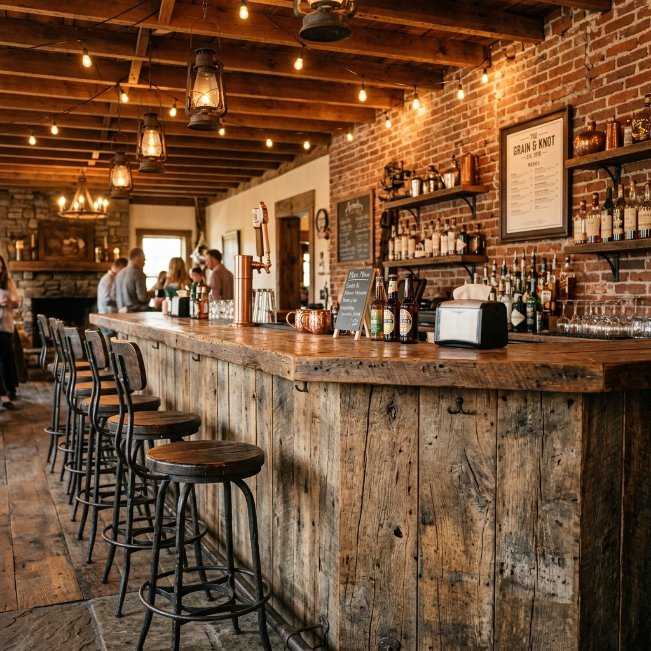
- Adds warmth and character that new materials can’t replicate
- Each plank brings unique grain, so no two bars look alike
- Pairs naturally with brick, stone, or greenery backdrops
- Budget-friendly if sourced from salvage yards or old fencing
- Creates a cozy, lived-in feel rather than a sterile showroom look
Reclaimed wood is a favorite among rustic outdoor kitchen ideas because it carries history that new lumber simply can’t fake. Weathered grain, small nail holes, and slightly uneven edges give the bar personality instead of a mass-produced look. Paired with iron or black metal legs, the combination feels intentional and collected over time, not staged. This is the kind of detail that makes guests stop and ask where the wood came from, which is exactly the reaction most homeowners hope for.
That’s why many designers recommend sourcing reclaimed wood locally before buying new boards. Old barns, shipping pallets, and fencing often work perfectly once cleaned and sealed for outdoor use. I’ve noticed this approach also saves money compared to specialty lumber, while still delivering a richer finished look. Sealing is the one step people skip, and it matters most outdoors. A properly treated reclaimed bar can handle weather for years while only growing more charming with age.
Pizza Oven Corner
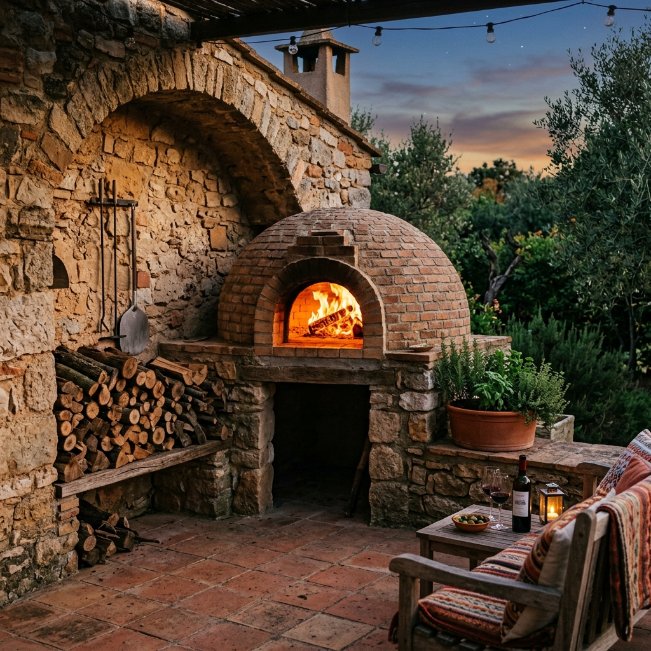
- Turns pizza night into a full backyard event
- Brick or stone domes hold heat efficiently for even cooking
- Becomes a natural focal point guests gather around
- Works for bread, roasted vegetables, and more than just pizza
- Adds a distinct Mediterranean or rustic architectural feature
A pizza oven corner stands out among outdoor kitchen ideas because it does more than cook food, it creates an experience. The glow of the fire, the smell of woodsmoke, and the ritual of watching a pizza cook in ninety seconds pulls people outside in a way a standard grill rarely does. It becomes the centerpiece guests naturally cluster around, turning a simple dinner into something closer to an event. Even on quieter nights, the oven adds warmth and atmosphere just by being there.
I’ve tried both gas-powered and wood-fired versions, and the wood-fired option wins for atmosphere every time, even though it takes more effort to maintain. Beyond pizza, these ovens roast vegetables, bake bread, and sear meats at high heat. Building it into a stone or brick corner keeps the design cohesive with the rest of the kitchen. It’s a bigger investment than most ideas on this list, but it consistently delivers the highest “wow factor” for visitors.
DIY Cinder Block Counter
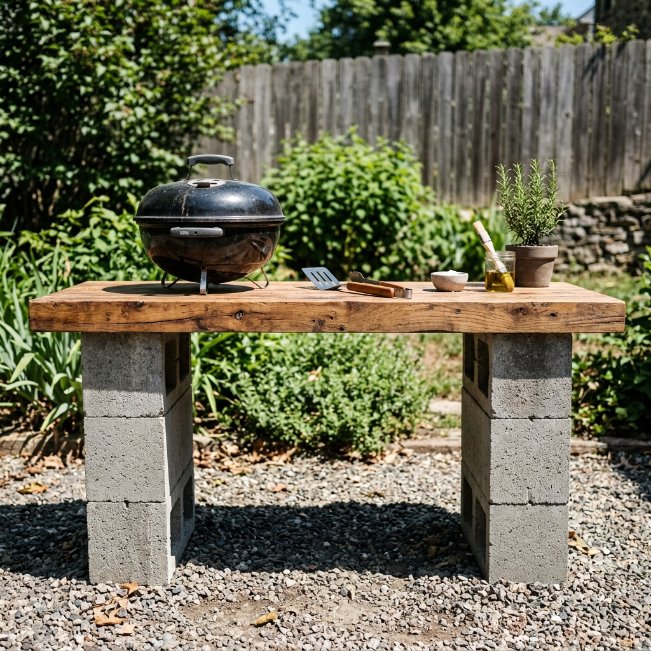
- Costs a fraction of stone or brick alternatives
- Simple enough to build in a single weekend
- Blocks can be painted, stuccoed, or left raw for texture
- Sturdy enough to support heavy grills and countertops
- Great starting project for first-time DIY builders
Cinder blocks are the backbone of countless diy outdoor kitchen ideas because they’re cheap, sturdy, and forgiving for beginners. There’s no masonry expertise required, just careful stacking, level checking, and a solid concrete base to start from. A butcher block or tile top finishes the look and hides the utilitarian blocks underneath if a cleaner finish is preferred. For anyone nervous about their first outdoor build, this method offers real structural strength without the steep learning curve of brick or stone work.
I’ve seen this work well for renters and homeowners alike, since the blocks can be left unglued and disassembled later if needed. Painting them white or charcoal instantly upgrades the raw look into something closer to a finished patio bar. Stuccoing over the blocks is another popular route for a smoother, more polished appearance. Whichever finish gets chosen, the underlying structure stays just as functional, proving that budget materials don’t have to look cheap once styled thoughtfully.
Blackstone Griddle Station
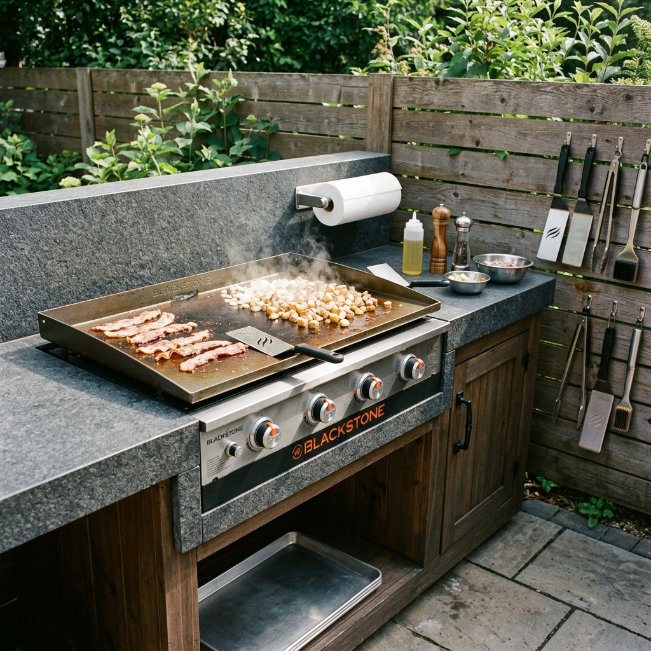
- Cooks large batches of food faster than a standard grill
- Flat surface works for breakfast, stir-fry, and burgers alike
- Easier grease management with built-in trays and drains
- Popular for feeding groups without juggling multiple pans
- Fits neatly into a built-in counter or standalone cart
Blackstone griddle stations have become one of the most searched outdoor kitchen ideas because they solve a problem grills can’t: cooking many different foods at once, side by side. Pancakes, eggs, smash burgers, and vegetables can all sit on the same flat surface without flare-ups or flavor crossover. That versatility makes it a favorite for families who cook large weekend breakfasts or feed groups during game-day gatherings. The flat-top design also heats evenly, which means fewer burnt edges and more consistent results overall.
Building the griddle into a permanent counter, rather than leaving it on a rolling cart, gives the whole station a finished look. Grease trays and side shelves keep tools and condiments close at hand while cooking. In my experience, people who upgrade from a rolling cart to a built-in version use their griddle far more often simply because it feels like a permanent fixture rather than extra equipment to drag out. It becomes the go-to cooking method for casual weekend meals.
Under-Counter Storage Cabinets
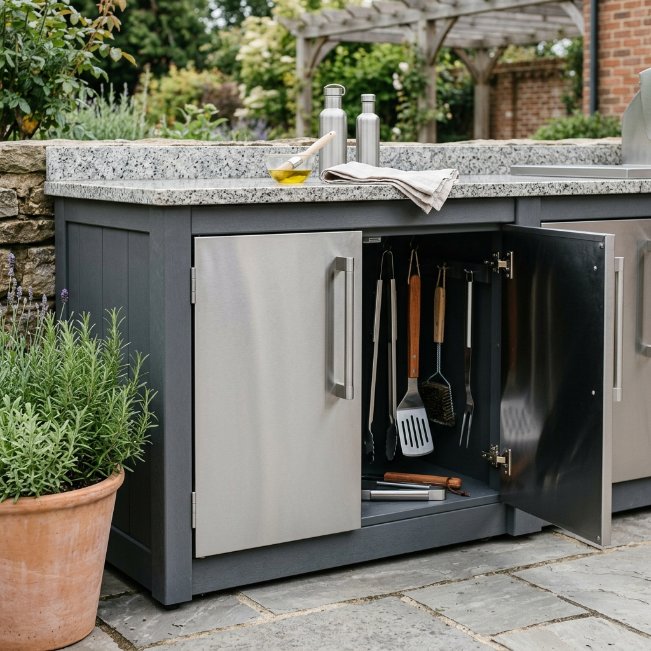
- Keeps tools, propane tanks, and dishware hidden from view
- Weatherproof materials prevent rust and warping over time
- Reduces clutter on countertops during cooking and cleanup
- Makes the whole setup feel finished, not half-built
- Adds real storage value beyond just the cooking surface
Storage is the detail many people forget when planning simple outdoor kitchen ideas, yet it’s often what makes a space feel truly finished. Without cabinets, tools end up piled on counters or carried back and forth from the kitchen indoors, which defeats the purpose of building an outdoor setup in the first place. Weatherproof stainless steel or marine-grade polymer cabinets solve this by giving everything a permanent, protected home. Doors also hide less attractive items like trash bins or propane tanks from view.
That’s why many designers recommend planning storage before choosing countertop material, since cabinet dimensions often shape the rest of the layout. I’ve noticed that outdoor kitchens without adequate storage tend to feel cluttered within a few months, even if they looked pristine on installation day. Built-in cabinets keep the space looking intentional long-term. They also protect tools from rain and sun damage, extending the life of grilling accessories that would otherwise rust or fade sitting exposed on an open shelf.
Stone Veneer Facade
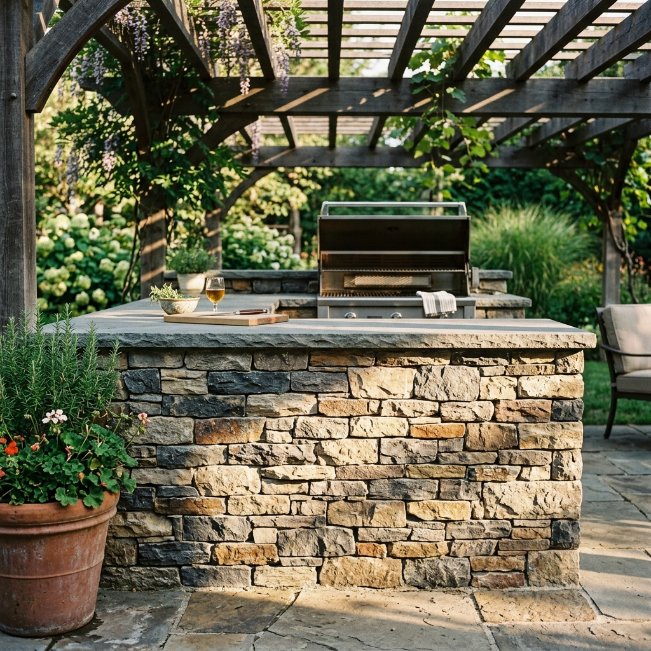
- Adds instant texture and depth to flat concrete bases
- Mimics natural stone at a lower material cost
- Blends easily with existing landscaping and garden stone
- Resists weather better than painted or stuccoed surfaces
- Elevates a basic structure into a custom-built appearance
Stone veneer is one of the easiest ways to upgrade a plain concrete or block base without starting construction over from scratch. It’s a thin, lightweight material that adheres directly to existing surfaces, meaning the structural work stays simple while the finished look becomes dramatically richer. This approach shows up constantly across outdoor kitchen ideas because it delivers a custom, high-end appearance without the cost or weight of solid natural stone. Homeowners get texture, dimension, and warmth in a single afternoon project.
I’ve noticed that stone veneer photographs especially well for Pinterest boards because the texture catches natural light in a way flat paint never can. It also ages gracefully, unlike painted surfaces that chip or fade within a few seasons. Matching the veneer to existing walkway stone or garden borders ties the whole backyard together visually. For anyone hesitant about a full masonry project, veneer offers nearly the same payoff with a fraction of the labor and material investment required.
Open Shelving Display
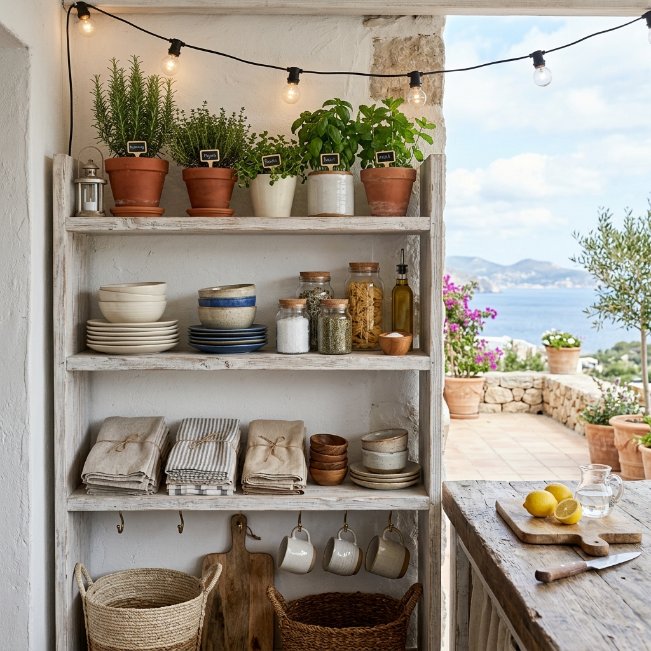
- Keeps everyday items visible and easy to grab
- Adds a decorative, styled look without extra cost
- Works well for smaller spaces where cabinets feel bulky
- Encourages minimal, curated storage instead of clutter
- Pairs nicely with herbs or small potted plants on top
Open shelving brings a lighter, more relaxed feel to easy outdoor kitchen ideas, especially compared to heavier closed cabinetry. Because everything stays visible, it naturally encourages a more curated approach. Nobody wants mismatched mugs and dusty tools on display, so shelves tend to stay tidier than hidden cabinets ever do. This idea works especially well for smaller patios where a full run of cabinetry would feel visually heavy or take up too much precious floor space near the cooking area.
In my experience, open shelving works best when treated like a small styling project rather than pure storage. A stack of ceramic plates, a few glass jars, and a small herb plant turn a functional shelf into something that looks intentional and photo-ready. Just keep weatherproof materials in mind, since untreated wood or metal exposed to rain will degrade faster than enclosed storage. Sealed wood or powder-coated metal shelving holds up far longer while keeping that open, breezy aesthetic intact.
Bar Height Seating Ledge
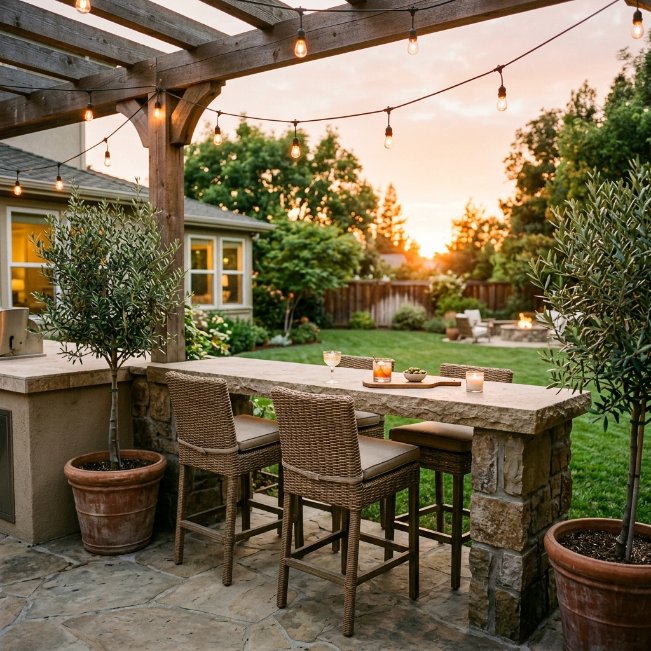
- Gives guests a spot to sit while food is prepared
- Keeps conversation flowing between cook and company
- Requires no extra furniture footprint beyond the counter itself
- Works for casual dining without a separate table setup
- Naturally faces the yard for a better view while seated
A bar-height seating ledge solves one of the most common complaints about outdoor cooking spaces: guests standing around awkwardly with nowhere to sit. By extending the countertop a few extra inches and adding stools underneath, the cook stays connected to conversation instead of working alone while everyone else waits at a separate table. This layout shows up often in outdoor kitchen ideas because it maximizes function without demanding additional square footage or a second furniture purchase for casual gatherings.
That’s why many designers recommend orienting the seating ledge toward the yard or view rather than facing a wall. It gives seated guests something pleasant to look at while they chat, rather than staring at siding or a fence line. I’ve seen this work particularly well for evening entertaining, when string lights and sunset views become part of the atmosphere. It’s a small layout decision that meaningfully changes how the space feels to sit in, not just how it looks.
Mini Fridge Nook
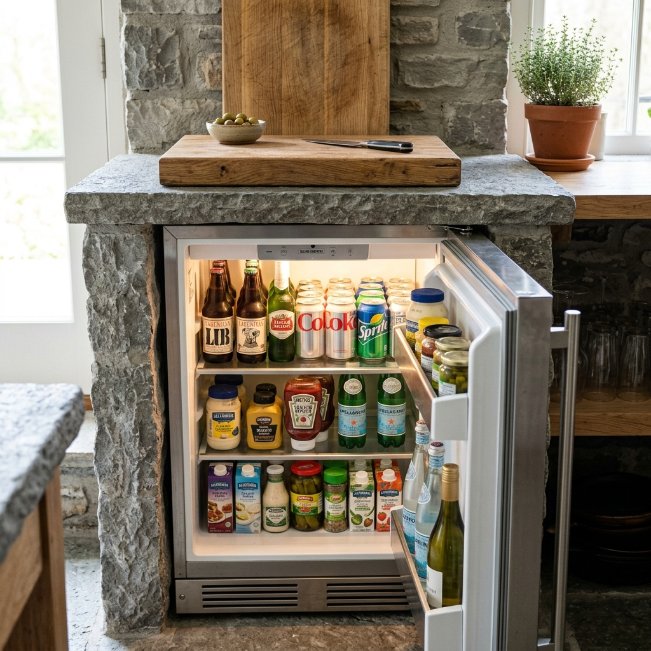
- Keeps drinks and ingredients cold without indoor trips
- Fits into tight gaps most other appliances can’t use
- Saves steps during cooking and entertaining alike
- Available in sizes small enough for compact layouts
- Doubles as extra counter support when built in flush
A mini fridge nook solves the single biggest inconvenience of outdoor cooking: constant trips back inside for drinks, condiments, or forgotten ingredients. Even a compact 24-inch unit holds enough for a full afternoon of grilling, meaning the cook and guests both stay outside longer. This appliance shows up in nearly every version of small outdoor kitchen ideas because it delivers major convenience in a surprisingly small footprint, often tucking into gaps too narrow for a full-size fridge or additional counter space.
I’ve noticed that once people install a mini fridge outdoors, their kitchen actually gets used far more consistently, not just for big cookouts. Grabbing a cold drink or a marinated dish becomes effortless instead of a hassle, which keeps people outside longer on ordinary weeknights too. Weatherproof, outdoor-rated models matter here since standard indoor fridges aren’t built to handle humidity or temperature swings. Spending slightly more on an outdoor-rated unit prevents costly repairs or replacement within just a year or two.
Herb Garden Border
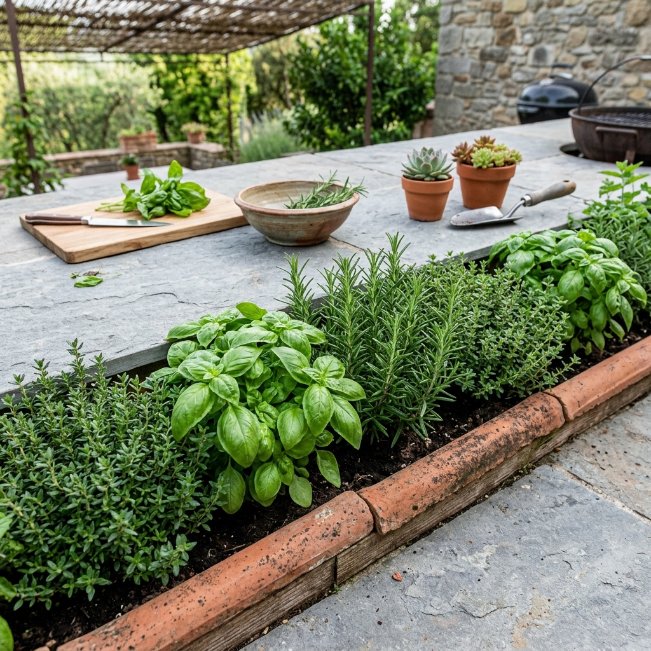
- Puts fresh herbs within arm’s reach while cooking
- Adds greenery and softness against hard stone or metal
- Requires minimal space compared to a full garden bed
- Improves flavor and freshness for grilled dishes instantly
- Creates a natural, lived-in look rather than sterile hardscape
A herb garden border does double duty, softening the visual hardness of stone and metal while putting fresh ingredients literally within reach of the grill. Snipping rosemary or basil mid-cook, rather than running inside for dried substitutes, changes the flavor of finished dishes noticeably. This small addition appears frequently across cheap outdoor kitchen ideas because it costs very little to implement yet adds both function and charm. A narrow planter strip along the counter edge is often all the space required to make it work.
In my experience, herbs planted directly near the cooking area get used far more often than the same herbs planted somewhere out in the main garden bed. Proximity matters more than people expect. Basil, thyme, rosemary, and chives all tolerate container growth well and thrive in the sunny, warm conditions most outdoor kitchens already provide. Beyond the practical benefit, the greenery breaks up hard surfaces visually, giving the whole space a softer, more inviting feel that photographs beautifully for inspiration boards.
Floating Wood Shelf Bar
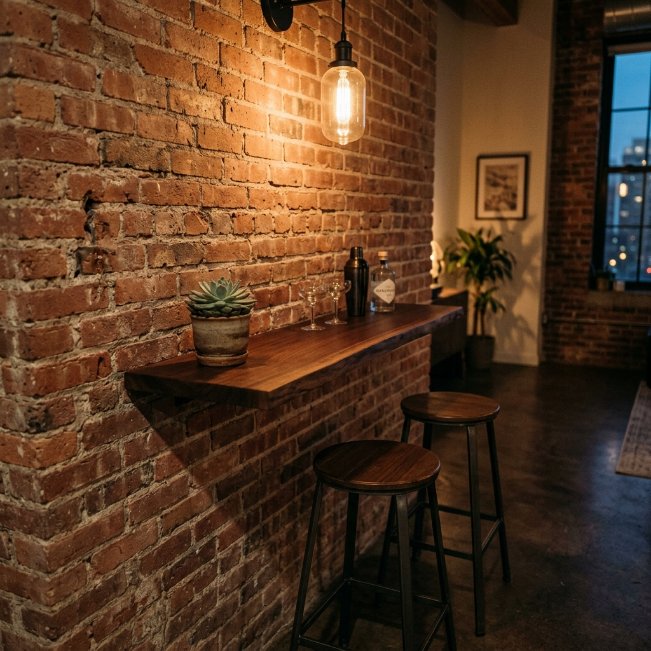
- Requires minimal materials and construction effort
- Perfect for narrow side yards or apartment patios
- Creates a bar feel without a full countertop build
- Easy to install against an existing wall or fence
- Budget-conscious option that still looks polished and intentional
A floating wood shelf bar is one of the most inexpensive covered outdoor kitchen ideas for anyone working with a narrow side yard or rented property where permanent construction isn’t an option. Mounted directly onto an existing wall or fence, it skips the need for a full base structure, legs, or foundation work entirely. Just a sealed wood plank, sturdy brackets, and a couple of stools create a genuine bar experience in spaces most people would assume are too small for any outdoor kitchen setup.
I’ve tried this approach in tight apartment patios, and it consistently surprises people how finished it looks despite the minimal build. Sealing the wood properly is the step that matters most, since floating shelves sit exposed without the protection a full counter structure would provide. Choosing a hardwood like teak or a well-sealed pine keeps it from warping through seasonal weather changes. It’s proof that even do it yourself outdoor kitchen ideas don’t require a big footprint to feel genuinely welcoming.
Movable Kitchen Cart
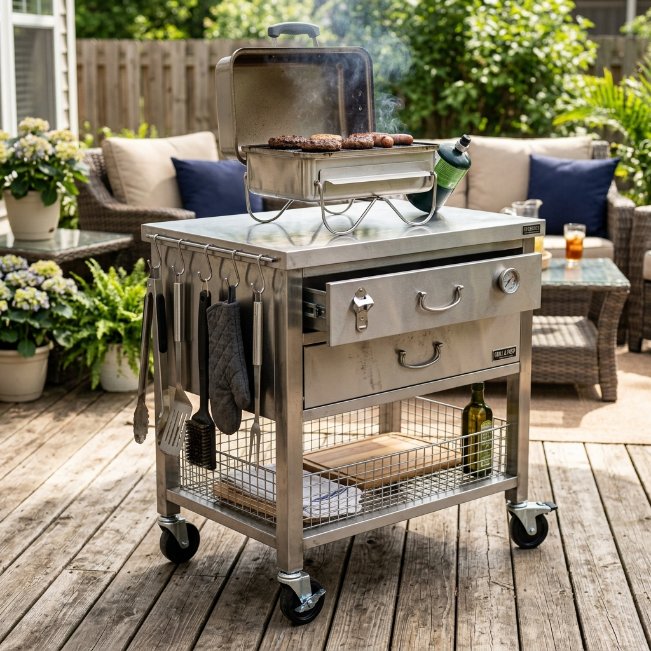
- No permanent installation or construction required
- Easy to reposition based on weather or gathering size
- Ideal for renters or those testing the outdoor cooking habit
- Can be rolled into storage during winter months
- Lower upfront cost than any built-in structure
A movable kitchen cart is the easiest entry point into inexpensive outdoor kitchen ideas, especially for renters or anyone unsure how much they’ll actually use an outdoor setup before committing to permanent construction. Everything, from the grill to the storage drawers, rolls as one unit, meaning it can shift toward shade on hot days or tuck against the house during storms. There’s no demolition or masonry involved, just assembly, which makes this option accessible to nearly anyone regardless of yard size or lease restrictions.
I’ve seen this work well as a trial run before a bigger investment. Families use a cart for a full season, learn how they actually cook and gather outside, then design a permanent structure based on real habits rather than guesswork. That approach avoids expensive mistakes down the road. Carts also solve winter storage easily, since the whole unit rolls into a garage or shed rather than requiring weatherproof covers or built-in protection through colder months.
Two-Tier Counter Design
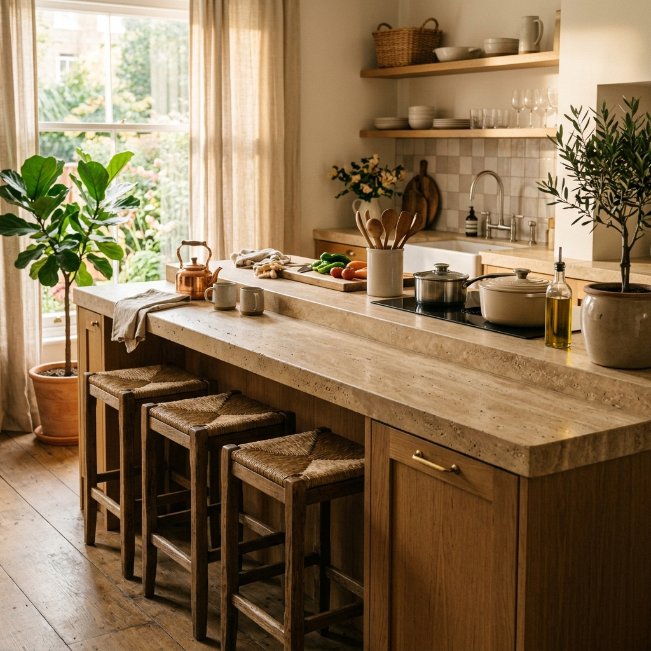
- Separates cooking mess from guest seating naturally
- Adds visual depth instead of one flat surface
- Gives the cook privacy while still staying social
- Works well for households that entertain frequently
- Creates distinct zones without needing extra square footage
A two-tier counter design solves a layout problem that flat, single-level counters can’t: keeping the cooking mess separate from where guests actually sit and eat. The lower tier handles prep, grilling, and cleanup, while the raised bar ledge behind it gives seated guests a clean surface for drinks and plates, without watching every splatter or dirty dish pile up mid-meal. This idea appears often in modern outdoor kitchen ideas because it adds functional zoning using height rather than extra floor space.
That’s why many designers recommend this layout specifically for households that entertain often, since it naturally manages flow during a party. Guests gravitate toward the upper tier to chat, while the cook has breathing room below to actually work. I’ve noticed this small height difference changes group dynamics more than people expect, cutting down on the crowded, everyone-hovering-at-once feeling that flat single-level counters tend to create during busy gatherings.
Wraparound Bench Seating
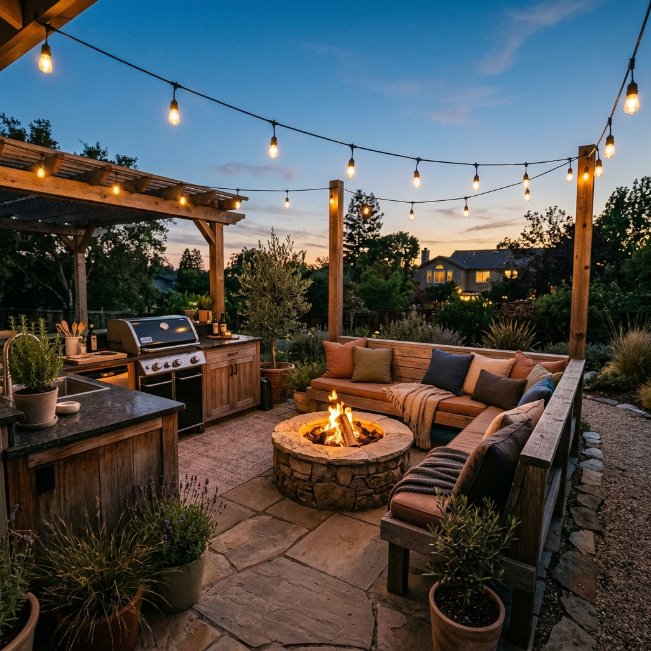
- Seats more guests than individual chairs in the same footprint
- Creates a natural gathering point near the cooking area
- Weatherproof cushions add comfort without sacrificing durability
- Works well paired with a fire pit or lounge zone
- Ties the kitchen visually to the rest of the backyard
Wraparound bench seating solves the seating math problem that stumps most backyard layouts: fitting enough guests without cluttering the space with individual chairs. An L-shaped or U-shaped bench tucks along the edges of a patio, seating six to eight people in roughly the same footprint that four chairs would take up. This idea connects naturally with easy outdoor kitchen ideas because it extends the gathering space beyond just the cooking counter, pulling guests toward a fire pit or lounge area nearby.
In my experience, benches encourage people to linger longer than individual chairs do, since there’s room to shift, tuck legs up, or slide closer to the fire without dragging furniture around. Weatherproof cushions make the difference between a bench that gets used daily and one that stays damp and ignored after rain. Choosing quick-dry foam or removable, washable covers keeps maintenance simple. It’s a seating solution that visually and functionally bridges the kitchen to the rest of the yard.
Corrugated Metal Roof
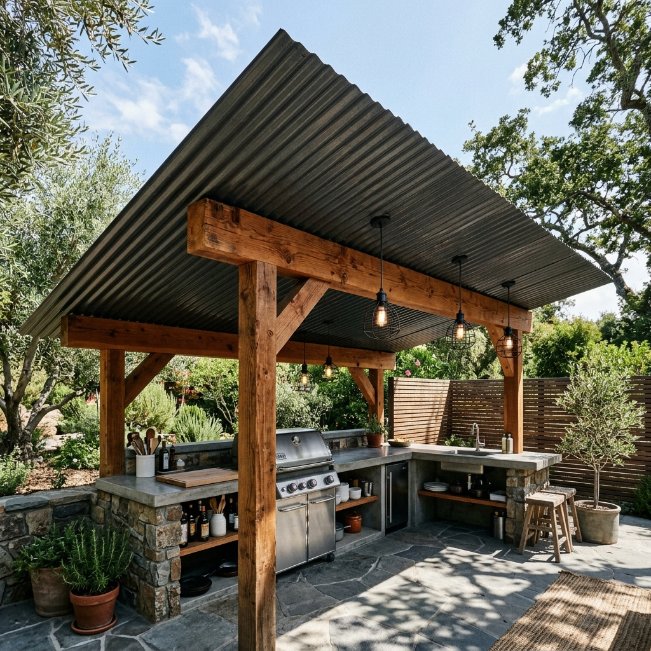
- Provides full rain and sun protection year-round
- More affordable than a traditional shingled roof structure
- Adds a modern, industrial edge to the overall look
- Lightweight material simplifies the support structure needed
- Handles harsh weather better than fabric or canvas covers
A corrugated metal roof solves full weather protection in a way that pergolas and umbrellas simply can’t match. Rain, direct sun, and even light hail get blocked completely, meaning the kitchen stays usable regardless of forecast. This option comes up constantly in covered outdoor kitchen ideas because metal panels cost significantly less than traditional shingled roofing while still delivering a durable, finished appearance. The material also holds up for decades with minimal maintenance, unlike fabric awnings that fade and tear within a few seasons.
I’ve noticed that homeowners in rainier climates lean toward this option specifically, since it’s the only cover type that guarantees a completely dry cooking surface no matter the weather outside. The industrial look pairs surprisingly well with both modern and rustic styling, depending on the beam material chosen underneath. Cedar beams soften the metal’s harder edges, while black steel supports lean into a sleeker aesthetic. Either way, it’s a practical structure that earns back its cost through genuine year-round usability.
Poolside Serving Counter
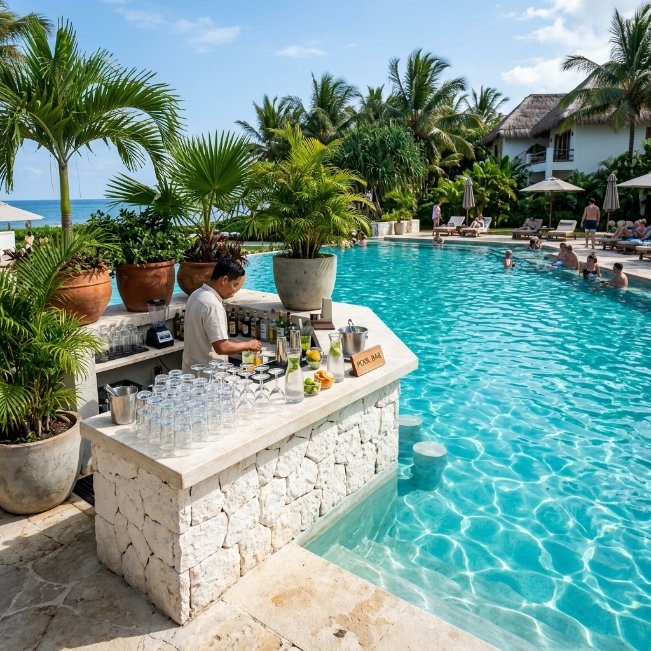
- Keeps food and drinks close without walking far from the water
- Reduces wet footprints tracking through the main kitchen area
- Adds a resort-style feel to everyday backyard swimming
- Works well for summer parties and casual pool days
- Simple counter height makes serving food effortless
A poolside serving counter keeps snacks and drinks within reach without anyone dripping water through the main cooking area, which matters more than people expect once summer swimming actually starts. This layout shows up frequently in florida outdoor kitchen ideas and other warm-climate designs because pools and outdoor kitchens naturally belong together for large portions of the year. A simple counter near the pool’s edge means less walking back and forth, and fewer wet footprints tracking sand or chlorine through the primary grilling and prep space.
That’s why many designers recommend placing this counter on a slightly separate zone from the main cooking station, keeping food prep dry while still staying close enough for easy serving. I’ve seen this work particularly well for families with kids, since snacks and drinks stay accessible without adults needing to leave pool supervision duties. The resort feel it creates, especially with tropical plants or a tiled counter finish, elevates an ordinary backyard pool into something closer to a vacation setting.
Chalkboard Menu Panel
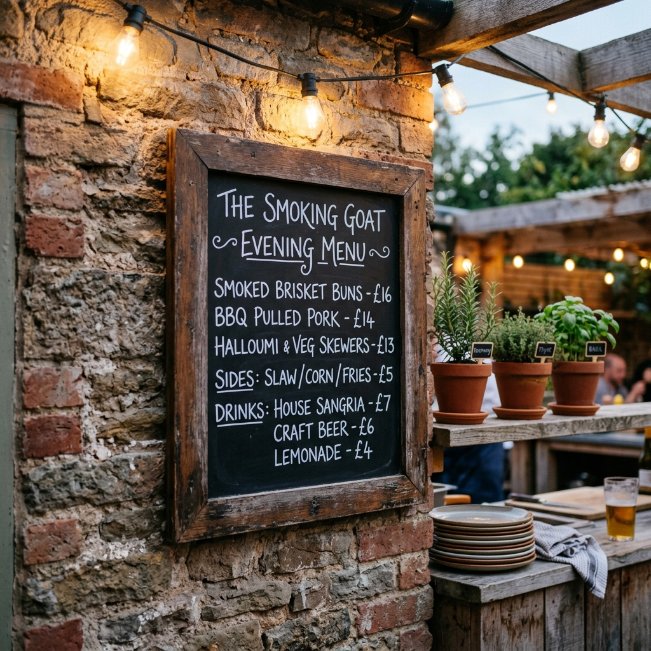
- Adds a personal, playful touch to gatherings and parties
- Doubles as a spot for daily specials or grocery reminders
- Costs very little compared to other decorative upgrades
- Easy to update for holidays, themes, or seasonal menus
- Gives guests a fun detail to notice and remember
A chalkboard menu panel is a small, low-cost detail that adds outsized personality to an outdoor kitchen setup. Writing out the night’s grilled menu, a drink special, or even a simple weather-appropriate greeting gives the space a personal touch that expensive materials alone can’t replicate. This idea fits well within cheap simple outdoor kitchen ideas because it costs almost nothing beyond a basic frame and chalk, yet consistently becomes a detail guests comment on and remember well after the gathering ends.
I’ve tried this in my own backyard setups, and it’s one of those small additions that photographs surprisingly well for Pinterest boards while adding almost zero cost or effort. Swapping the message for birthdays, holidays, or seasonal menus keeps the space feeling fresh without any construction or redesign involved. It’s a detail that rewards creativity more than budget, making it accessible to nearly anyone regardless of what stage their outdoor kitchen project is currently in.
Hanging Pot Rack
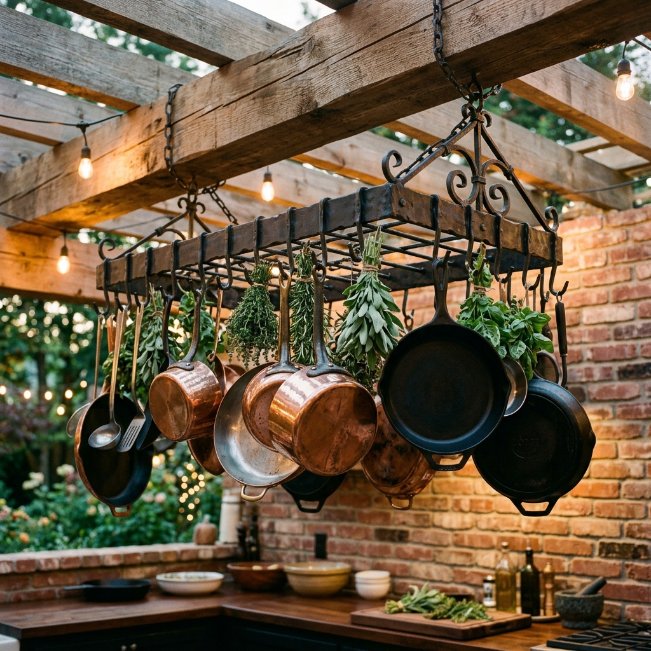
- Frees up counter and cabinet space for other essentials
- Keeps frequently used pots and pans within easy reach
- Adds visual interest overhead instead of leaving it empty
- Works well in kitchens with limited built-in storage
- Turns cookware into part of the overall decor
A hanging pot rack solves a storage problem many people overlook until cabinets fill up faster than expected. Mounting cookware overhead frees up valuable counter and drawer space for items that actually need to stay hidden, like cleaning supplies or extra propane fittings. This idea works especially well within diy small outdoor kitchen ideas, since it requires just a beam, some hooks, and basic hardware rather than any cabinetry construction. It’s one of the simplest upgrades that noticeably improves daily function.
I’ve noticed that hanging racks work best when only the most-used pieces are displayed, rather than every pot and pan owned. A curated selection of cast iron skillets or copper pots looks intentional and adds warmth to the space visually. Overcrowding the rack, on the other hand, starts to look cluttered rather than styled. Choosing weather-resistant cookware for open display also matters, since pieces left hanging outdoors will be exposed to humidity and temperature swings year-round.
Tiled Backsplash Accent
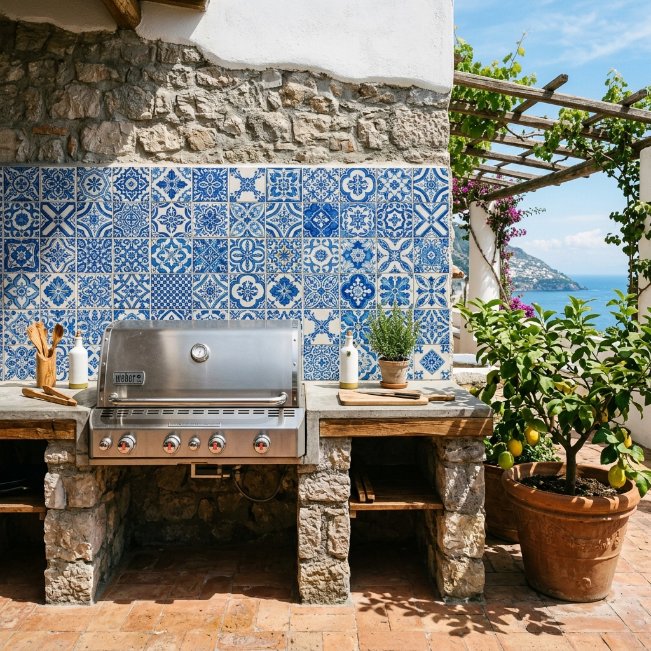
- Adds color and pattern without overwhelming the whole space
- Protects the wall behind cooking surfaces from grease and heat
- Easy focal point that elevates a simple counter design
- Available in countless patterns to match any style direction
- Simple to clean compared to painted or unfinished walls
A tiled backsplash accent gives an outdoor kitchen the kind of finished, designer touch that plain stone or stucco walls can’t achieve on their own. Beyond looks, it serves a real function, protecting the wall surface from grease splatter and heat damage that builds up over years of regular grilling. This detail appears across nearly every style direction, from simple outdoor kitchen ideas with a few clean tiles to elaborate Mediterranean-inspired patterns covering an entire accent wall behind the cooking station.
That’s why many designers recommend choosing backsplash tile early in the planning process, since it often sets the color palette for everything else, from countertop material to cushion fabric. I’ve seen this work well as the single detail that transforms a builder-basic layout into something that looks custom-designed. Ceramic and porcelain tiles handle outdoor conditions well, resisting fading and moisture damage far better than natural stone alternatives in humid or rainy climates.
Fire Pit Kitchen Combo
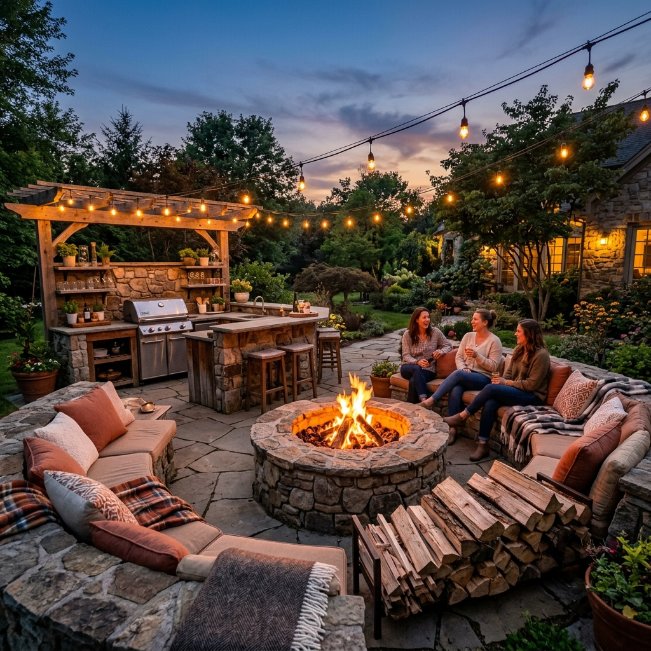
- Extends outdoor use into cooler evenings and fall months
- Creates a natural transition from cooking to relaxing
- Adds warmth and ambiance beyond just the cooking function
- Works as a secondary gathering point during larger parties
- Ties the whole backyard into one connected living space
Pairing a fire pit directly with the cooking counter turns a functional grilling setup into a genuine outdoor living space that people want to stay in long after the food is done. Once the sun sets and temperatures drop, the fire pit keeps guests outside rather than sending everyone back indoors early. This combination consistently ranks among the most popular outdoor kitchen ideas because it solves both cooking and comfort in one connected layout, rather than treating them as two completely separate backyard projects.
In my experience, this pairing gets more year-round use than a kitchen alone, especially through fall and early spring when direct sun cooking feels less appealing but a fire still draws people outside. Positioning the fire pit close enough to feel connected, but far enough to avoid smoke drifting over food prep, takes a bit of planning. Once dialed in, though, it becomes the spot where dinner turns into hours of lingering conversation around the flames.
Conclusion:
A backyard doesn’t need a massive renovation to feel like a whole new space. Sometimes it just takes one idea, a built-in grill, a reclaimed wood bar, a cozy fire pit combo, to change how a family gathers outside. I’ve seen how small changes like these can completely transform the way people use their yard, turning it into the place everyone naturally ends up. Pick the outdoor kitchen ideas that fit your space and budget, save this post for when you’re ready to start, and pass it along to a friend planning their own backyard upgrade too.