
22 Minimalist Bedroom Ideas to Simplify Your Space
Introduction:
Ever walk into your bedroom and feel instantly overwhelmed before you’ve even sat down? You’re not alone. A cluttered, over-decorated room can quietly drain your energy without you realizing why. These 22 minimalist bedroom ideas are here to change that, offering simple, practical ways to simplify your space without losing warmth or personality. In my experience, the calmest bedrooms aren’t the emptiest ones, they’re the most intentional. Every idea in this list focuses on real, livable changes: smarter storage, softer lighting, natural textures, and small daily habits that actually stick. Whether you’re starting fresh or editing what you already have, you’ll find inspiration that feels achievable, not intimidating, and a bedroom that finally feels like a place to breathe.
Platform Bed Frame
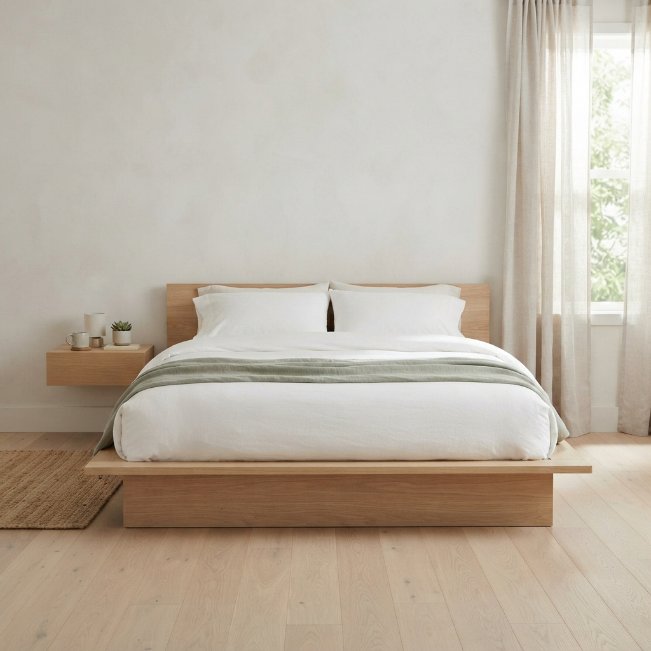
- Creates an open, grounded feel without the bulk of a tall headboard
- Makes the ceiling feel higher and the room feel more spacious
- Easier to keep clean underneath compared to bulky bed frames
- Pairs well with almost any minimalist bedroom color palette
- Works especially well in small rooms where visual weight matters
A platform bed frame is one of the simplest ways to change the entire feel of a room. In my experience, swapping a tall, heavy frame for a low platform style instantly makes a small bedroom breathe better. The lower silhouette keeps sightlines open, so the eye travels across the room instead of stopping at a bulky headboard. This is one of the most practical minimalist bedroom ideas for small rooms because it reduces visual clutter without reducing comfort. It’s a small structural change that delivers a noticeably calmer, more spacious result almost immediately.
Beyond the visual benefit, platform beds tend to suit a wider range of design styles, which makes them a safe long-term choice. Many people don’t realize how much a bed frame silhouette affects the whole room’s proportions until they see it in person. I’ve noticed that clients who switch to platform frames rarely go back to traditional ones. They’re also easier to style with minimal bedding, since the frame itself becomes part of the design rather than something to hide. It’s a foundational choice that supports almost every other minimalist bedroom decor idea layered on top of it.
Neutral Color Palette
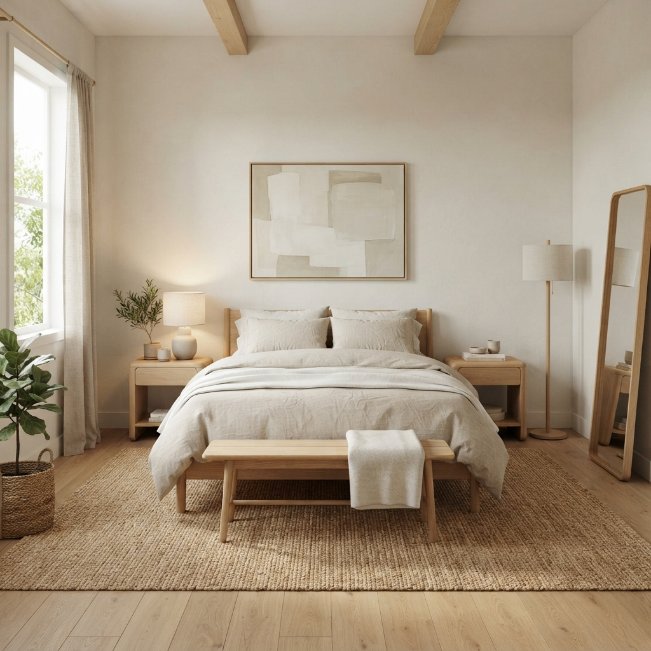
- Instantly makes a room feel calmer and larger than it is
- Neutral tones age well and rarely feel outdated
- Easier to layer textures without visual competition
- Works for any gender, age, or design preference
- Reflects more natural light, brightening darker rooms
Color does more emotional work in a bedroom than almost any other design choice. A neutral color palette is one of the most reliable minimalist bedroom design ideas because it creates a backdrop that feels restful rather than stimulating. Soft beiges, warm whites, and light greiges reflect natural light beautifully, which makes even a windowless room feel brighter. Unlike bold color trends, neutrals rarely need to be repainted every few years. That’s why many designers recommend starting here first, since the wall color sets the emotional tone for everything else in the space.
Neutral doesn’t mean boring when it’s done thoughtfully. I’ve seen this work well in many homes where warm and cool neutrals are mixed to add subtle depth without breaking the calm mood. A slightly warmer wall paired with cooler bedding, for example, keeps the eye interested while still feeling cohesive. This approach also makes future updates easier, since accent pillows or a single piece of art can shift the whole feel without a full repaint. It’s a low-effort, high-impact foundation for a genuinely peaceful bedroom.
Floating Nightstands
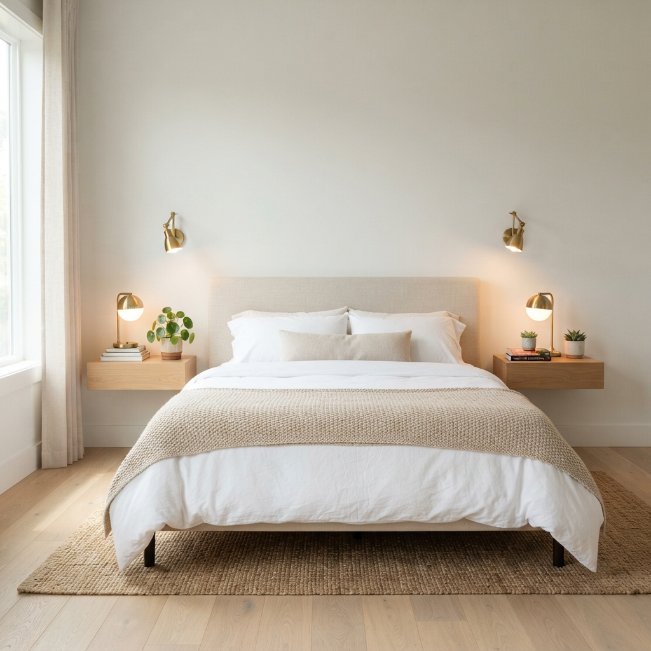
- Frees up visible floor space, making the room feel larger
- Simplifies cleaning since there are no legs to work around
- Adds a modern, architectural touch to the bedroom
- Keeps surfaces small on purpose, which limits clutter naturally
- Great for narrow bedrooms where floor space is limited
Floating nightstands solve a problem most people don’t think about until they see the difference. By removing the visual weight of legs and floor contact, this idea opens up sightlines across the entire room. It’s one of the more overlooked minimalist ideas for bedroom layouts, especially in tighter spaces where every inch of visible floor matters. The mounted design also naturally limits how much clutter can accumulate, since the surface area is intentionally small. The result is a room that feels tidier without requiring extra daily effort to maintain that feeling.
Installation is a bigger commitment than a freestanding table, so it’s worth planning placement carefully before mounting. In my experience, height matters more than people expect. Nightstands mounted too high disrupt the proportions of the bed, while the right height creates a floating, balanced look. Pairing them with a small wall sconce instead of a table lamp frees up even more surface space. This combination works particularly well in modern minimalist bedroom ideas where every element is chosen for both function and visual lightness.
Hidden Storage Solutions
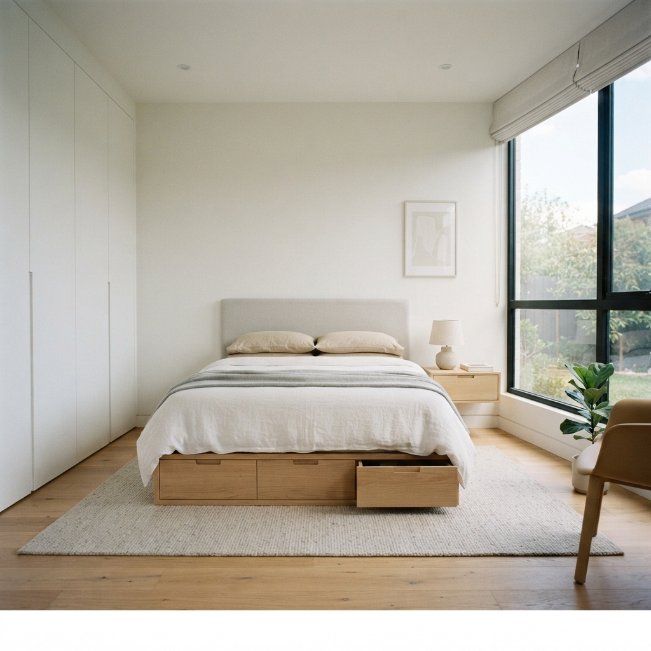
- Keeps everyday items out of sight without needing a bigger room
- Reduces visual noise, which is the core of any minimalist look
- Works especially well in small apartments or shared bedrooms
- Doubles up furniture function instead of adding more pieces
- Makes the room easier to reset and tidy in minutes
Storage is often the biggest obstacle to a truly minimalist bedroom, and hidden storage solves it quietly. Built-in drawers under the bed, flush wardrobe panels, or under-window benches with lift-tops all keep belongings organized without cluttering the visible space. This is one of the most useful minimalist bedroom ideas for small rooms because it adds function without adding footprint. When storage disappears into the architecture itself, the room reads as calm and spacious even if it’s holding just as much as a traditional bedroom. Nothing competes with the eye for attention.
The key is choosing pieces where the storage feels built-in rather than added on. I’ve noticed that handle-less cabinet fronts and matched wall colors make storage nearly invisible, which strengthens the minimalist effect significantly. This matters most in smaller homes, where a dresser or extra shelving unit can quickly dominate a room. Hidden storage also makes daily tidying faster, since there are fewer surfaces collecting stray items. It’s a practical upgrade that supports the aesthetic goal and the everyday livability of the space at the same time.
Warm Wood Accents
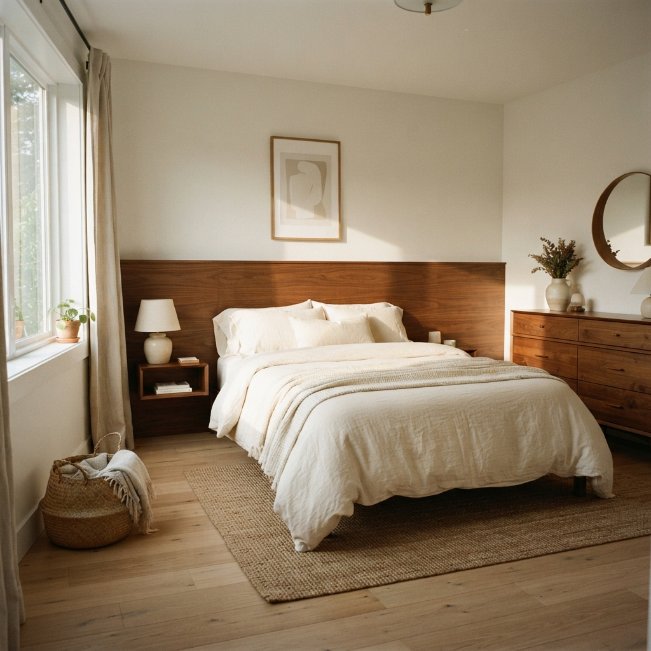
- Adds warmth so the room doesn’t feel cold or sterile
- Brings natural texture into an otherwise simple color scheme
- Complements almost any neutral or muted color palette
- Grounds the space with an organic, timeless material
- Works well for minimalist bedroom ideas for men and couples alike
Minimalism can sometimes tip into feeling cold, and warm wood accents are the easiest fix. A wood headboard panel, a low dresser, or simple floating shelves introduce natural grain and texture that softens an all-white or all-grey room. This is one of the most requested minimalist bedroom decor ideas because it adds richness without adding visual clutter. Wood tones like walnut, oak, or teak bring warmth into the space while still keeping the overall look clean and restrained. The result feels lived-in and inviting rather than stark or showroom-like.
Choosing the right wood tone depends on the room’s existing light and color scheme. I’ve seen this work well in many homes where a single warm wood piece, like a headboard or bench, became the room’s quiet focal point. It doesn’t need to be repeated everywhere to work; one or two pieces are usually enough. Mixing wood tones slightly, rather than matching them exactly, also tends to look more natural and less staged. This small addition often makes the biggest difference in how welcoming a minimalist bedroom actually feels.
Statement Headboard Wall
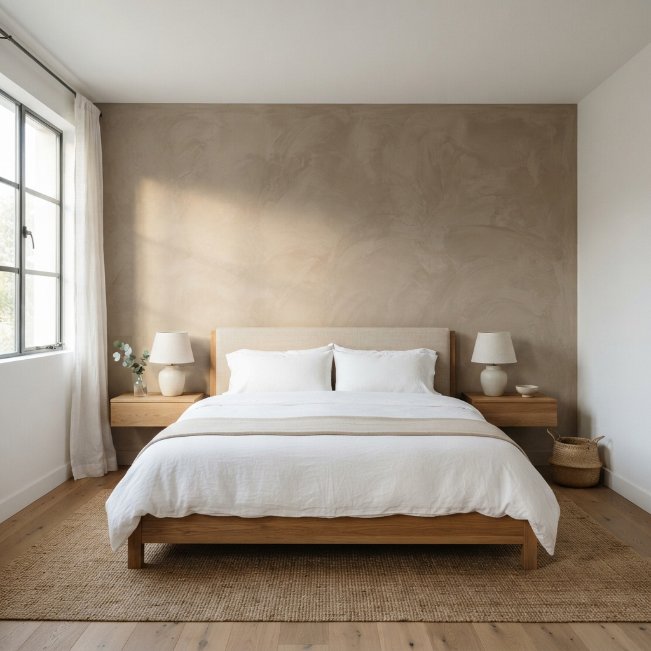
- Adds depth and interest without needing extra decor items
- Creates a natural focal point behind the bed
- Textured finishes add dimension without adding color or clutter
- Simple to update later without redoing the whole room
- Elevates the space with minimal cost and effort
A statement headboard wall gives the eye somewhere to land without introducing a single extra object into the room. Using texture, such as limewash, plaster, or subtle paneling, instead of pattern or bold color keeps the look aligned with minimalist bedroom aesthetic principles while still making a visual statement. This approach works because it adds dimension through material rather than through more furniture or decor. It’s an especially good option for anyone who wants their bedroom to feel designed and intentional without collecting more things to dust, style, or eventually replace.
This idea also happens to be one of the more budget-friendly upgrades on this list. That’s why many designers recommend starting with a textured accent wall before buying new furniture, since it changes the entire mood of the room for a relatively low cost. A soft taupe or warm grey plaster finish catches light differently throughout the day, which keeps the wall visually interesting even without artwork. It’s a subtle but effective way to add personality to a minimalist bedroom without breaking the quiet, uncluttered feel the style depends on.
Layered Neutral Textiles
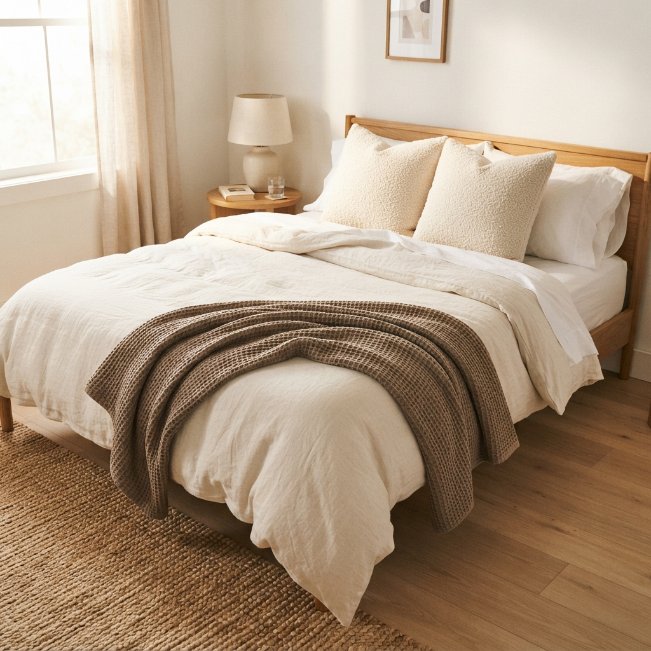
- Adds visual richness without introducing new colors or patterns
- Makes the bed feel inviting instead of plain or flat
- Easy to swap seasonally for a refreshed look
- Uses texture as the main design tool, which suits minimalism
- Keeps the palette calm while still feeling dimensional
Texture is what keeps a neutral bedroom from feeling flat, and layered textiles are the easiest way to bring it in. A linen duvet, a waffle-weave throw, and one or two textured pillows in close, related tones create depth without disrupting the calm color story. This is one of the simplest minimalist bedroom decor ideas to try because it requires no renovation, no new furniture, and very little cost. The bed becomes the visual centerpiece of the room through touch and texture alone, which is exactly the kind of quiet detail that makes a minimalist space feel considered rather than empty.
Getting the layering right comes down to varying the textures while staying within a tight color range. In my experience, mixing at least two textures, like a smooth linen with a nubby bouclé, keeps the bed from looking too matched or too stiff. Stick to two or three tones at most so the layering reads as intentional rather than busy. This idea also works well seasonally, since swapping a heavier knit throw for a lighter linen one in warmer months keeps the room feeling fresh without changing anything else.
Slim Profile Furniture
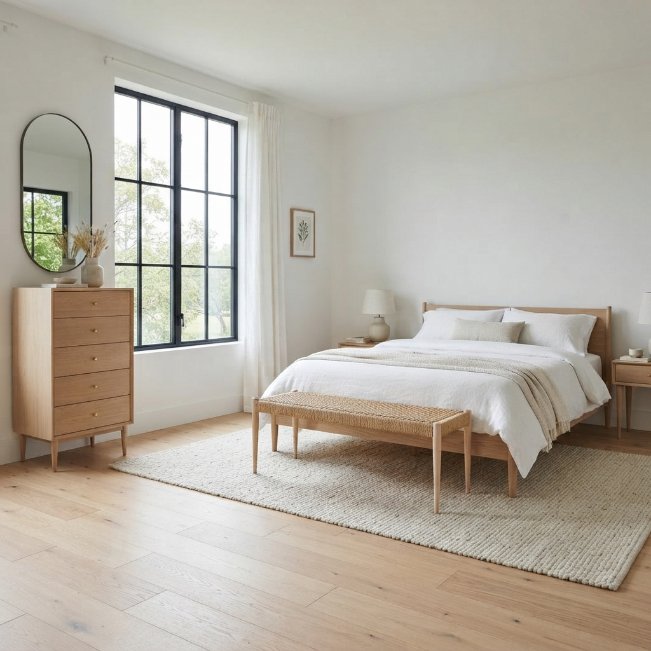
- Keeps the floor visible, which makes small rooms feel bigger
- Reduces visual bulk compared to heavy, boxy furniture
- Suits both modern and slightly traditional minimalist styles
- Easier to move and rearrange when needed
- A smart pick among minimalist bedroom ideas small spaces rely on
Furniture with a slim, tapered profile changes how a room feels almost instantly, especially in smaller bedrooms. Thin-legged dressers, narrow benches, and light-framed mirrors let floor space show through underneath and around them, which keeps the room visually open. This is one of the most effective minimalist bedroom ideas for small rooms because it reduces bulk without reducing storage or function. Heavy, boxy furniture tends to visually shrink a room, while slim silhouettes do the opposite. The difference becomes especially clear in bedrooms where floor space is already limited by the bed itself.
Choosing slim furniture also tends to make a room easier to live in day to day. I’ve noticed that lighter pieces are simpler to reposition when rearranging the room, which matters more than people expect in bedrooms that double as workspaces or reading nooks. Tapered wood legs in particular add a subtle mid-century warmth that pairs well with most neutral palettes. This idea works especially well combined with a platform bed and floating nightstands, since all three choices reinforce the same open, breathable feeling throughout the space.
Soft Ambient Lighting
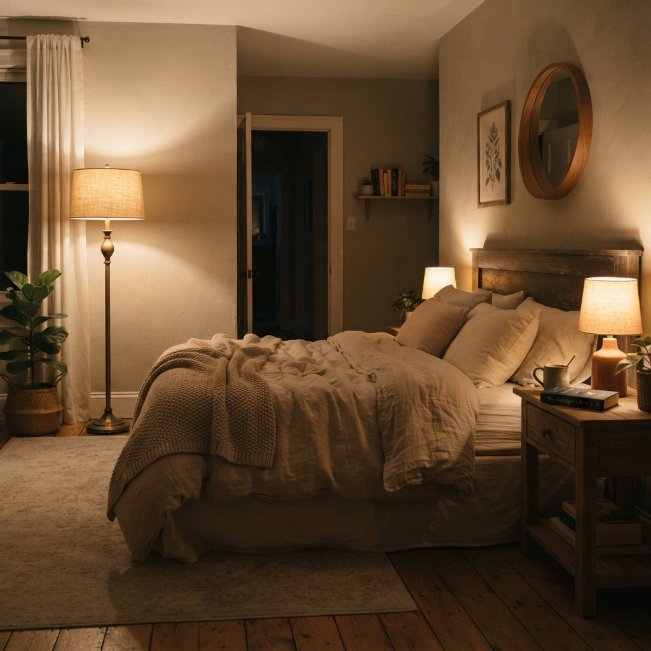
- Creates a calming atmosphere instead of harsh overhead light
- Makes the room feel cozy and intentional in the evening
- Easy and affordable to add without any renovation
- Supports better wind-down routines before sleep
- Enhances the mood of every other design choice in the room
Lighting shapes the mood of a bedroom more than almost any other single element, yet it’s often the last thing people think about. Swapping harsh overhead lighting for a warm floor lamp or a soft bedside lamp with a fabric shade instantly makes a minimalist bedroom feel calmer and more intentional. This is one of the easiest minimalist bedroom ideas to implement immediately, since it usually just requires the right lamp rather than any structural change. Warm, low lighting also photographs beautifully, which is part of why it’s such a popular detail across bedroom inspiration boards.
Beyond aesthetics, lighting quality genuinely affects how well a bedroom functions as a place to rest. I’ve seen this work well in many homes where simply removing overhead lighting from the nightly routine made the room feel more like a retreat and less like an office. Warm bulbs in the 2700K range tend to suit minimalist spaces best, since cooler light can feel clinical against soft neutral tones. Layering two or three small light sources, rather than relying on one bright fixture, gives the room flexibility for both daytime tasks and evening wind-down.
Minimal Wall Art
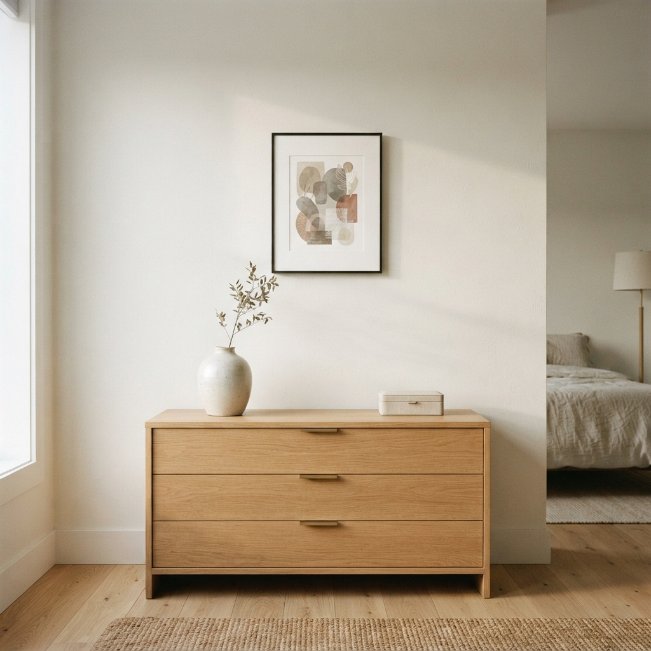
- Adds personality without overwhelming the calm color palette
- One well-placed piece has more impact than a full gallery wall
- Easy to switch out when the mood or season changes
- Keeps the eye focused rather than scattered across the room
- Works well above a dresser, bench, or empty wall space
Wall art in a minimalist bedroom works best when it’s treated as an accent, not a decorating strategy. One carefully chosen piece, in muted tones that echo the room’s palette, adds warmth and personality without disrupting the quiet visual balance the space depends on. This is one of the simplest minimalist bedroom decor ideas to get right, because restraint does most of the work. A single abstract print or a black-and-white photograph in a thin frame tends to feel more intentional than a cluster of smaller pieces, which can quickly start to feel busy in a small room.
Placement matters just as much as the artwork itself. In my experience, hanging one piece slightly off-center above a dresser or bench, rather than perfectly centered over the bed, gives the room a more natural, lived-in feel. It also avoids competing with the headboard wall as a focal point. Choosing a print with tones that echo the bedding or wood furniture ties the whole room together without adding a new color into the mix. Less really is more here, and that restraint is what keeps the space feeling calm.
Concealed Wardrobe Doors
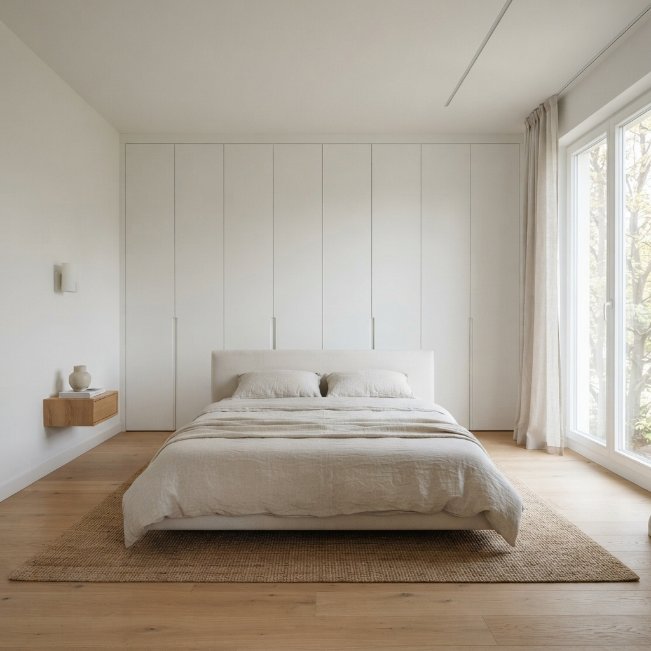
- Makes storage disappear visually instead of dominating the room
- Keeps the room’s lines clean and uninterrupted
- Ideal for smaller bedrooms where a bulky wardrobe feels heavy
- Creates a custom, built-in look even in rented spaces
- Supports a distraction-free, calm visual environment
Concealed wardrobe doors take hidden storage a step further by making an entire wall of storage nearly disappear. Flush panel doors, painted to match the surrounding wall and finished without visible handles, turn a wardrobe into part of the room’s architecture rather than a standalone piece of furniture. This is one of the more advanced minimalist bedroom design ideas, but it delivers one of the biggest visual payoffs. When storage blends into the wall itself, the room’s lines stay clean and uninterrupted, which is often the difference between a bedroom that feels curated and one that feels merely tidy.
This approach works particularly well in bedrooms where a traditional wardrobe would otherwise dominate the available wall space. That’s why many designers recommend push-to-open mechanisms or slim integrated handles, since they preserve the flush look while keeping the doors functional day to day. Matching the door color exactly to the wall paint is what sells the illusion, so it’s worth testing samples before committing. Even in rented homes, a lightweight paneled overlay can achieve a similar effect without permanent alterations to the existing wardrobe structure.
Low-Profile Rug Layering
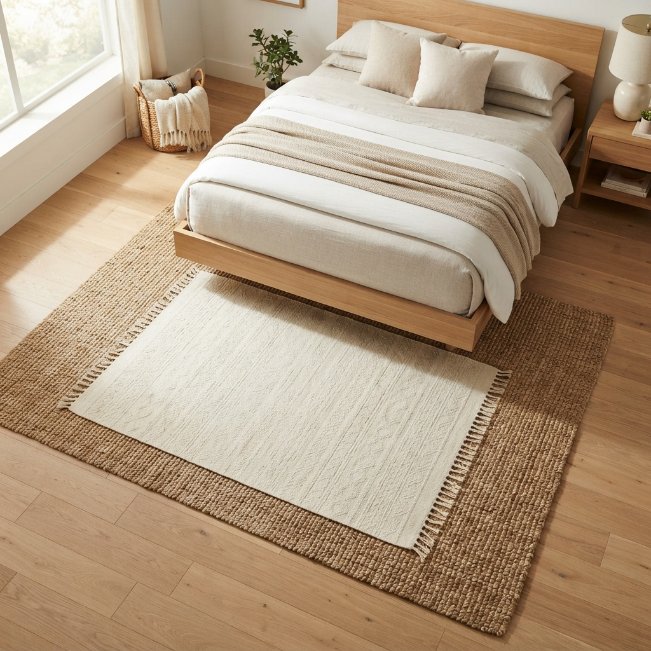
- Adds texture and warmth underfoot without heavy patterns
- Defines the bed area without needing extra furniture
- Softens the look of hard flooring in a subtle way
- Layering two neutral rugs adds depth without adding color
- Practical for cooler mornings while staying visually light
Rugs are often overlooked in bedroom design, but low-profile layering adds warmth and texture without weighing the room down visually. A natural jute rug topped with a smaller, softer flatweave in a related neutral tone creates dimension underfoot while still keeping the overall look light and airy. This is one of the more understated minimalist bedroom ideas for small rooms, since low-pile options don’t visually shrink the floor space the way thick, plush rugs can. It’s a small addition that makes a noticeable difference in how grounded and finished the room feels.
The trick is choosing rugs with similar tones so the layering feels cohesive rather than like two mismatched pieces. I’ve noticed that placing the rug at the foot of the bed, rather than fully underneath it, tends to work best in smaller layouts, since it defines the space without cutting off visible floor area elsewhere. Natural fibers like jute or sisal also bring texture that pairs naturally with wood furniture and linen bedding. It’s a finishing touch that ties the whole room together once the larger furniture pieces are already in place.
Muted Sage Color Scheme
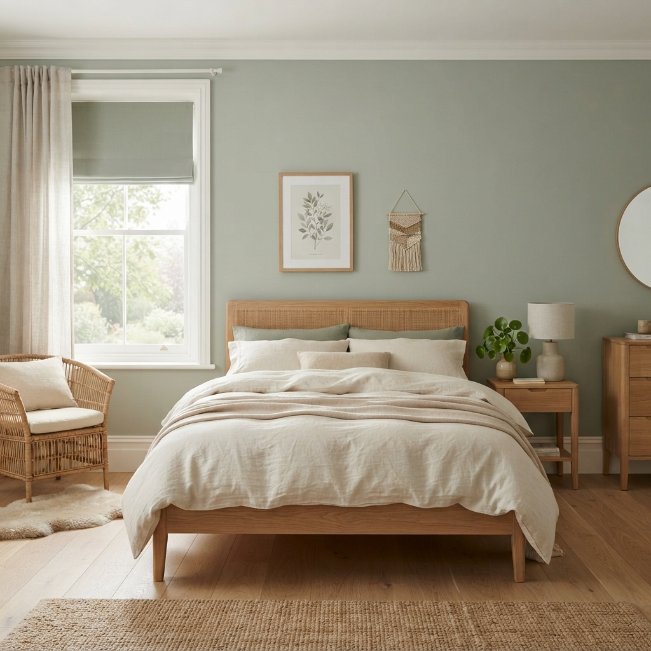
- Brings a soft touch of color without breaking the calm mood
- Pairs naturally with wood tones and warm neutrals
- Feels fresh and organic rather than sterile or stark
- A popular pick among minimalist bedroom ideas grey and green schemes alike
- Works well in bedrooms that get plenty of natural light
Muted sage green has become one of the most requested alternatives to an all-white or all-grey minimalist bedroom, and it’s easy to see why. The color reads as calm and grounded rather than bold, which keeps it fully in line with a minimalist bedroom ideas aesthetic while still adding personality. Paired with warm white trim and natural wood tones, sage creates a room that feels organic and softly cocooning. It’s a color that photographs beautifully in both bright daylight and warm evening lighting, which is part of why it continues to trend across bedroom inspiration boards season after season.
Choosing the right shade of sage matters more than people expect. In my experience, a more muted, greyed-down sage works better in minimalist spaces than a bright or saturated green, which can start to feel more like an accent color than a calm backdrop. Testing the paint at different times of day helps avoid surprises, since sage can shift depending on natural versus warm artificial light. Balancing it with plenty of white, cream, and light wood keeps the overall palette restrained, so the color feels intentional rather than overwhelming.
Built-In Window Bench
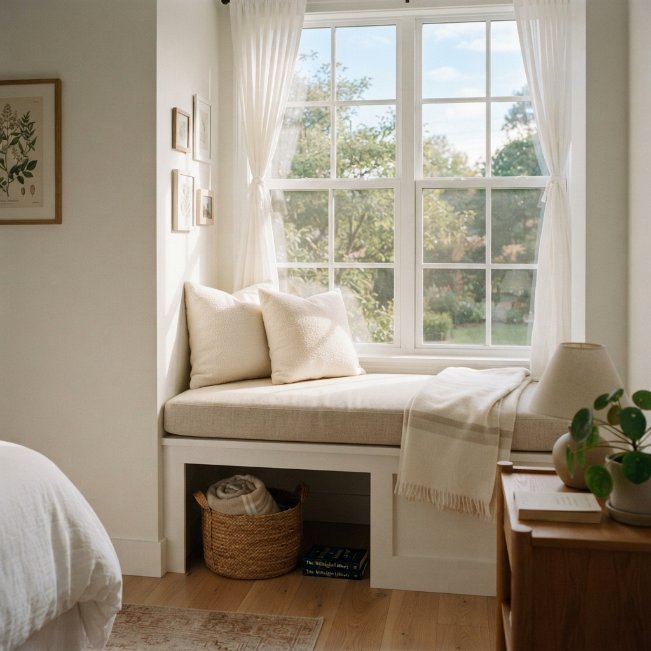
- Turns unused window space into a functional, cozy corner
- Adds seating without needing an extra chair or ottoman
- Often includes hidden storage underneath for extra function
- Creates a natural spot to unwind, read, or get dressed
- A smart addition for minimalist bedroom ideas for couples sharing space
A built-in window bench makes use of space that would otherwise sit empty, turning it into one of the most functional corners in the room. Upholstered in a soft, neutral linen and paired with a couple of simple cushions, the bench adds seating without introducing a bulky chair or extra furniture piece. This is one of the more space-savvy minimalist bedroom ideas for small rooms, since it works with the room’s existing architecture rather than competing with it. Many versions also include storage underneath, which quietly solves two problems, seating and storage, with a single built-in feature.
Beyond function, a window bench naturally becomes a favorite spot in the home once it’s added. I’ve seen this work well in many homes where the bench turned into the go-to place for morning coffee, reading, or simply pausing before the day starts. Keeping the cushions in the same neutral tone as the bedding ties the nook visually into the rest of the room, rather than making it feel like a separate zone. It’s a detail that adds real daily value while still supporting the room’s overall calm, uncluttered look.
Matte Black Accents
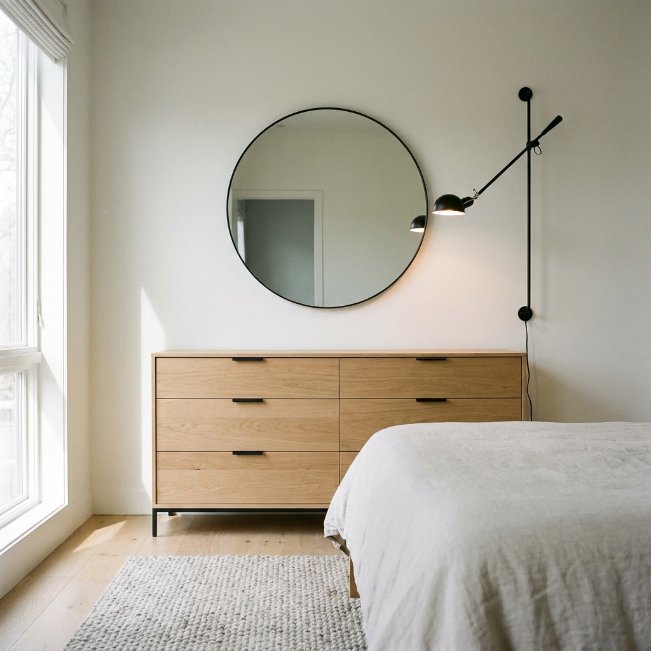
- Adds quiet contrast without disrupting the calm neutral palette
- Gives the room a slightly more modern, grounded edge
- Small hardware and fixture swaps are an easy, low-cost update
- Balances well against warm wood and soft white tones
- A favorite detail in minimalist bedroom ideas for men
Matte black accents introduce just enough contrast to keep a neutral bedroom from feeling flat, without pulling it away from a minimalist bedroom design ideas foundation. Small details, like cabinet hardware, a slim wall sconce, or a thin-framed mirror, add a grounded, slightly modern edge when paired against warm wood and soft white surfaces. Because the color is used sparingly and only in small doses, it never competes with the room’s overall calm mood. It’s a detail-level upgrade rather than a full design overhaul, which makes it one of the more approachable changes on this list.
This idea works particularly well for anyone who wants a slightly more masculine or modern feel without moving away from a neutral palette. That’s why many designers recommend starting with hardware and lighting fixtures first, since they’re the easiest and most affordable pieces to swap. A matte, rather than glossy, black finish keeps the look softer and more in line with the room’s relaxed mood. Even just two or three black accents, spaced out around the room, are usually enough to create a noticeable, cohesive contrast.
Curved Furniture Lines
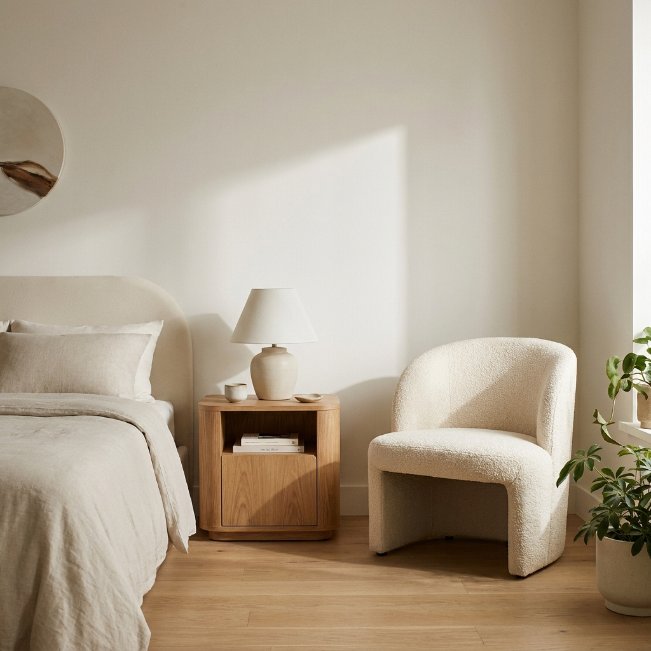
- Softens a room that might otherwise feel too sharp or clinical
- Adds visual interest through shape instead of color or pattern
- Feels organic and welcoming, especially in smaller spaces
- Pairs easily with existing neutral or wood-toned furniture
- A gentle way to add personality to minimalist bedroom ideas aesthetic spaces
Curved furniture has moved from trend to staple in minimalist interiors, and for good reason. A rounded nightstand or a curved-back chair softens a room’s overall geometry, balancing out the straight lines of a platform bed or paneled wardrobe. This is one of the more subtle minimalist bedroom decor ideas, since it works through shape rather than color or texture. The effect is a room that feels calm and organic instead of rigid or overly architectural. Even one curved piece can shift the entire mood of a space, especially when everything else in the room follows straight, clean lines.
Introducing curves doesn’t mean abandoning the minimalist structure already in place. In my experience, one curved accent piece, paired with mostly straight-lined furniture, creates the most balanced result. Too many rounded shapes can start to feel busy, while too few can leave a room feeling stiff. A boucle-upholstered chair or a rounded-edge nightstand are both easy entry points if a full furniture change isn’t practical. This idea pairs especially well with warm wood accents, since both soften a space in complementary ways.
Ceiling-Height Curtains
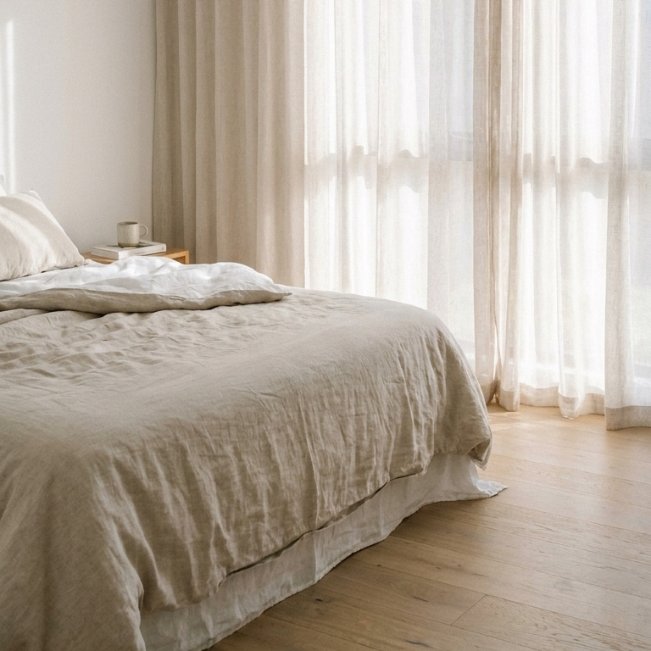
- Makes ceilings appear taller than they actually are
- Softens natural light instead of blocking it completely
- Adds a subtle sense of luxury without extra furniture
- Works in nearly any minimalist bedroom ideas for small rooms setup
- Simple curtain rod placement change delivers a big visual result
Hanging curtains as close to the ceiling as possible, rather than directly above the window frame, is a small trick that makes a noticeable difference in how tall a room feels. This detail is often missing from otherwise well-designed minimalist bedrooms, yet it’s one of the easiest and most affordable ways to elevate the space. Sheer linen panels in particular soften incoming daylight without blocking it, keeping the room bright while adding a gentle layer of texture. It’s a low-cost adjustment that makes the entire room feel more considered, simply by shifting where the hardware sits on the wall.
The height difference this creates is more dramatic than most people expect before trying it. I’ve noticed that even a few extra inches between the rod and the window frame elongates the wall visually, which matters most in bedrooms with standard or lower ceiling heights. Choosing a curtain length that just grazes the floor, rather than pooling or hovering above it, keeps the look clean and intentional. Combined with sheer, light-colored fabric, this small styling choice supports the airy, open feeling that defines the best minimalist bedroom ideas.
Nightstand Styling Rule
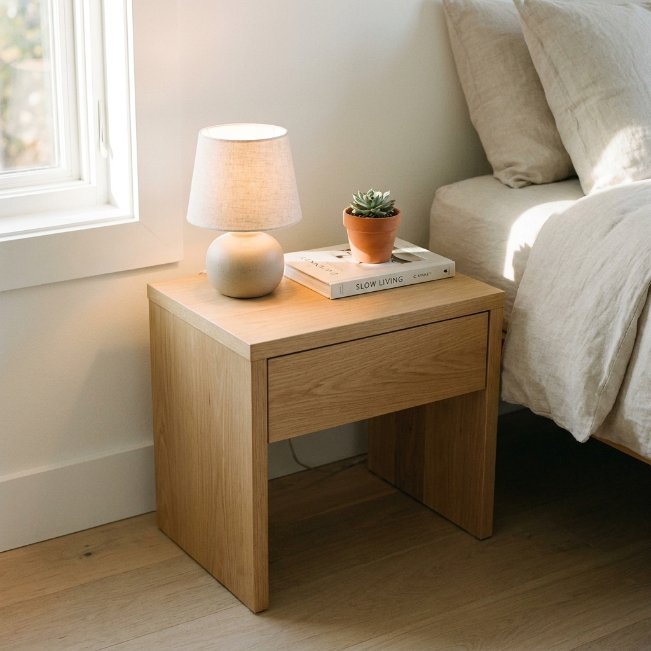
- Prevents nightstands from becoming a catch-all surface
- Keeps the room feeling calm even during busy weeks
- Easy habit to maintain once the limit is set
- Small styling rule that supports the whole room’s minimalist goal
- Works for any minimalist bedroom ideas for teens or adults alike
Nightstands are one of the fastest surfaces to collect clutter in any bedroom, which makes a simple styling rule genuinely useful. Limiting each nightstand to a small, fixed number of items, like a lamp, a book, and one small object, keeps the surface intentional rather than accidental. This is less of a design idea and more of a maintenance habit, but it has a real impact on how calm the room feels day to day. A styled nightstand also tends to encourage better habits elsewhere in the room, since it sets a visual standard for what “tidy” looks like.
This rule is especially useful in households where nightstands tend to accumulate chargers, tissues, and loose items over the course of a week. I’ve seen this work well in many homes simply by giving each item on the nightstand an assigned “away” spot, like a small drawer or basket, so surfaces reset quickly. It’s a detail that costs nothing to implement but makes a lasting difference in how put-together the room feels. Pairing this habit with a floating or slim nightstand only reinforces the effect further.
Woven Natural Textures
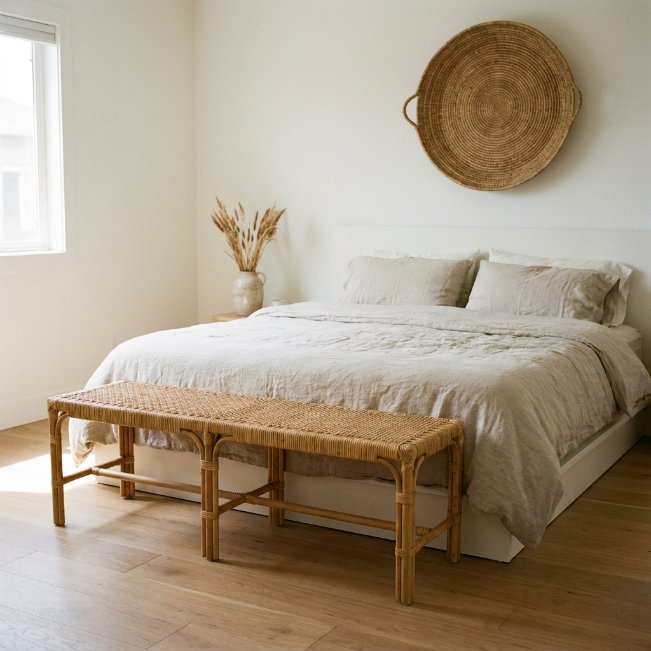
- Adds organic texture without introducing new colors
- Brings warmth to spaces that feel too smooth or flat
- Works well as wall decor, seating, or small storage baskets
- Pairs naturally with wood tones and neutral bedding
- Suits minimalist bedroom ideas for ladies and gender-neutral spaces alike
Woven natural textures, like rattan, jute, or seagrass, bring a tactile, organic quality into a minimalist bedroom without disrupting its restrained color palette. A woven bench at the foot of the bed or a simple woven basket used as wall decor adds visual warmth in a way that flat, smooth surfaces can’t achieve on their own. This is one of the easier minimalist bedroom decor ideas to layer in gradually, since even one or two pieces make a noticeable difference. The natural imperfections in woven materials also add a handmade quality that keeps the room from feeling too polished or impersonal.
These textures work especially well in rooms that lean heavily on whites, creams, and light wood tones, since the added texture prevents the space from feeling flat. In my experience, using woven pieces as functional items, like a bench, basket, or pendant shade, gets more visual and practical value than using them purely as decoration. It’s worth choosing pieces with a similar fiber tone so they read as part of the same design story rather than random additions. This detail brings the room’s earthy, grounded side forward.
Under-Bed Lighting
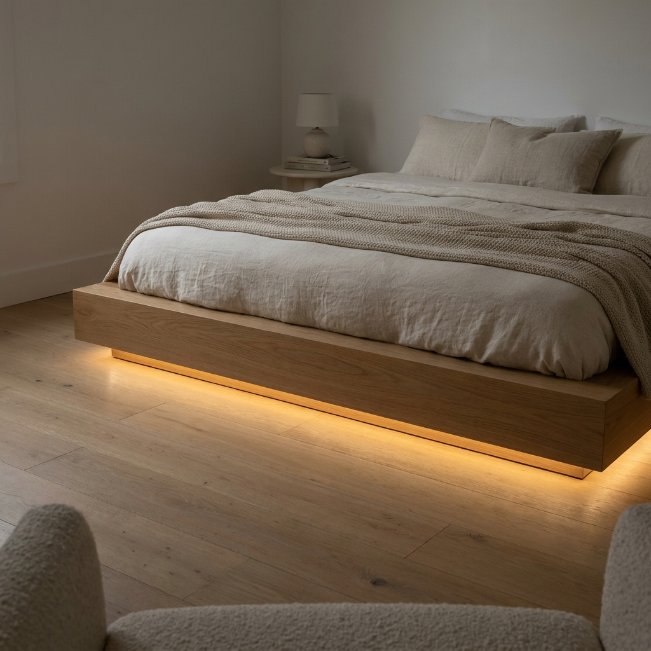
- Creates a soft, floating effect that makes the bed feel lighter
- Adds a modern touch without requiring any major renovation
- Useful as gentle night lighting without a harsh overhead switch
- Simple to install on most platform bed frames
- A subtle upgrade among modern minimalist bedroom ideas worth trying
Under-bed lighting is a small addition that delivers a surprisingly large visual effect, especially with a low platform frame. A warm LED strip tucked beneath the bed creates a soft glow that makes the entire frame appear to float slightly above the floor. This is one of the more modern minimalist bedroom ideas on this list, and it’s also one of the easiest to install without any structural changes. Beyond the visual appeal, the soft glow works well as gentle nighttime lighting, offering just enough visibility without the harshness of a bedside lamp or overhead light.
Choosing a warm color temperature is what keeps this detail feeling cozy rather than futuristic or cold. I’ve noticed that a soft warm white, rather than a cool white or colored light, blends more naturally into a minimalist bedroom’s overall calm mood. Most LED strips are simple to install along the underside of the frame and can be controlled with a small remote or app. It’s a detail that photographs beautifully and adds a quiet sense of modern comfort to a space that already relies on clean, simple lines.
Grid-Style Shelving
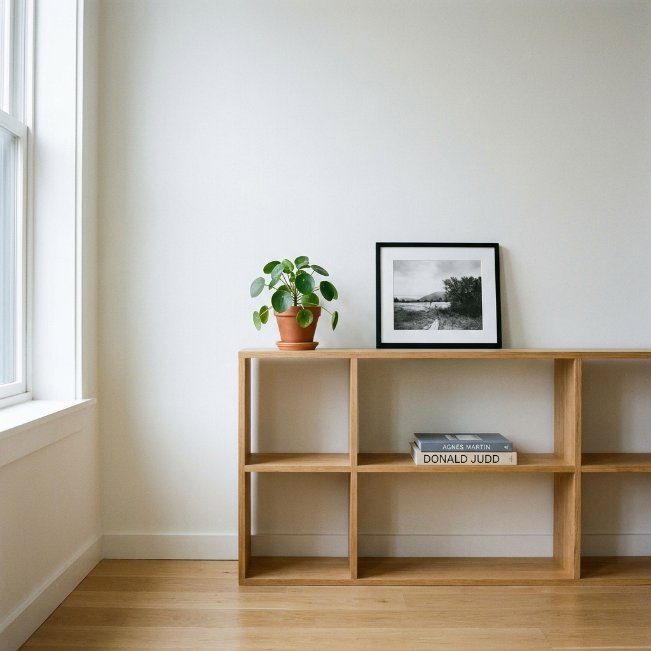
- Provides display space without needing bulky furniture
- Geometric lines add subtle structure to a plain wall
- Encourages sparse, intentional styling by design
- Works well as a headboard alternative or accent wall feature
- A flexible option among minimalist bedroom ideas grey or neutral palettes
A grid-style shelving unit gives a plain wall purpose and structure without adding bulk to the room. The simple geometric lines of the shelves add a subtle architectural detail, while the open design keeps the wall from feeling heavy or crowded. This is one of the more versatile minimalist bedroom ideas for small rooms, since it can double as a headboard alternative, a display area, or light storage, depending on how it’s styled. Because the grid format naturally limits how much can be displayed at once, it also encourages the kind of sparse, intentional styling that defines the minimalist look.
The key to making this idea work is resisting the urge to fill every square of the grid. I’ve seen this work well in many homes where only about half the openings were used, leaving the rest empty on purpose to preserve the calm, uncluttered feel. Sticking to a consistent color story, like all-natural wood tones or all-white ceramics, across the displayed items keeps the shelving from looking scattered. It’s a striking yet simple feature that adds personality without ever feeling busy.
Everyday Clutter-Free Habit
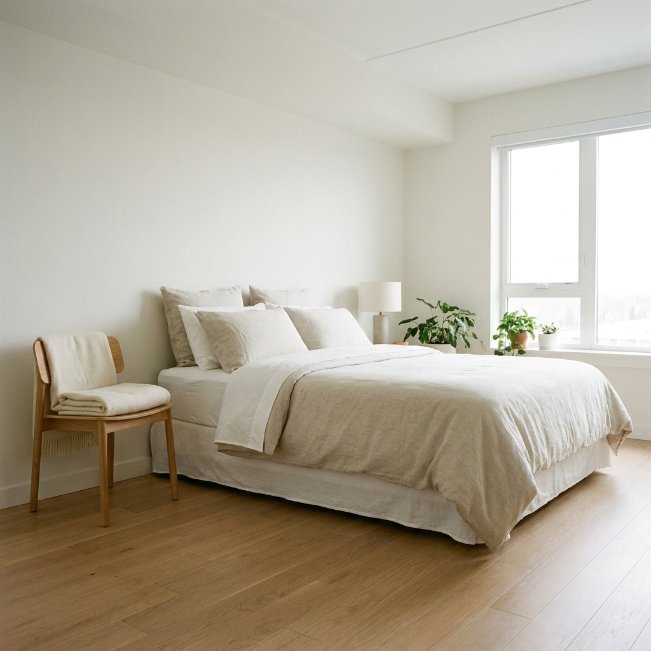
- Ties every other idea together into one consistent daily result
- Requires no purchase, just a small shift in daily habits
- Keeps the room feeling calm even without new furniture or decor
- Makes maintaining a minimalist look far easier long-term
- The final, most important piece of any minimalist bedroom setup
No design choice matters more than the daily habit of keeping surfaces clear, and it’s the one idea on this list that costs nothing to try. Making the bed each morning, clearing the floor of stray items, and returning things to their designated spot takes only a few minutes but has an outsized effect on how calm the room feels all day. This habit is really the foundation underneath every other minimalist bedroom ideas featured here, since even the best-designed room can feel cluttered without it. The design does the visual work, but the habit is what keeps that work visible.
Building this habit doesn’t require a strict routine, just a small, repeatable pattern. That’s why many designers recommend a short “reset” each morning or evening, rather than one big cleaning session each week, since small consistent effort is easier to maintain long-term. Once the room’s furniture and storage are already working in favor of a tidy look, as covered throughout this article, keeping it that way becomes noticeably easier. This final habit is what turns a well-designed bedroom into a genuinely calm, livable space every single day.
Conclusion:
A calmer bedroom doesn’t require a full renovation, just a few intentional choices. From a low platform bed to a simple nightstand styling rule, these minimalist bedroom ideas prove that small, thoughtful changes add up to a space that genuinely feels restful. I’ve seen how even one or two updates, like better lighting or hidden storage, can shift the entire mood of a room. Pick the ideas that speak to you most, try them in your own space, and don’t be afraid to make it your own. Save this post to Pinterest for later, and share it with anyone ready to simplify their bedroom too.