
22 Trendy Kitchen Flooring Ideas That Are Worth Trying
Introduction:
Your floor sets the tone for your entire kitchen, so why settle for something ordinary? Whether you’re planning a full renovation or simply dreaming for later, kitchen flooring can completely change how a space feels underfoot and at first glance. This article walks through 22 fresh, practical ideas that blend real style with everyday durability, from bold patterned tile to warm wood-look vinyl. In my experience, homeowners often underestimate how much the floor influences a kitchen’s overall mood until they see it done well. Each idea here is designed to inspire your next project while staying realistic about budget, maintenance, and daily family life. If you’re gathering inspiration for a Pinterest board or planning an actual renovation, you’ll find plenty here worth saving.
Herringbone Wood-Look Tile
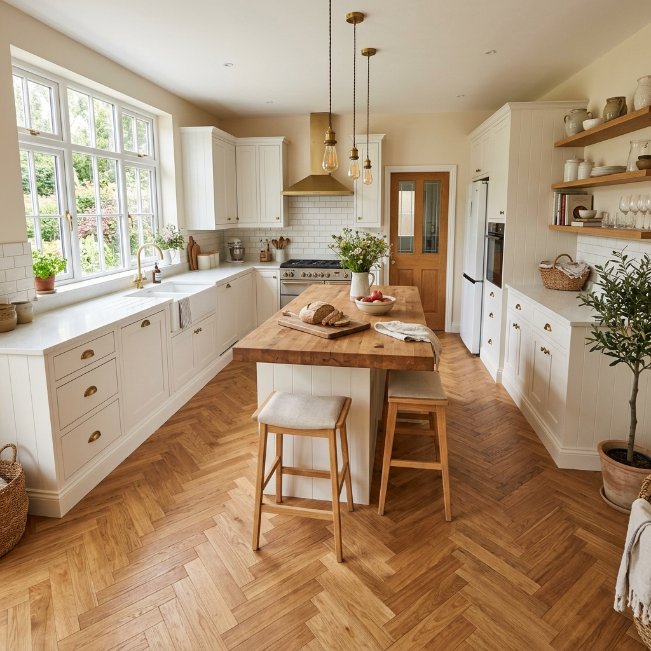
- Adds instant texture and movement to an otherwise flat floor
- Works beautifully with both modern and traditional kitchen styles
- Wood-look tile gives real hardwood charm without the maintenance worry
- Pattern draws the eye and makes small kitchens feel larger
- Pairs well with light cabinetry for a bright, airy feel
Herringbone patterns have quietly taken over kitchen renovations, and it’s easy to see why. This layout turns simple wood-look planks into a design statement, adding depth and rhythm to the floor. In my experience, this pattern works especially well in galley-style kitchens, where the diagonal lines visually widen the space. Unlike plain plank flooring, herringbone catches light differently at each angle, creating subtle contrast throughout the day. It’s a detail that photographs beautifully too, which is part of why it performs so well on Pinterest boards focused on kitchen flooring ideas and timeless design inspiration.
What makes this option practical is the material underneath the pattern. Most herringbone layouts today use porcelain or luxury vinyl, so homeowners get the classic look without worrying about water damage or scratches. I’ve noticed families with kids and pets gravitate toward this choice because it holds up to daily wear while still looking elevated. It’s a smart middle ground between style and durability. If your kitchen leans traditional, warm oak tones soften the space. For a more contemporary feel, a gray-washed herringbone tile creates a cleaner, more modern contrast against white or navy cabinetry.
Checkerboard Vinyl Floor
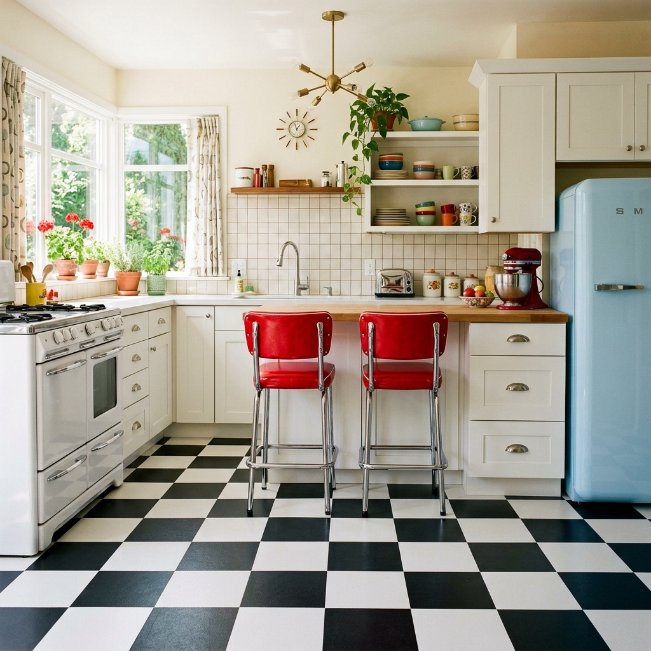
- Brings playful, nostalgic charm without feeling outdated
- Vinyl makes the bold pattern budget-friendly and easy to install
- High contrast pattern hides everyday dirt and scuff marks well
- Instantly recognizable style that photographs well for social sharing
- Works in both retro and modern farmhouse kitchen themes
Few patterns feel as timeless as a checkerboard floor, and it’s making a strong comeback in kitchen design. This look pairs a classic black-and-white grid with a fresh, modern twist, giving the space personality without overwhelming it. Vinyl flooring makes this idea especially approachable, since it’s more affordable and easier to install than tile. I’ve seen this work well in smaller kitchens, where the graphic pattern becomes the focal point rather than relying on bold cabinetry or wallpaper. It’s a simple way to add character while keeping the rest of the room calm and cohesive.
Beyond the visual appeal, checkerboard flooring genuinely holds up in busy households. The alternating light and dark squares do an excellent job of camouflaging crumbs, footprints, and minor spills between cleanings. That’s why many designers recommend this pattern for family kitchens where the floor sees heavy daily traffic. You can also soften the classic black-and-white version with muted tones like cream and sage, or navy and white, for a subtler take. Either way, this idea brings a sense of movement and rhythm to the kitchen while staying practical, low-maintenance, and easy to coordinate with existing decor.
Large-Format Stone Tiles
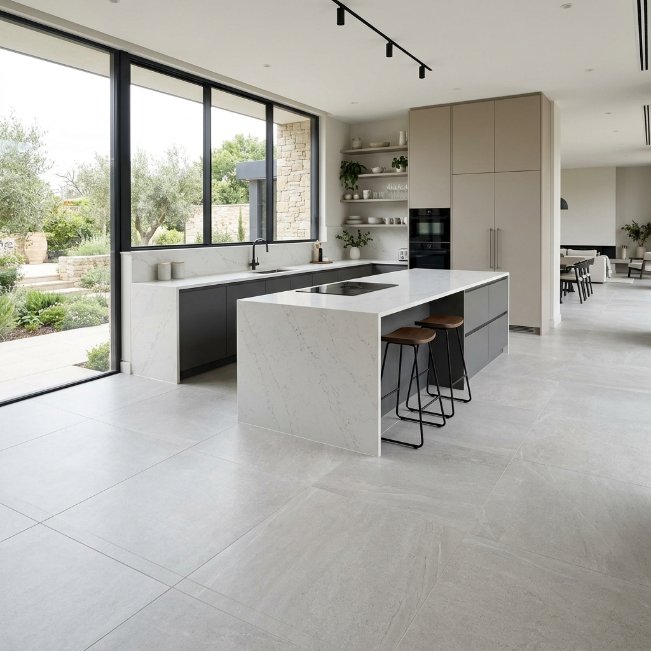
- Fewer grout lines mean a cleaner, more seamless overall look
- Large tiles visually expand small or narrow kitchen layouts
- Stone-look finish adds a high-end feel without natural stone cost
- Easier to clean thanks to minimal seams and grout lines
- Creates a calm, uncluttered foundation for busy kitchen decor
Large-format tiles have become a favorite among homeowners chasing that seamless, luxury showroom look. By minimizing grout lines, this flooring choice creates a smoother visual flow that makes the entire kitchen feel more spacious and polished. In my experience, this works especially well in open-concept homes, where the flooring often continues into the dining or living area. The oversized scale keeps the eye moving instead of getting caught on repetitive grid patterns, giving the space a calmer, more grown-up feel that still photographs beautifully for kitchen flooring ideas boards.
Practicality is just as strong here as the aesthetics. Fewer grout lines mean less scrubbing, which is a real win for anyone who has dealt with stained or discolored grout over the years. I’ve noticed this option holds up particularly well in high-traffic kitchens, since the tiles resist chipping and show less wear over time. While natural stone can be costly and porous, today’s porcelain versions replicate the look convincingly at a fraction of the price. It’s a smart upgrade for anyone wanting a refined, modern finish that stays low-maintenance for years to come.
Bold Geometric Tile
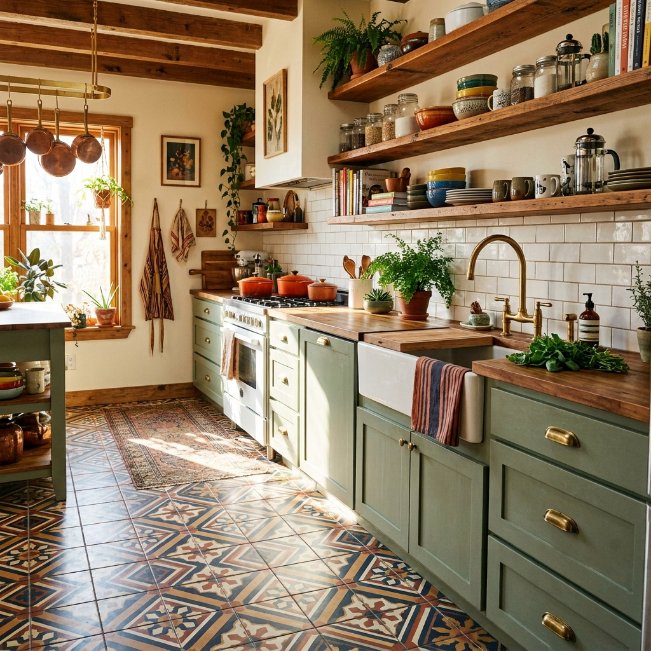
- Adds personality and color without changing wall paint or cabinetry
- Pattern draws attention downward, creating a unique focal point
- Works well as an accent in entryways or kitchen islands
- Encaustic-style designs feel artisanal and collected, not mass-produced
- Balances neutral kitchens with a pop of pattern and warmth
Bold geometric tile is one of the fastest ways to give a kitchen a completely different personality. Instead of relying on paint colors or statement lighting, the floor itself becomes the design anchor. This approach works particularly well in kitchens with simple white or wood cabinetry, since the pattern has room to stand out without competing with other elements. I’ve noticed homeowners often use this idea in smaller zones first, like a breakfast nook or the area in front of the sink, as a lower-commitment way to test bold pattern before flooring the whole kitchen.
What makes this trend last beyond a passing moment is its artisanal feel. Many geometric tile designs are inspired by traditional Mediterranean or Moroccan patterns, giving the kitchen a sense of history and craftsmanship. That’s why many designers recommend pairing these tiles with simple, unfussy cabinetry, letting the floor do the visual work. Today’s printed porcelain versions replicate the look of hand-painted cement tile at a much lower cost and with far easier maintenance. It’s a confident choice that adds warmth, texture, and character to kitchens that might otherwise feel a little too plain or predictable.
Warm Oak Plank Flooring
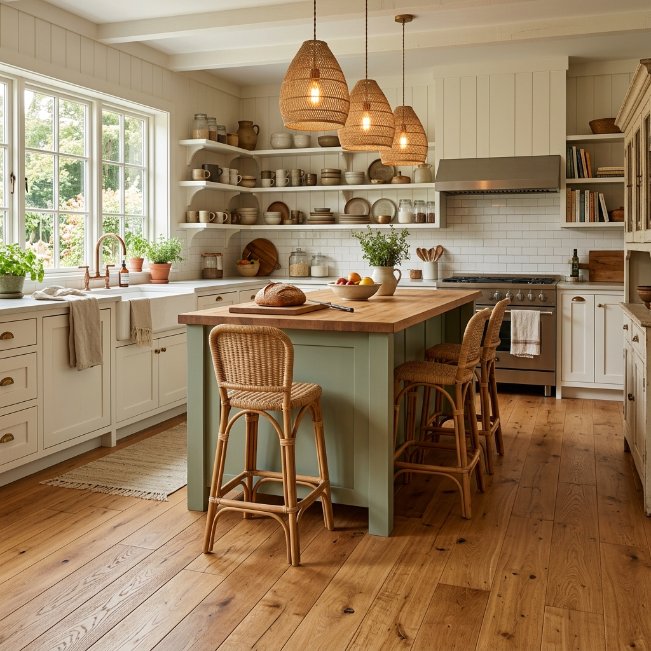
- Creates a warm, welcoming feel that suits nearly any kitchen style
- Wide planks make the room feel larger and more grounded
- Wood tones soften hard surfaces like stone counters and metal fixtures
- Easy to coordinate with both light and dark cabinetry
- Adds a cohesive, natural flow when matched with adjoining rooms
Warm oak plank flooring remains one of the most requested looks for kitchens, and for good reason. The natural grain and honey undertones bring instant warmth to a room that can otherwise feel cold, especially when paired with stone countertops or stainless steel appliances. I’ve seen this work well in open floor plans, where continuing the same wood tone from the living area into the kitchen creates a smooth, connected feel throughout the home. It softens the transition between spaces and avoids the choppy, segmented look that mismatched flooring often creates.
Durability is a real consideration here, and today’s options make this easier than ever. Engineered wood and wood-look luxury vinyl both offer the same cozy appearance with much better resistance to moisture and scratching. In my experience, this matters most directly in front of the sink and stove, where spills happen most often. Wider planks, typically five to seven inches, also reduce the number of visible seams, giving the floor a more expansive, high-end appearance. It’s a flooring choice that feels timeless rather than trendy, which is part of its lasting appeal.
Two-Tone Tile Border
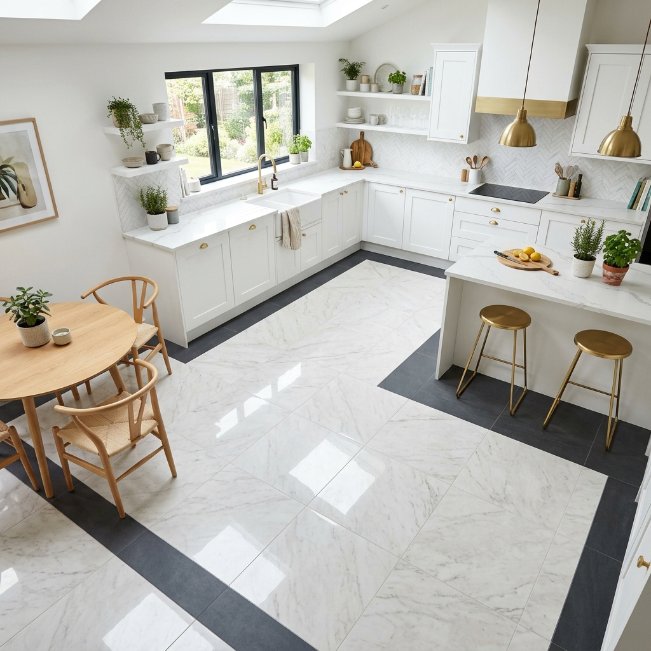
- Frames the kitchen space with a subtle, tailored design detail
- Adds visual interest without introducing a busy overall pattern
- Border can match cabinet hardware or accent colors in the room
- Creates a custom, designer feel at a relatively low added cost
- Works especially well in open-concept kitchens needing defined boundaries
A two-tone tile border is a subtle detail that makes a noticeable difference. Instead of covering the whole floor in one continuous pattern, this idea uses a contrasting trim to outline the kitchen’s edges, almost like a picture frame for the room. It’s a favorite among homeowners with open-concept layouts, since the border naturally defines where the kitchen ends and the living or dining space begins, without needing a wall or step to separate them. This small design choice adds a tailored, intentional feel that reads as custom-designed rather than builder-basic.
I’ve noticed this idea works especially well when the border color echoes another element in the room, like dark hardware, window frames, or a kitchen island. That repetition ties the whole space together in a way that feels cohesive rather than accidental. Cost-wise, this upgrade is more approachable than people expect, since only the perimeter tiles require the contrasting material. It’s a great option for anyone wanting a designer-level detail without a full flooring overhaul, and it consistently performs well on kitchen flooring ideas boards because of its clean, photogenic structure.
Marble-Look Porcelain
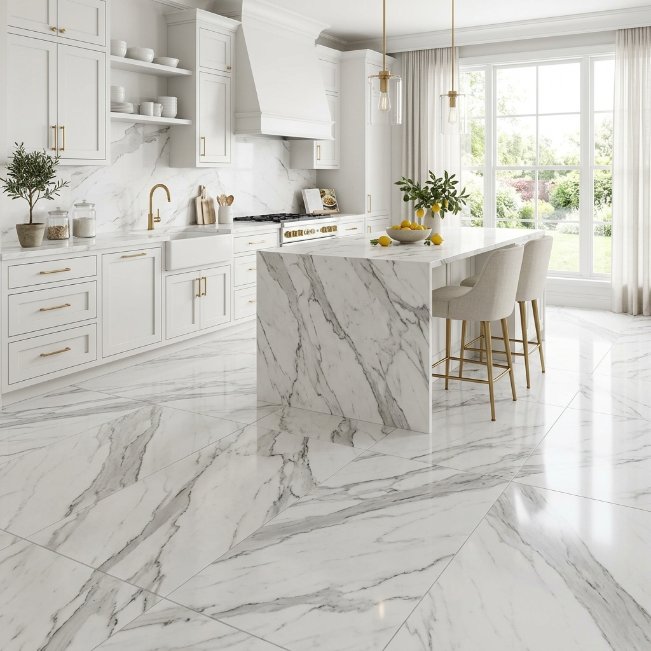
- Delivers a luxury marble look without staining or etching concerns
- Veining pattern adds movement and softness to plain white kitchens
- Pairs beautifully with matching marble-look countertops for a cohesive feel
- Far more scratch and stain resistant than natural marble slabs
- Budget-friendly alternative that still feels high-end and elevated
Marble-look porcelain has become the go-to alternative for homeowners who love the elevated look of natural stone but not the upkeep it demands. This flooring replicates the soft veining and cool tones of real marble while standing up far better to daily kitchen life. I’ve seen this work well in kitchens aiming for that bright, timeless, all-white aesthetic, since the subtle gray veining keeps the space from feeling flat or sterile. It adds just enough movement and depth to catch the eye without pulling attention away from the room’s other design elements.
The practical side of this choice is what keeps it popular year after year. Natural marble is porous and prone to staining from acidic spills like wine or lemon juice, which is a real concern in a kitchen. Porcelain versions eliminate that worry entirely while still delivering the same refined appearance. In my experience, this makes it a favorite for resale-focused renovations, since buyers respond strongly to marble aesthetics but appreciate the lower maintenance reality. It’s an idea that photographs beautifully and holds up just as well in everyday use.
Concrete-Style Flooring
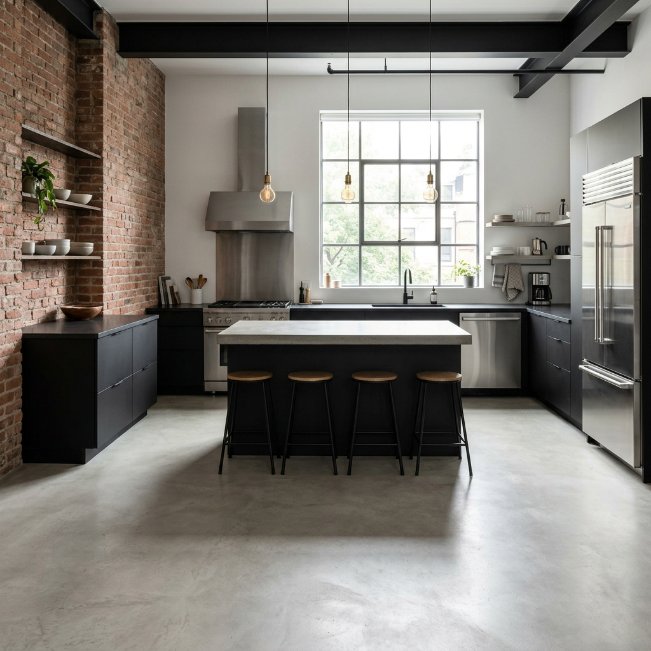
- Gives kitchens a sleek, modern, loft-inspired atmosphere
- Seamless surface makes cleaning spills and crumbs effortless
- Neutral gray tone pairs well with almost any cabinet color
- Works especially well in industrial, modern, or minimalist kitchen styles
- Cooler tone balances out warm wood or brass accents nicely
Concrete-style flooring brings an understated, architectural quality to kitchens that lean modern or industrial. The smooth, matte surface creates a clean visual base that lets other design elements, like open shelving or statement lighting, take center stage. I’ve noticed this option works particularly well in homes with an open floor plan connecting the kitchen to a living or workspace area, since the flooring reads as intentional and cohesive rather than segmented. It’s a look that feels calm and grounded, especially when paired with warmer textures like wood shelving or woven light fixtures.
Homeowners are often surprised to learn that most concrete-style kitchen floors today are actually polished porcelain or vinyl, not real poured concrete. This makes installation far simpler and avoids the cracking or sealing issues that come with actual concrete. That’s why many designers recommend it as an accessible way to achieve an industrial aesthetic without the structural commitment. The surface is also remarkably easy to maintain, resisting stains and showing minimal wear even in high-traffic kitchens, which makes it a practical option for busy households.
Terracotta Tile Accent
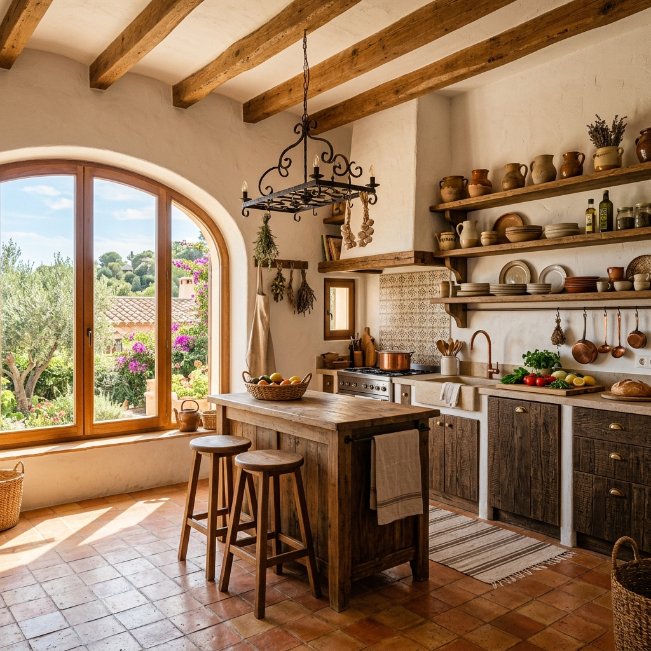
- Brings warm, earthy character to kitchens with neutral or white palettes
- Terracotta tones pair beautifully with wood, rattan, and greenery
- Adds a sun-washed, Mediterranean warmth that feels inviting year-round
- Textured tile surface hides minor scuffs and everyday wear well
- Creates a strong visual identity that stands out on style boards
Terracotta tile brings a sense of warmth and history that few other flooring options can match. Its earthy, sun-baked tones instantly evoke a Mediterranean or Spanish-inspired kitchen, even in homes that don’t otherwise lean into that style. In my experience, this idea works best when balanced with plenty of white or neutral wall space, allowing the floor’s rich color to stand out without overwhelming the room. Paired with natural materials like wood shelving, woven baskets, or greenery, terracotta creates a warm, lived-in feel that photographs beautifully for kitchen flooring ideas inspiration.
Beyond its visual charm, terracotta tile is naturally durable and has been used in kitchens for centuries, which speaks to its long-term reliability. The slightly textured, matte surface does a great job of hiding small scuffs and footprints between cleanings, a detail I’ve seen appreciated most in busy family kitchens. While sealing is recommended to protect against staining, the maintenance routine is straightforward once established. This flooring choice offers something increasingly rare: a look that feels collected and authentic rather than mass-produced or overly polished.
Herringbone Vinyl Planks
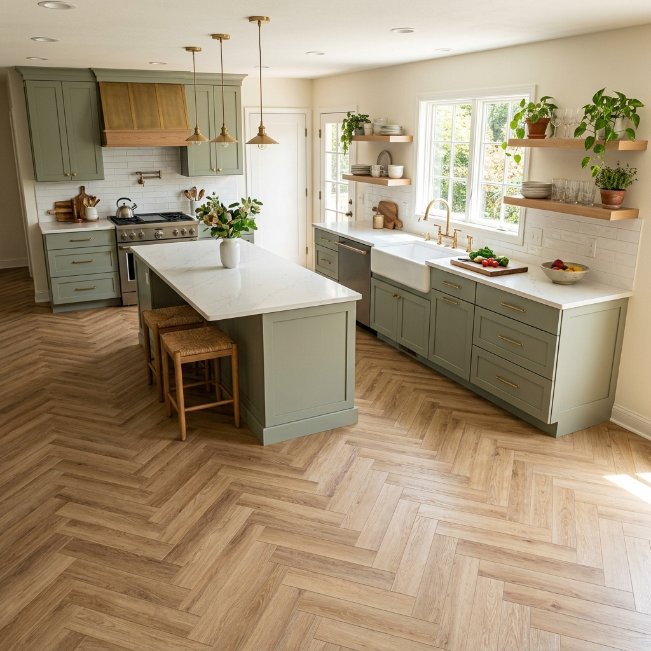
- Delivers the herringbone look at a fraction of the cost of tile
- Vinyl planks resist water damage better than real hardwood
- Click-lock installation makes this idea more DIY-friendly than tile
- Softer underfoot feel than stone or ceramic alternatives
- Pattern adds designer detail without a full flooring budget
Herringbone vinyl plank flooring gives homeowners a way to get the high-end pattern look without the high-end price tag. Unlike solid wood or tile herringbone, which often requires professional installation, many vinyl plank systems use a simple click-lock design that’s approachable for a confident DIYer. I’ve seen this work well for kitchen refreshes on a tighter timeline, since installation moves faster than traditional tile setting and doesn’t require grout curing time. It’s a practical way to add that sought-after pattern detail to kitchen flooring ideas boards without stretching a renovation budget too thin.
Beyond affordability, vinyl brings genuine functional advantages to a kitchen setting. It’s naturally more water-resistant than hardwood, which matters near sinks, dishwashers, and refrigerators where moisture is a constant. In my experience, this makes it a smart pick for households with young kids or pets, where spills and splashes happen often. The softer surface is also easier on the feet and joints during long cooking sessions compared to tile or stone. It’s a flooring idea that balances style, comfort, and practicality in a way that suits everyday family life.
Statement Runner Rug Look
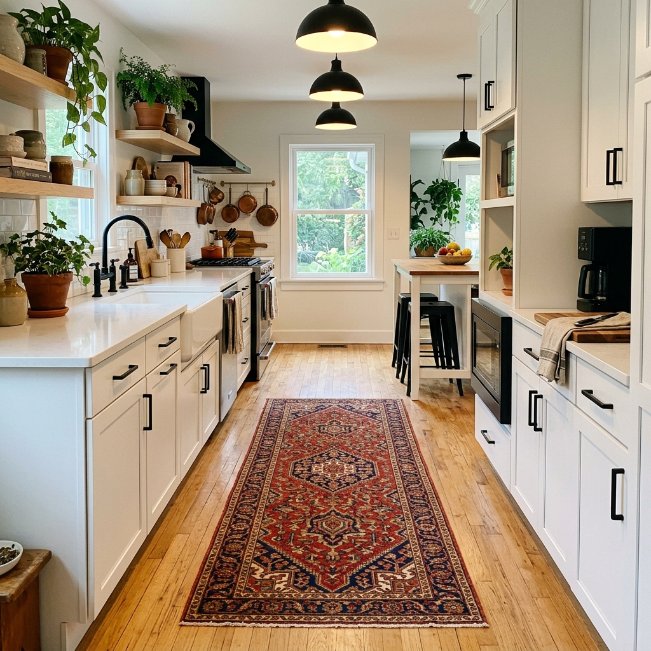
- Layers pattern and color over a neutral floor without permanent changes
- Runner rugs add softness and comfort underfoot near the sink
- Easy to swap out for seasonal or style updates over time
- Bold patterns hide minor spills and daily wear effectively
- Budget-friendly way to test new colors before a full flooring change
A statement runner rug is one of the simplest ways to transform how a kitchen floor feels, without touching the flooring itself. Placed in front of the sink or stove, a bold patterned runner adds color, texture, and visual interest to an otherwise neutral space. I’ve noticed this idea works especially well for renters or anyone hesitant to commit to permanent flooring changes, since it delivers major visual impact with zero installation required. It’s also one of the most Pinterest-friendly upgrades, offering an easy before-and-after transformation that photographs well from almost any angle.
Practicality plays a big role in why this idea has staying power. A good runner adds cushioning underfoot, which makes a real difference during long stretches of cooking or dishwashing. That’s why many designers recommend choosing a low-pile, machine-washable rug for kitchen use, since it needs to handle spills and frequent cleaning. Layering a runner over wood, tile, or vinyl flooring also lets homeowners experiment with pattern and color seasonally, refreshing the whole room’s mood without any renovation cost or long-term commitment involved.
Diagonal Tile Layout
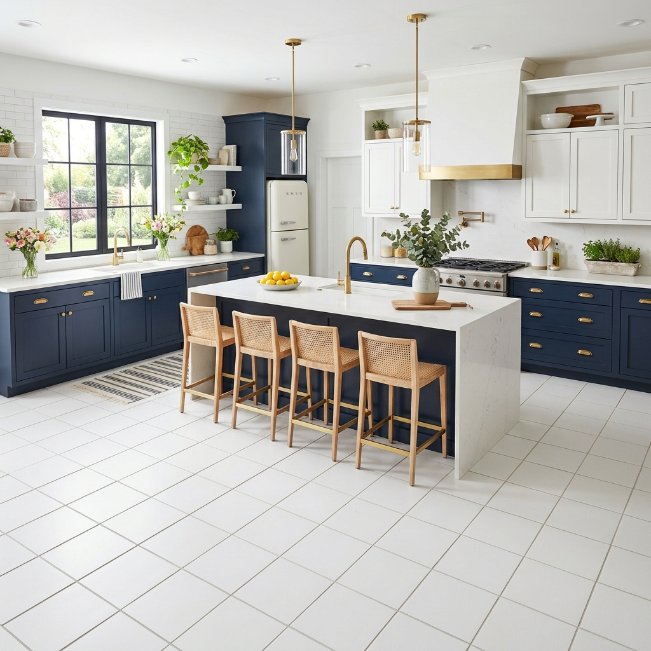
- Diagonal layout visually widens narrow or awkwardly shaped kitchens
- Draws the eye toward the room’s longest sightline naturally
- Same tile, different installation angle creates a custom feel
- Minimizes the appearance of uneven or off-square walls
- Works especially well in galley or narrow kitchen footprints
A diagonal tile layout is a clever installation trick that changes how a kitchen feels without changing the tile itself. By angling the same square or rectangular tiles at forty-five degrees, the floor visually stretches the room, making narrow or boxy kitchens feel noticeably more open. I’ve seen this work particularly well in galley kitchens, where the diagonal lines pull the eye toward the far wall, creating a sense of length that a straight layout simply doesn’t achieve. It’s a subtle but effective idea that costs little extra beyond standard installation labor.
This layout also does a helpful job of disguising minor structural imperfections. In my experience, many older homes have walls that aren’t perfectly square, and a diagonal pattern is far more forgiving of these irregularities than a straight grid, which tends to highlight every uneven edge. Installers do typically charge slightly more for the extra cuts involved, but the visual payoff is often worth it. This idea works with nearly any tile style, from classic white porcelain to bold patterned options, making it a flexible upgrade for almost any kitchen flooring project.
Black and White Tile Mix
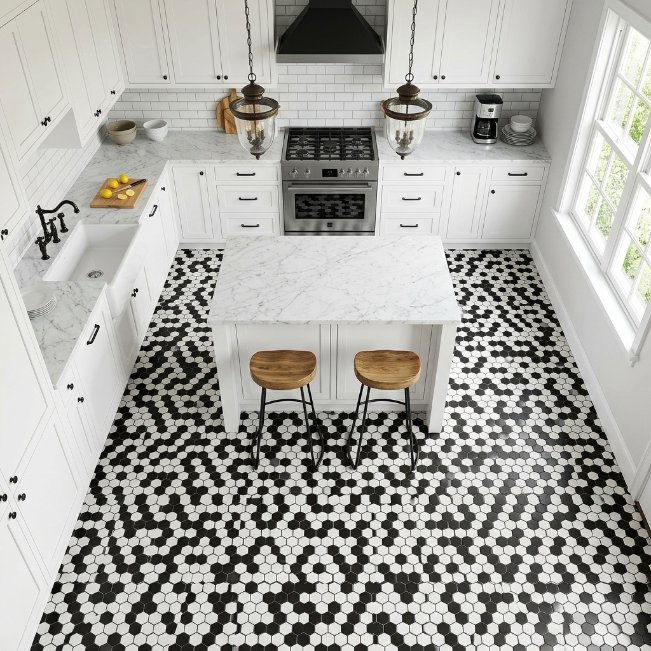
- High contrast pattern brings timeless, classic character to any kitchen
- Hexagon or penny tile shapes add texture beyond a standard grid
- Works well in both vintage-inspired and modern minimalist kitchens
- Pattern naturally hides grout lines and minor everyday marks
- Pairs effortlessly with black fixtures, white cabinetry, or marble accents
Black and white tile flooring is a design choice that never really goes out of style, and it’s easy to understand why. This combination brings crisp, graphic contrast to a kitchen while still feeling classic rather than trendy. I’ve noticed this idea works particularly well in kitchens that already feature black hardware or fixtures, since the floor echoes those tones and ties the whole room together. Whether laid in hexagons, penny rounds, or a simple checkerboard grid, this pairing consistently ranks among the most saved kitchen flooring ideas on Pinterest for good reason.
What makes this combination especially practical is how forgiving it is day to day. The contrast between black and white naturally camouflages dust, crumbs, and light scuffing between cleanings, which is a real advantage in a high-traffic kitchen. In my experience, this pattern also gives homeowners flexibility for the future, since black and white pairs easily with almost any cabinet color if the kitchen gets updated later. It’s a flooring decision that photographs beautifully, ages gracefully, and rarely needs to be second-guessed once installed.
Whitewashed Wood Floors
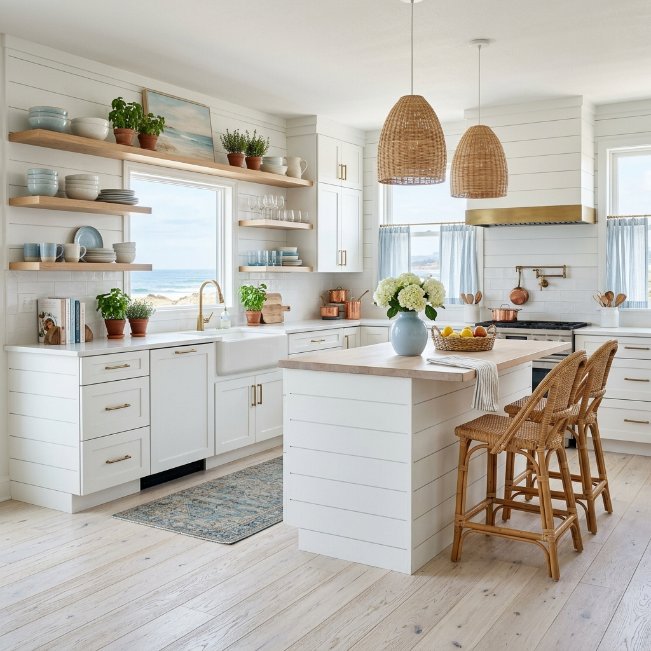
- Brightens dark or low-light kitchens without a full renovation
- Softer than pure white tile while still feeling fresh and airy
- Complements coastal, farmhouse, and Scandinavian kitchen styles equally well
- Wood grain still shows through, adding subtle natural texture
- Creates a relaxed, sunlit feel even in north-facing kitchens
Whitewashed wood flooring offers a softer alternative to stark white tile while still delivering that bright, airy feeling homeowners often chase. The pale, weathered finish lets the natural wood grain peek through, giving the floor warmth and texture that flat white surfaces can lack. I’ve seen this work especially well in kitchens with limited natural light, where the pale tone helps bounce available daylight around the room instead of absorbing it. It’s a flooring idea that suits coastal, Scandinavian, and modern farmhouse styles equally well, without locking the space into one narrow aesthetic.
Maintenance is worth considering with this option, since lighter wood tones can show scuffing more visibly than darker finishes. That said, engineered wood and wood-look vinyl versions have made this look far more forgiving than solid whitewashed hardwood used to be. That’s why many designers recommend the engineered route for kitchens specifically, since it holds up better against moisture near sinks and dishwashers. The overall effect is a calm, sunlit atmosphere that feels effortless, current, and noticeably brighter than typical honey-toned or dark wood flooring choices.
Patterned Cement Tile
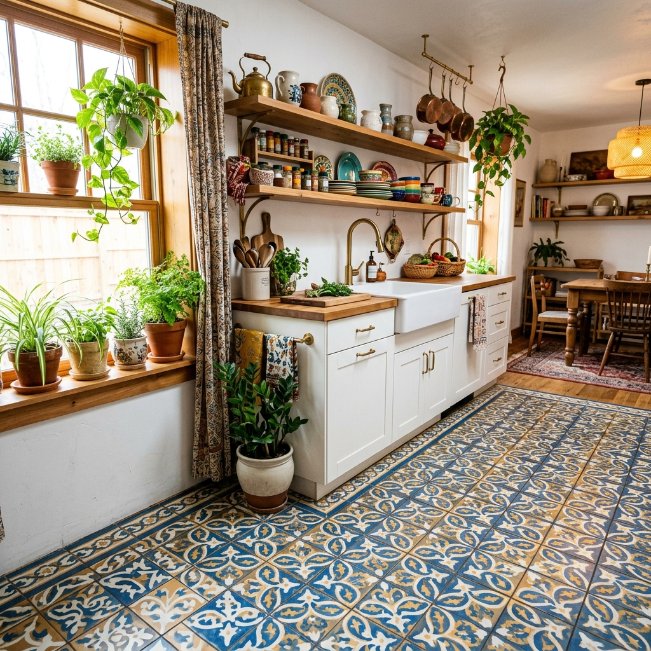
- Adds a bold, artisanal focal point that feels handmade and unique
- Bright colors and patterns energize otherwise neutral kitchen spaces
- Works beautifully as a small accent area near an island or entry
- Pattern hides everyday spills and marks better than solid colors
- Gives a collected, well-traveled feel without extensive global sourcing
Patterned cement tile brings an artisanal, globally inspired energy that few other flooring choices can replicate. Originally popular in Mediterranean and Latin American homes, these intricate designs have found their way into modern kitchens looking for a bold, characterful touch. I’ve noticed this idea works particularly well as a contained accent, such as under a kitchen island or within a small breakfast nook, rather than covering the entire floor. This approach lets the pattern make a strong visual statement while keeping installation costs and maintenance more manageable for the rest of the space.
Today’s printed porcelain versions have made this once-costly look far more accessible, replicating the hand-painted appearance of authentic cement tile at a fraction of the price and with much easier upkeep. In my experience, this makes the look approachable even for smaller renovation budgets. The busy pattern also does practical work, disguising crumbs, water spots, and daily wear far better than a plain tile would. It’s a flooring idea that consistently draws attention on kitchen flooring ideas boards because it feels personal, artistic, and genuinely different.
Two-Tone Wood Planks
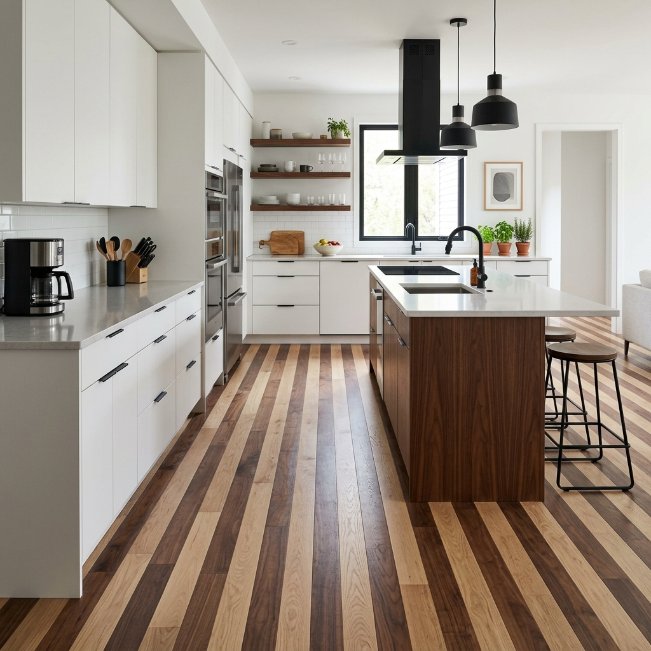
- Creates visual rhythm without relying on tile or patterned materials
- Alternating tones can echo cabinet or island colors for cohesion
- Adds a custom, high-end look to standard plank flooring
- Works well in modern, transitional, and Scandinavian-style kitchens
- Subtle enough to avoid overwhelming smaller kitchen footprints
Two-tone wood plank flooring is a quieter way to add pattern to a kitchen without committing to bold tile or intricate designs. By alternating light and dark planks in a simple stripe or randomized layout, this idea introduces movement and rhythm while still feeling grounded and natural. I’ve seen this work especially well in kitchens with a matching two-tone cabinet scheme, since the flooring echoes that same light-and-dark contrast happening at eye level. It ties the whole room together in a way that feels intentional rather than accidental, which is exactly the kind of detail that gets noticed.
From a practical standpoint, this look is achievable with standard engineered wood or wood-look vinyl planks, simply installed in an alternating sequence rather than a uniform run. In my experience, this makes it more budget-friendly than people initially assume, since it doesn’t require specialty materials, just thoughtful planning during installation. That’s why many designers recommend sketching the layout in advance to control exactly how the tones repeat across the room. The result is a floor that feels custom and considered, without the higher cost of true patterned tile work.
Slate Tile Flooring
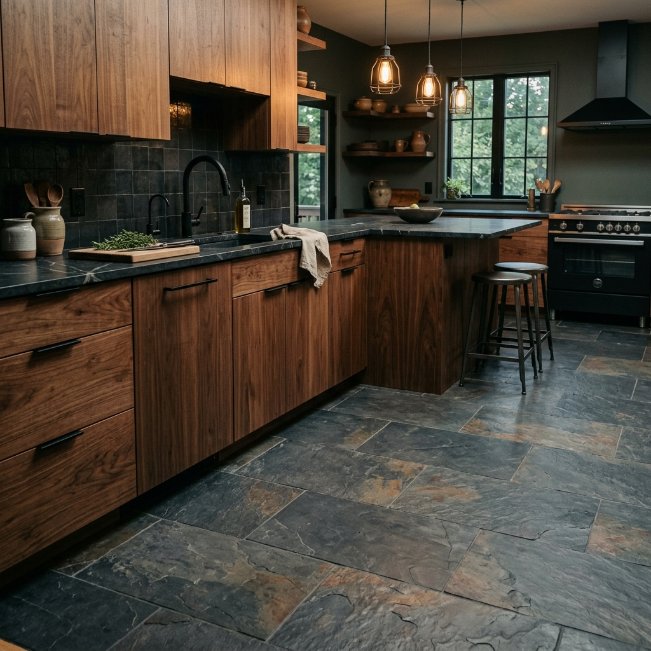
- Natural texture adds depth and grounds the kitchen visually
- Dark tone hides dirt, footprints, and daily wear exceptionally well
- Pairs beautifully with warm wood tones and matte black fixtures
- Slate’s slight texture offers better slip resistance than polished tile
- Brings an earthy, organic feel to modern or industrial kitchens
Slate tile flooring brings a grounded, organic quality that’s hard to replicate with manufactured materials. Each tile carries natural variation in color and texture, so no two floors look exactly alike, giving the space a one-of-a-kind character. I’ve noticed this option works particularly well in kitchens that already lean toward an earthy or industrial palette, since the deep gray and charcoal tones complement warm wood cabinetry and matte black fixtures without competing for attention. It’s a flooring choice that feels substantial and intentional, especially in kitchens with an open connection to outdoor or natural elements.
Beyond its visual depth, slate offers real functional advantages that matter in daily kitchen use. The naturally textured surface provides better slip resistance than polished tile, which is a genuine safety consideration near sinks and stovetops. In my experience, the dark tone also does an excellent job of masking footprints, pet hair, and minor spills between cleanings, cutting down on how often the floor needs attention. While slate does require sealing to prevent staining, the maintenance routine is straightforward once established, making it a durable choice for busy, high-traffic kitchens.
Wood-Tile Transition Strip
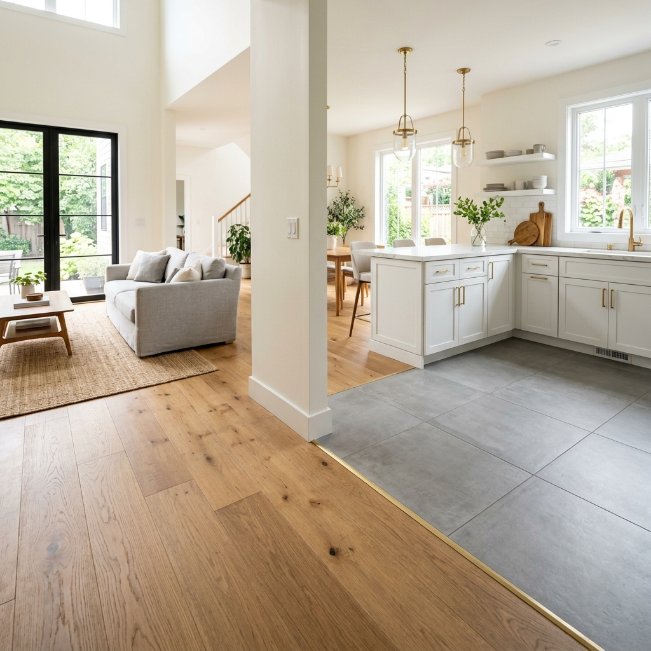
- Clearly defines the kitchen without needing walls or partitions
- Protects both flooring materials at their most vulnerable meeting point
- Creates a clean, finished look between two different surfaces
- Works well in open-concept homes blending wood and tile zones
- Small design detail that elevates the overall flooring installation
A wood-tile transition strip solves a common challenge in open-concept homes: how to move gracefully between two different flooring materials. Rather than letting wood and tile awkwardly butt up against each other, a slim metal or wood transition strip creates a clean, deliberate boundary at the kitchen’s threshold. I’ve seen this work well in homes where the kitchen sits adjacent to a living or dining area with hardwood floors, allowing each space to keep its ideal material, tile for the kitchen’s moisture-prone zone, wood for the more casual living space beyond it.
This detail is small but genuinely functional. In my experience, transition strips prevent the edges of both materials from chipping or lifting over time, which commonly happens when two surfaces meet without proper support. That’s why many designers recommend this addition even when the flooring heights are nearly identical, since it protects the installation long-term. Beyond durability, the strip itself can be chosen to match cabinet hardware or light fixtures, turning a purely practical necessity into one more cohesive design touch throughout the connected living space.
Wood-Look Vinyl Sheet Flooring
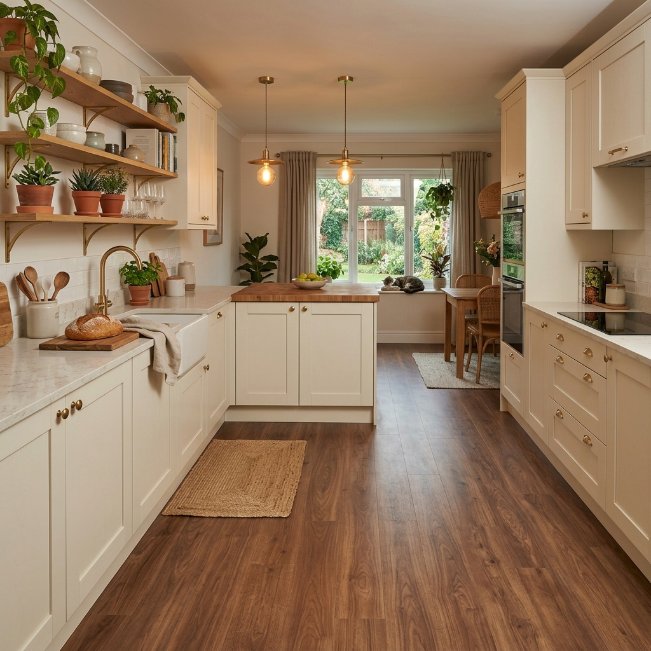
- Seamless surface means no grout lines or seams to trap moisture
- Budget-friendly option that still delivers a warm wood appearance
- Softer, warmer underfoot feel compared to tile or stone flooring
- Ideal for kitchens prone to spills near sinks and dishwashers
- Quick to install compared to individual plank or tile systems
Wood-look vinyl sheet flooring is often overlooked in favor of individual planks, but it offers a genuinely practical advantage: a completely seamless surface. Without individual plank seams, there’s no place for water to seep through, which makes this idea especially well-suited to kitchens where spills near the sink or dishwasher are a regular occurrence. I’ve noticed this option works particularly well for busy households wanting the warmth of wood-look flooring without worrying about moisture damage creeping in at the edges over time, especially in older homes with less-than-perfect subfloors.
Installation is another area where this idea stands out among kitchen flooring ideas. Since it comes in large rolls rather than individual pieces, sheet vinyl typically installs faster than plank or tile options, which can shorten a renovation timeline considerably. In my experience, this makes it a smart choice for rental properties or quick kitchen refreshes where time and budget are both limited. Modern printing technology has also improved the realism of the wood grain significantly, so today’s versions look far more convincing than sheet vinyl did in past decades.
Conclusion:
The right floor can quietly transform a kitchen from ordinary to unforgettable, and these 22 kitchen flooring ideas offer plenty of inspiration to get there. From timeless herringbone patterns to practical vinyl planks, there’s an option here for nearly every style, budget, and lifestyle. I’ve seen how small changes like a bold tile pattern or a warmer wood tone can completely shift how a space feels day to day. Save this post to your Pinterest board for later, try an idea that speaks to you, and pass it along to a friend planning their own kitchen refresh. Your dream floor might be closer than you think.