
23 Luxury Bathroom Design Ideas for Small Homes
Introduction:
Ever walked into a tiny bathroom and instantly felt like it belonged in a five-star hotel? That’s the magic of smart, intentional design. This collection of luxury bathroom design ideas proves that square footage has almost nothing to do with how rich a space feels. In my experience helping readers rethink small rooms, the biggest transformations rarely come from knocking down walls, they come from thoughtful details like lighting, texture, and finish choices working together. Whether you’re renovating a full bathroom or refreshing a small guest powder room, these 23 ideas will show you exactly how to create that warm, elevated, hotel-like feeling in your own home, no matter how compact the space actually is.
Floating Marble Vanity
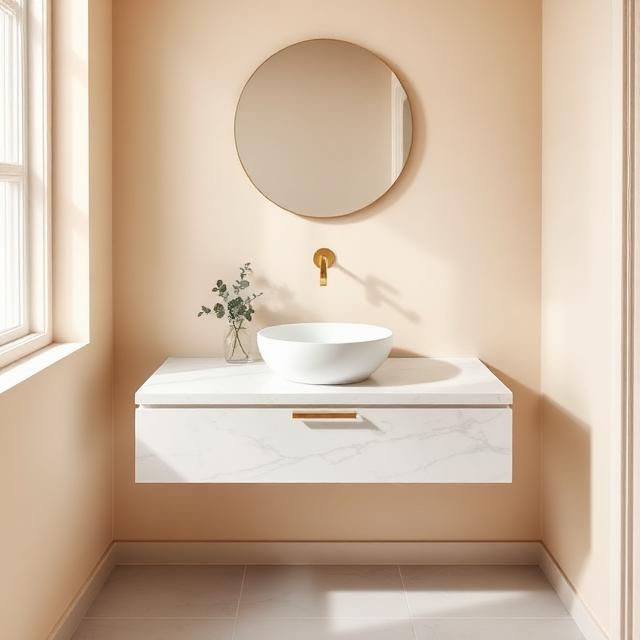
- Frees up floor space, making even a tiny bathroom feel open and airy
- Marble veining adds instant richness without needing a full renovation
- Easy to clean underneath, which keeps small guest bathrooms looking fresh longer
- Pairs beautifully with warm metal fixtures for a boutique hotel feel
- Works in almost any color scheme, from soft neutrals to deep tones
A floating vanity is one of the simplest ways to make a small bathroom feel expensive. In my experience, homeowners underestimate how much visual weight a traditional cabinet adds to a tight space. When you lift the vanity off the floor, the eye travels further, and the whole room feels taller and lighter. Marble tops bring texture without clutter, since the pattern itself becomes the decoration. This is especially useful in guest bathrooms, where you want a strong first impression but don’t have room for extra furniture or accessories.
The real transformation happens in how the space functions day to day. Storage baskets or a slim shelf can slide underneath, keeping towels accessible without crowding the floor. I’ve noticed that clients who switch to floating vanities also report their bathrooms feel easier to clean, since there’s no base cabinet trapping dust or moisture. For small luxury bathroom design, this single swap often does more visual work than a full tile replacement. It’s a practical upgrade that photographs beautifully and genuinely improves how the room feels to use every single day.
Brass Hardware Accents
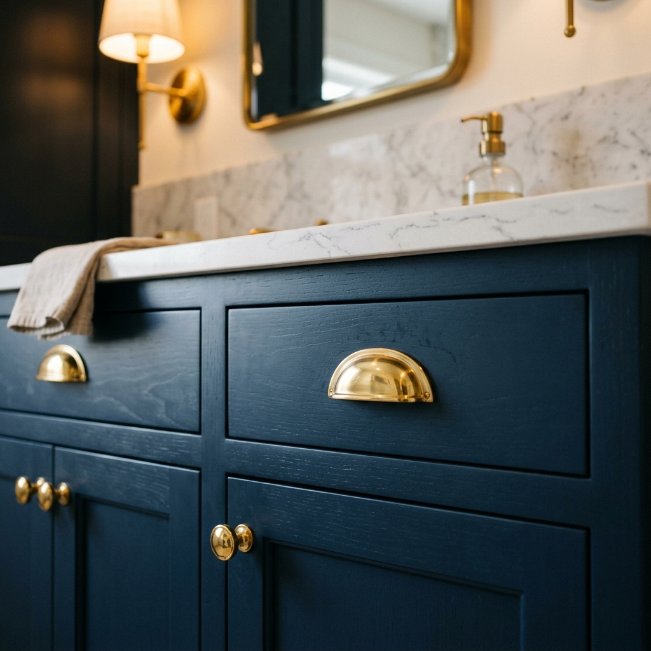
- Small hardware changes create a noticeably richer, more finished look
- Brass tones warm up cool color palettes like navy, grey, or white
- Affordable way to upgrade a bathroom without touching plumbing or tile
- Works well on cabinets, mirrors, towel bars, and light fixtures together
- Creates a cohesive, designer-style finish when matched throughout the room
Brass hardware is the detail people notice even if they can’t name why a bathroom feels luxurious. That’s why many designers recommend starting here before any bigger renovation. Swapping dull chrome knobs for warm brass pulls instantly shifts the mood from ordinary to intentional. It’s one of the lowest-cost changes with the highest visual return, since hardware sits at eye level and catches light constantly. For anyone exploring luxury bathroom design ideas on a tighter budget, this is often the smartest starting point before investing in larger fixtures or full remodels.
Consistency is what makes this idea work so well in real homes. Matching your cabinet pulls, faucet, mirror frame, and towel bar in the same brass finish creates a pulled-together, hotel-style look rather than a mismatched collection of parts. I’ve seen this work well even in rental bathrooms, where tenants simply swap hardware without altering permanent fixtures. The warmth of brass also softens harsh white tile or stark navy cabinetry, balancing the room’s temperature. It’s a small investment that consistently photographs well and feels genuinely upscale in person.
Freestanding Soaking Tub
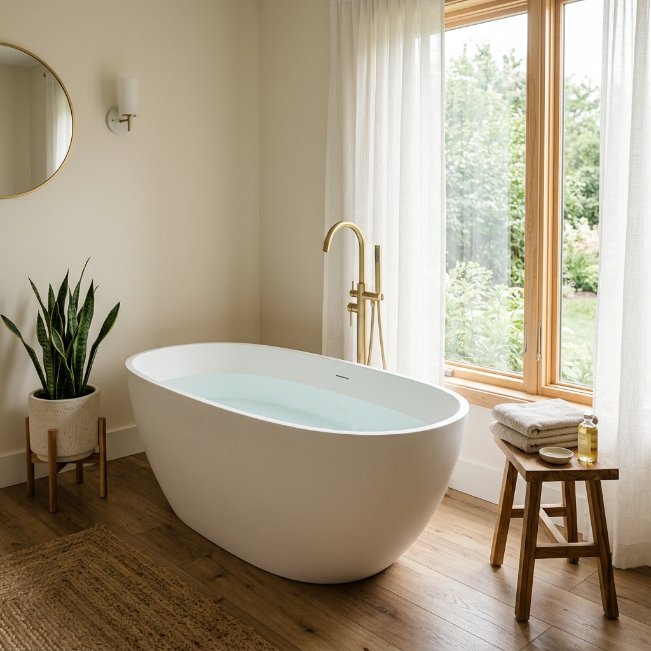
- Instantly signals a spa-like retreat, even in a modest-sized bathroom
- Draws the eye as a focal point, distracting from limited square footage
- Works well tucked into a corner or under a window for natural light
- Pairs beautifully with soft textiles like linen towels or a bath tray
- Creates a strong visual anchor that photographs beautifully for inspiration boards
A freestanding tub does something a built-in tub simply can’t: it turns bathing into an experience rather than a routine. In my experience, even a modestly sized tub placed thoughtfully near natural light makes the entire room feel like a retreat. Small homes benefit the most from this idea, since one striking centerpiece can outweigh the need for extra square footage. The curved silhouette also softens a room full of straight lines and hard tile edges, adding a gentler, more inviting shape to the overall layout without requiring any structural changes.
Placement matters more than size when it comes to making this idea work. Positioning the tub near a window, under soft lighting, or against a textured accent wall creates depth and a sense of intention. I’ve noticed homeowners often skip this idea assuming their bathroom is too small, but compact oval and slipper-style tubs fit tighter spaces easily. Adding a simple wooden tray, a candle, or folded towels nearby completes the spa feeling. It’s a bold visual statement that consistently performs well as a Pinterest save-worthy centerpiece.
Warm Ambient Lighting
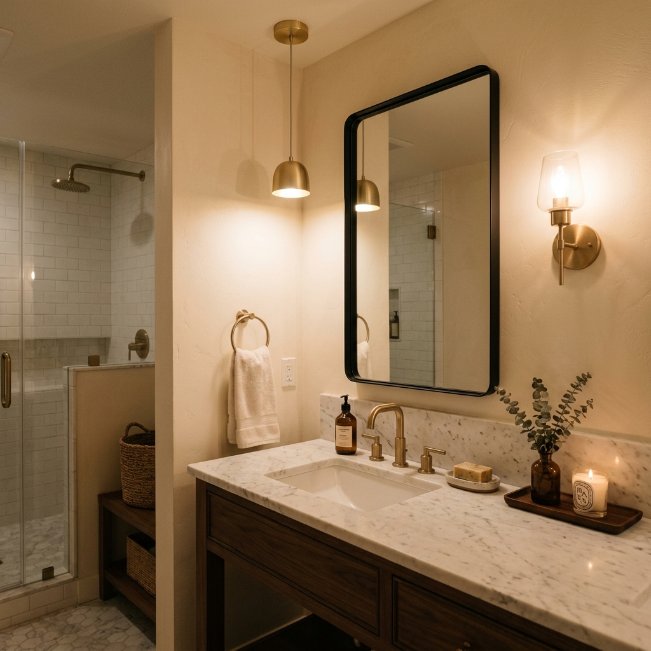
- Softens the entire room instantly, replacing harsh overhead light with warmth
- Makes skin tones and surfaces look richer, closer to boutique hotel lighting
- Layering light sources adds depth instead of one flat, bright glow
- Dimmable options let the space shift from functional to relaxing easily
- Small fixture upgrades can transform mood without any construction work
Lighting is the single most underrated tool in bathroom design, and it costs far less than people assume. Harsh, cool-toned overhead lighting flattens a room and makes even beautiful tile look sterile. Switching to warm sconces beside the mirror, paired with a soft pendant or dimmer switch, changes the entire atmosphere instantly. This approach mirrors what luxury hotels do so well, using layered, warm light instead of one bright source. For small luxury bathroom design, this shift alone can make a modest space feel considerably more expensive and relaxing within a single afternoon.
I’ve seen this work well across dozens of small bathrooms, and it’s usually the easiest recommendation to implement immediately. Adding a dimmer switch lets the same space serve two purposes, bright and functional in the morning, soft and calming at night. Warm bulbs, roughly 2700K to 3000K, flatter both the room’s finishes and the person using the mirror. Combined with brass or gold fixtures, the warm glow reflects beautifully off marble or quartz surfaces. It’s a low-cost, high-impact upgrade that consistently earns saves and shares on inspiration platforms.
Textured Accent Wall
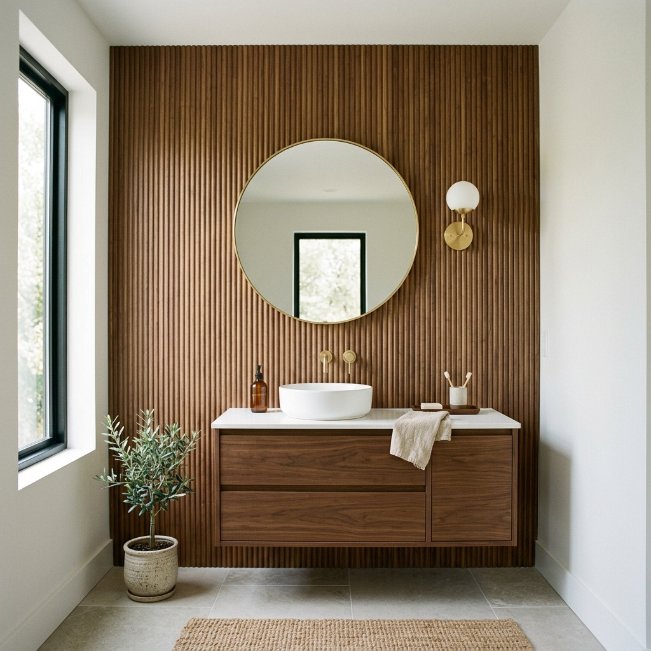
- Adds dimension and richness to an otherwise flat, plain wall
- Fluted wood, stone panels, or textured plaster all create visual depth
- Works as a feature wall behind the mirror or bathtub for impact
- Requires only one wall, keeping costs and installation time manageable
- Gives the room a tactile, high-end feel without full renovation
A textured wall does something flat paint never can: it gives the room a sense of craftsmanship and depth. Fluted wood panels, natural stone cladding, or Venetian plaster all catch light differently throughout the day, adding subtle movement to an otherwise static space. This idea works particularly well in small bathrooms because it only requires transforming one wall, usually behind the mirror or tub, rather than the entire room. That’s why many designers recommend starting with texture before color when clients want a richer, more layered look without committing to a full remodel.
The impact of this idea comes from contrast and restraint. Keeping the surrounding walls simple and neutral allows the textured feature wall to stand out as an intentional design choice rather than visual clutter. I’ve noticed that homeowners who add fluted or paneled walls often pair them with warm lighting and matte black or brass fixtures, which enhances the tactile quality even further. This combination reads as thoughtful and expensive, even on a modest budget. It’s a detail that photographs exceptionally well and consistently draws attention on visual platforms like Pinterest.
Statement Mirror Frame
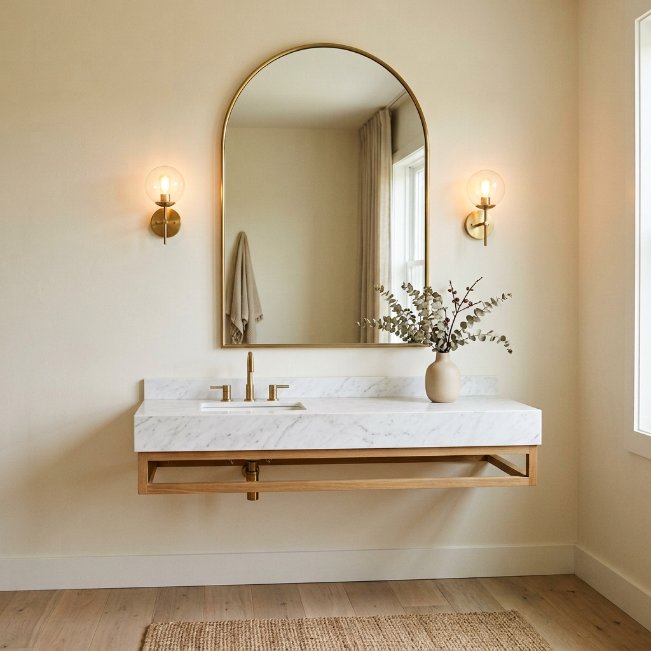
- Elevates a plain vanity area instantly, becoming the room’s focal point
- Arched or oversized shapes add elegance without needing extra floor space
- Metal-framed mirrors read as more finished than basic builder-grade versions
- Reflects light around the room, helping small bathrooms feel brighter
- Easy swap that requires no plumbing or structural changes at all
The mirror above your vanity carries more visual weight than most people realize, since it’s the first thing anyone notices when they walk in. Swapping a plain, frameless builder mirror for an arched or statement-framed piece changes the entire tone of the room. Brass, black, or curved wood frames all add a sense of intention, making the space feel curated rather than default. This is one of the fastest upgrades within luxury bathroom design ideas because it requires no construction, just a straightforward wall-mounted swap that can be completed in under an hour.
Beyond appearance, a well-placed statement mirror genuinely improves how the room functions. Larger mirrors bounce natural and artificial light around the space, which helps small bathrooms avoid feeling boxed in or dim. I’ve noticed that arched shapes in particular soften a room dominated by straight countertops and square tile, creating a more balanced visual rhythm. Pairing the mirror with flanking sconces adds symmetry and warmth on either side. It’s a detail that consistently performs well on inspiration boards because it’s both beautiful and genuinely functional.
Herringbone Tile Pattern
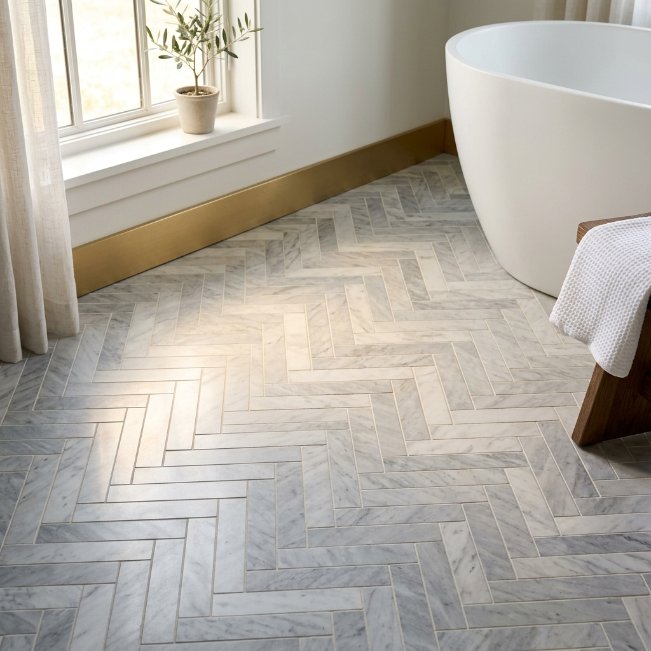
- Adds movement and richness to the floor without changing the color palette
- Herringbone pattern makes small rooms feel more dynamic and detailed
- Works beautifully in marble, wood-look, or classic subway tile styles
- Elevates a basic tile choice into a distinctly high-end feature
- Draws the eye downward, subtly making the room feel larger
Pattern does more for a small bathroom than color alone ever could. A herringbone layout takes an ordinary tile and turns it into a deliberate design feature, adding rhythm and movement across the floor. This works especially well in compact spaces, where the diagonal lines create an illusion of extended length and width. Instead of investing in expensive materials, homeowners can achieve a similarly luxurious look simply by changing the laying pattern of a mid-range marble or porcelain tile, which keeps the project budget-friendly while still delivering a genuinely upscale result.
Installation does take slightly more time and precision than a standard grid layout, but the payoff is significant. I’ve seen this work well in guest bathrooms and powder rooms, where a small footprint means less material is needed overall, making the higher labor cost easier to justify. Pairing herringbone flooring with a simple, neutral color palette keeps the pattern as the star of the room rather than competing with busy walls or fixtures. It’s a detail that photographs beautifully from above and consistently ranks among the most saved ideas in bathroom design inspiration.
Matte Black Fixtures
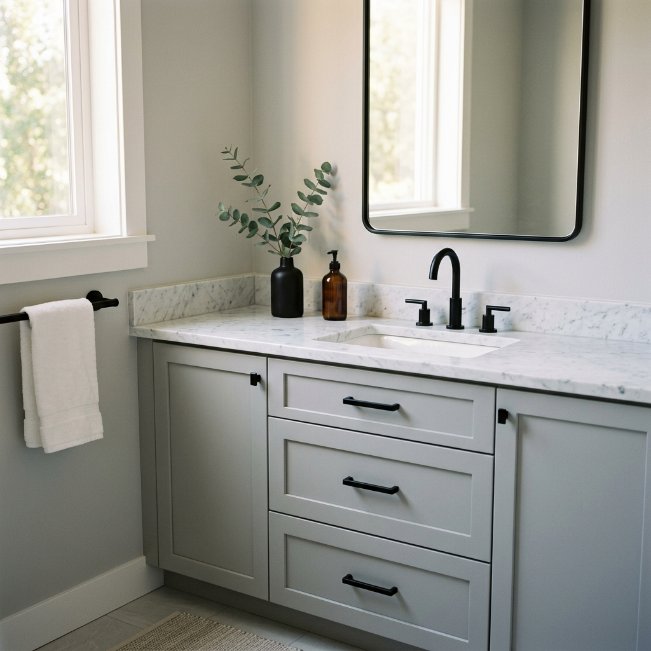
- Creates strong visual contrast against light countertops and pale walls
- Matte finish feels more modern and sophisticated than glossy black
- Works well mixed with brass or gold for a layered metal look
- Easy fixture swap that instantly updates a dated or plain bathroom
- Pairs naturally with both minimalist and moody design styles
Matte black fixtures bring a quiet sense of confidence to a bathroom that softer metals sometimes lack. Against white marble, cream tile, or pale grey cabinetry, the deep contrast makes every line and edge feel sharper and more intentional. This is a particularly strong choice for small luxury bathroom design, since dramatic contrast tends to draw the eye and create a sense of depth even in a compact room. Unlike glossy black, which can feel harsh under bright lighting, a matte finish absorbs light softly, giving the room a more grounded, sophisticated atmosphere throughout the day.
This idea also works exceptionally well layered with other metals rather than used alone. I’ve noticed that mixing matte black fixtures with brass mirror frames or gold cabinet pulls creates a richer, more collected look than sticking to a single metal finish. It avoids feeling flat or overly matched, which can sometimes read as generic. Matte black also tends to hide water spots and fingerprints better than chrome, making it a practical choice for busy households. It’s a small change that consistently adds drama and depth to before-and-after transformation photos.
Marble Waterfall Countertop
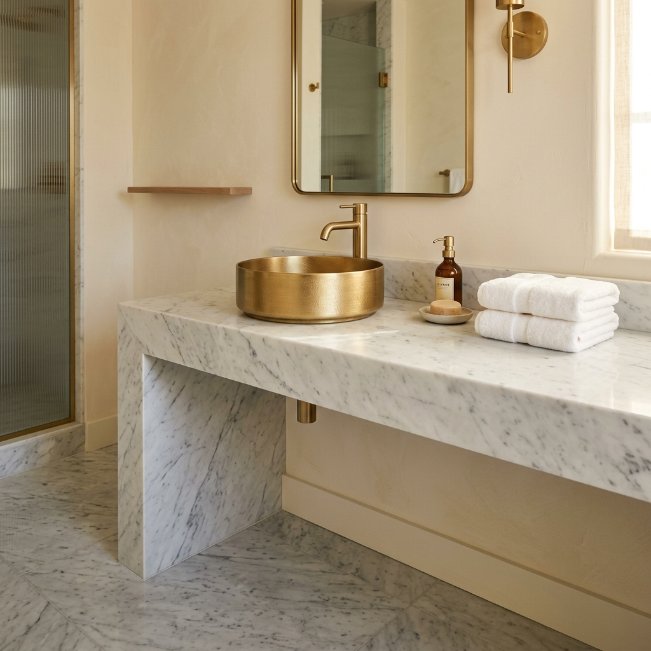
- Extends the marble pattern down the side, creating a seamless luxury look
- Hides plain cabinet edges beneath a continuous, elegant stone surface
- Adds a strong visual statement without expanding the vanity’s footprint
- Works especially well in small bathrooms where every surface is visible
- Elevates even a simple single-sink vanity into a striking focal point
A waterfall edge takes a countertop from functional to sculptural, and it’s one of those details that quietly signals real investment in the space. Instead of stopping at the edge of the counter, the marble continues down the side panel in one unbroken sheet, hiding the cabinet base and creating a smooth, seamless line from top to floor. In small bathrooms, this matters more than people expect, since every surface is within view at once. For anyone researching luxury bathroom design, this is one of the most photographed features because it reads as custom even on a standard vanity size.
The visual continuity is what makes this idea feel so rich in person and in photos. Rather than breaking the eye’s path with mismatched cabinet wood and stone countertop, the waterfall edge lets the marble veining flow uninterrupted. I’ve noticed that this works particularly well with brass or gold vessel sinks, since the warm metal contrasts beautifully against the cool white and grey stone. It does add to material and labor costs, but for a single vanity in a small space, the total marble needed stays reasonable while the visual payoff remains significant.
Round Vessel Sink
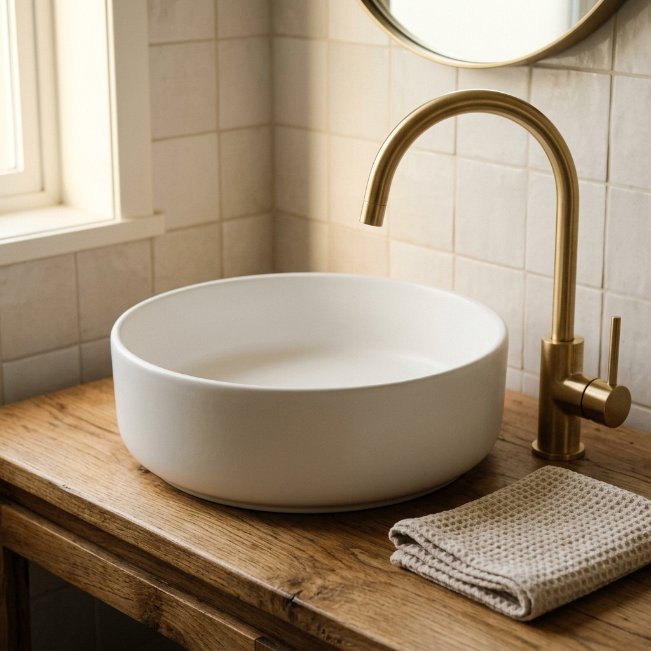
- Softens a bathroom full of straight lines and hard countertop edges
- Sits above the counter, adding sculptural height and visual interest
- Available in stone, ceramic, or glass for different design styles
- Pairs beautifully with a tall gooseneck faucet for added elegance
- Small footprint makes it ideal for compact vanities and powder rooms
A vessel sink changes the entire feel of a vanity simply by sitting above the counter rather than sunk into it. This small shift in form adds a sculptural, almost artistic quality to a fixture that’s usually purely functional. Round shapes in particular soften a room dominated by rectangular mirrors, square tile, and straight cabinet lines, creating a more balanced and inviting composition. It’s a favorite among small luxury bathroom design ideas because it adds visual interest and height without requiring any additional counter space, making it especially practical for powder rooms and guest bathrooms.
Material choice plays a big role in how upscale this idea feels in the finished space. Ceramic and stone vessel sinks tend to photograph beautifully under warm lighting, catching subtle texture and shadow across their curved surface. I’ve seen this work well when paired with a tall gooseneck faucet, since the added height balances the sink’s rounded shape and prevents splashing. It’s a relatively affordable upgrade compared to a full countertop replacement, yet it consistently reads as a deliberate, higher-end design decision to anyone who walks into the room.
Layered Bath Textiles
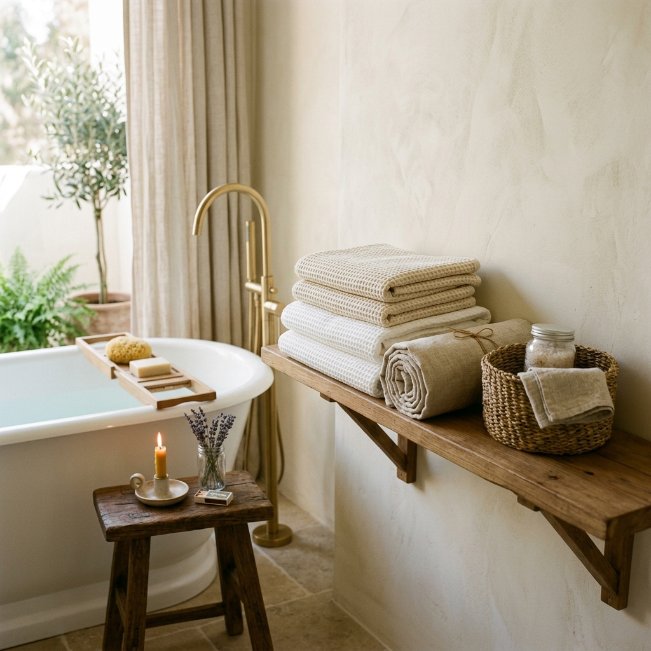
- Adds instant coziness and texture without any permanent installation
- Layering different fabrics like linen and waffle-weave creates depth
- Neutral, matching tones make even a plain bathroom feel curated
- Inexpensive way to refresh the room’s look seasonally or anytime
- Small styling detail that consistently performs well in inspiration photos
Textiles are the fastest, lowest-cost way to make a bathroom feel finished, and they’re often the last thing people think to upgrade. Swapping mismatched towels for a coordinated set in a soft neutral palette, then layering in a linen bath mat and a woven basket, adds texture and warmth that hard surfaces like tile and marble simply can’t provide on their own. This idea works in any budget and any size bathroom, which is why it’s one of the easiest starting points for anyone wanting a richer look without committing to a renovation or new fixtures at all.
Styling details like this are exactly what separate a functional bathroom from one that feels genuinely curated. I’ve noticed that rolling towels instead of folding them flat adds a subtle spa-like quality that photographs particularly well. Adding a small tray with a candle, a plant, or a stack of folded washcloths near the tub completes the layered look. Because textiles are easy to swap seasonally, this idea also gives homeowners a low-commitment way to refresh their bathroom’s mood throughout the year without touching anything permanent or structural.
Skylight or Window Nook
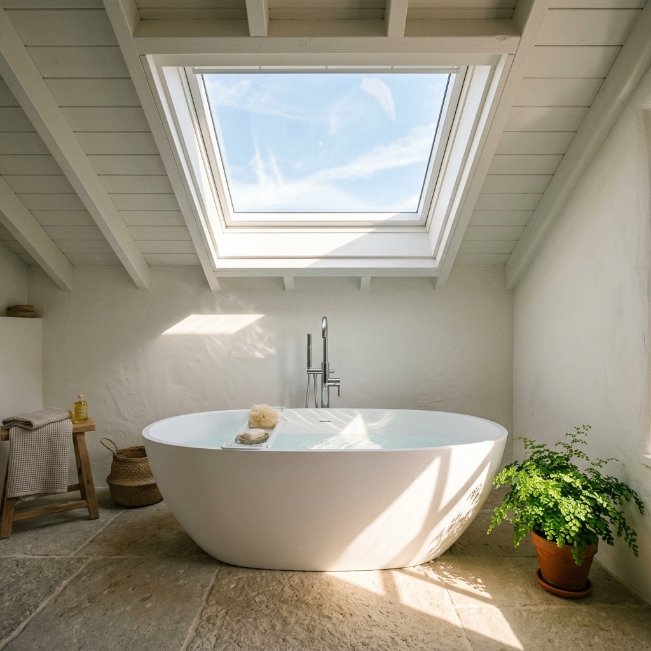
- Brings in natural daylight, making a small bathroom feel considerably larger
- Reduces reliance on artificial lighting during daytime hours
- Positioned above a tub or shower, it creates a spa-like sunlit moment
- Adds a sense of openness even in windowless interior bathrooms
- Natural light shows off tile, marble, and fixture colors more accurately
Natural light does something artificial fixtures simply can’t replicate, it shifts subtly throughout the day, giving the room a living, changing quality. A skylight or even a small high window placed above a tub or shower turns an ordinary bathing area into a sunlit retreat, filling the space with soft, diffused daylight rather than harsh overhead glare. For small bathrooms especially, this addition matters because natural light visually expands a room in a way no paint color or mirror trick fully achieves. It’s a bigger investment, but one that consistently transforms how the entire space feels day to day.
If a full skylight isn’t possible, even a narrow frosted window can make a meaningful difference in a compact layout. I’ve noticed that clients who add any form of natural light source above their tub report using that space far more often, simply because it feels calming rather than clinical. Morning light in particular flatters marble and stone surfaces, showing their true color and veining more accurately than warm artificial bulbs. Paired with a simple plant or neutral tile, this idea creates one of the most genuinely peaceful moments in the entire home.
Hidden Storage Niches
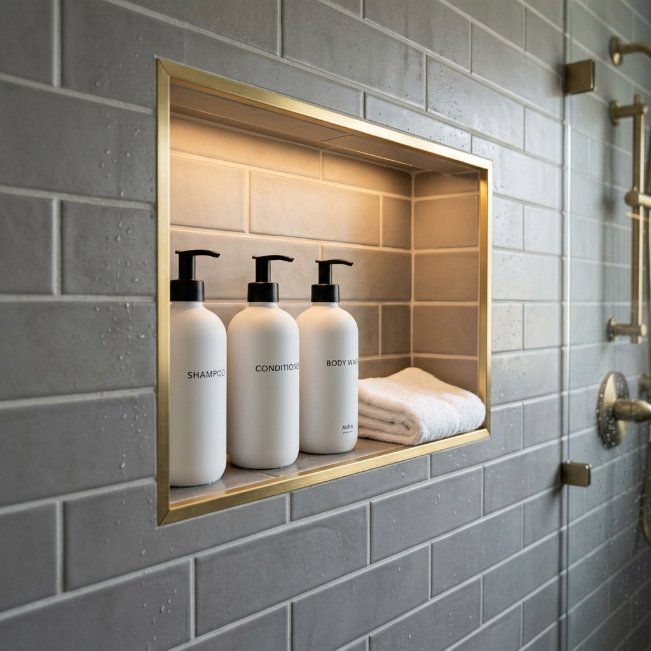
- Keeps everyday items out of sight while staying easily within reach
- Recessed niches avoid clutter on countertops or shower caddies
- Framed edges in metal trim add a subtle decorative touch
- Frees up visual space, making small bathrooms feel calmer overall
- Practical detail that blends function directly into the wall design
Clutter is one of the fastest ways to make a small bathroom feel chaotic, no matter how nice the fixtures are. A recessed niche built directly into the shower or vanity wall solves this by giving everyday items, like shampoo bottles, soap, or skincare products, a dedicated home that doesn’t interrupt clean sightlines. Unlike a bulky shower caddy or open shelf, a niche integrates into the architecture itself, which keeps the overall design feeling intentional and calm. This is a detail worth planning early, since it requires coordination during tiling rather than being added afterward.
I’ve noticed that homeowners often underestimate how much visual noise open storage creates until they remove it entirely. A well-placed niche, framed with a thin strip of metal trim matching the room’s other fixtures, becomes a small design feature rather than just a functional necessity. Keeping the items inside neatly arranged, grouped by size or color, enhances the effect even further. It’s a practical solution that solves a real everyday problem while genuinely elevating the finished look of the shower or vanity wall, making it a favorite among small-space renovation ideas.
Two-Tone Cabinetry
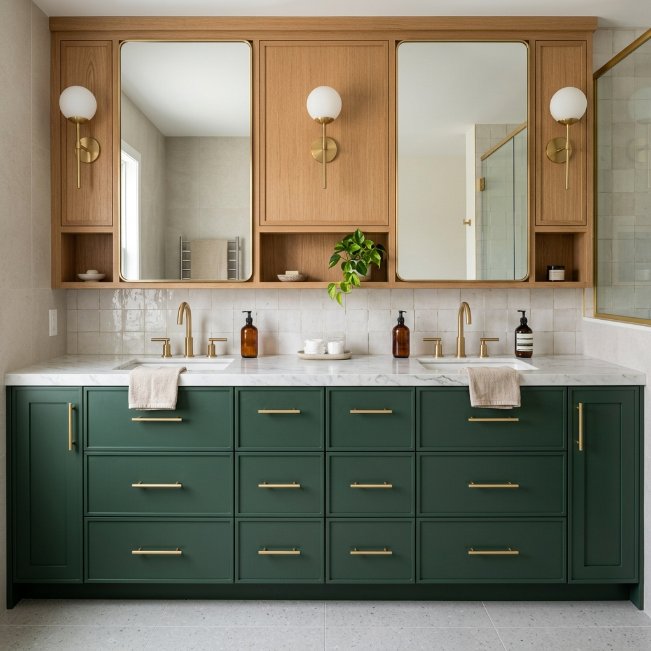
- Adds depth and personality without committing to one bold color everywhere
- Combining wood tones with painted cabinetry feels layered and intentional
- Darker lower cabinets ground the room while lighter tones open it up
- Works well in both traditional and modern small bathroom layouts
- Creates visual interest that photographs beautifully from multiple angles
Two-tone cabinetry solves a common design dilemma, wanting a bold, memorable color without overwhelming a small space entirely. By pairing a deeper tone, like forest green or navy, on the lower cabinets with a lighter wood or neutral finish above, the room gains richness while still feeling balanced and open. This layered approach reads as far more intentional than a single flat color and works particularly well for anyone drawn to luxury bathroom design ideas that feel collected rather than matched straight from a catalog. It’s a detail that instantly signals thoughtful, custom design choices.
The key to making this idea succeed is keeping the color transition clean and deliberate rather than random. I’ve seen this work well when the darker tone stays below the counterline, grounding the room, while lighter wood or painted uppers keep the space feeling airy above. Matching hardware throughout, rather than switching finishes between sections, ties the whole look together cohesively. This approach also gives homeowners flexibility to update just one portion of the cabinetry later if their taste changes, without needing to redo the entire vanity from scratch.
Chevron Mosaic Backsplash
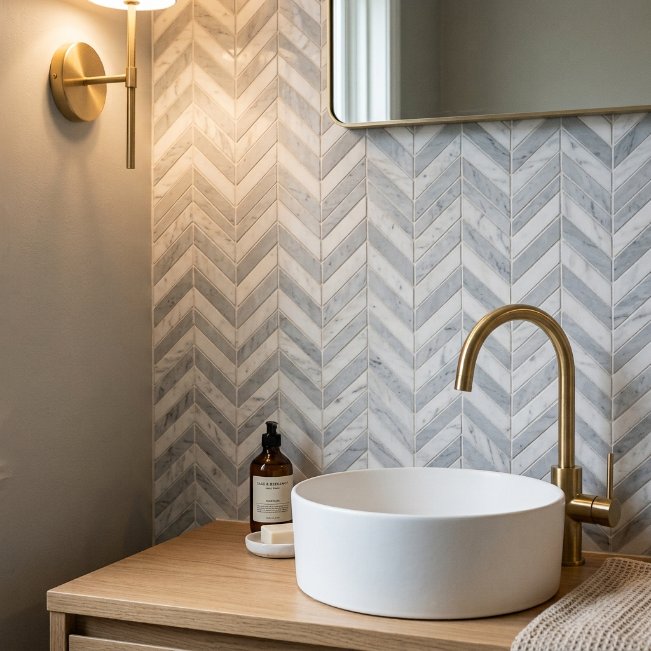
- Adds pattern and texture to a wall that’s usually left plain
- Chevron’s angled lines create a more dynamic look than flat tile
- Works well as a focused accent rather than covering the entire room
- Elevates a simple vessel sink setup into a designed vignette
- Small material quantity keeps the cost manageable for a single wall
A backsplash is often treated as an afterthought, just a strip of tile behind the faucet, but a chevron mosaic turns that small area into a genuine design feature. The angled, pointed pattern catches light differently than a flat tile surface, adding subtle movement and texture to what would otherwise be a plain wall. Because it only covers the area directly behind the sink, this idea stays budget-friendly even when using higher-end marble or stone tile. For small guest bathrooms in particular, this kind of focused detail delivers a strong visual impact without requiring a full wall-to-wall renovation.
I’ve noticed that this idea works best when paired with simple, unfussy surroundings, like a plain white wall and a minimal round sink. The chevron pattern already carries enough visual energy on its own, so keeping everything else understated lets it stand out as the room’s clear focal point. Choosing a soft, cohesive color palette, like grey and white marble, keeps the pattern feeling elegant rather than busy. It’s a detail that photographs exceptionally well up close, making it a strong candidate for save-worthy Pinterest content.
Freestanding Towel Ladder
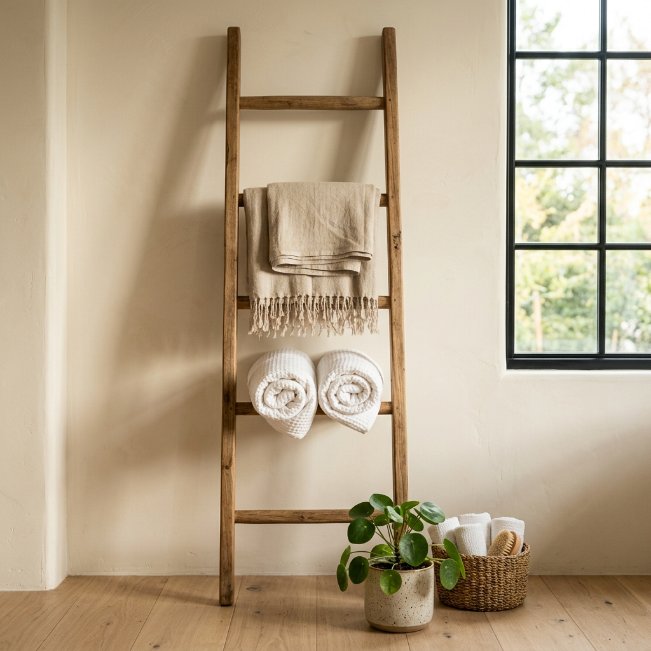
- Adds warmth and texture through natural wood against tiled or painted walls
- Requires no drilling or wall mounting, ideal for rental bathrooms
- Doubles as both storage and a decorative styling element
- Easy to reposition depending on available floor or corner space
- Softens a room dominated by hard, cold surfaces like tile and stone
A ladder-style towel rack brings a level of warmth to a bathroom that wall-mounted bars often miss. Because it leans freely against the wall rather than requiring installation, it’s one of the simplest additions for anyone renting or hesitant to drill into freshly tiled walls. The natural wood material contrasts beautifully against cool tile, marble, or painted surfaces, softening a room that can otherwise feel sterile and hard-edged. For small bathrooms, tucking a ladder rack into an unused corner also solves a real storage need without taking up the footprint a full cabinet or shelf would require.
This idea works especially well because it doubles as both function and styling in one simple object. I’ve seen this work well in guest bathrooms, where rolled towels on a ladder rack look intentional and inviting rather than just practical. Choosing a wood tone that complements existing cabinetry or flooring ties the piece naturally into the room’s overall palette. It’s an affordable, low-commitment upgrade that adds texture and warmth immediately, making it a popular choice for renters and homeowners alike who want a quick refresh.
Sculptural Wall Sconces
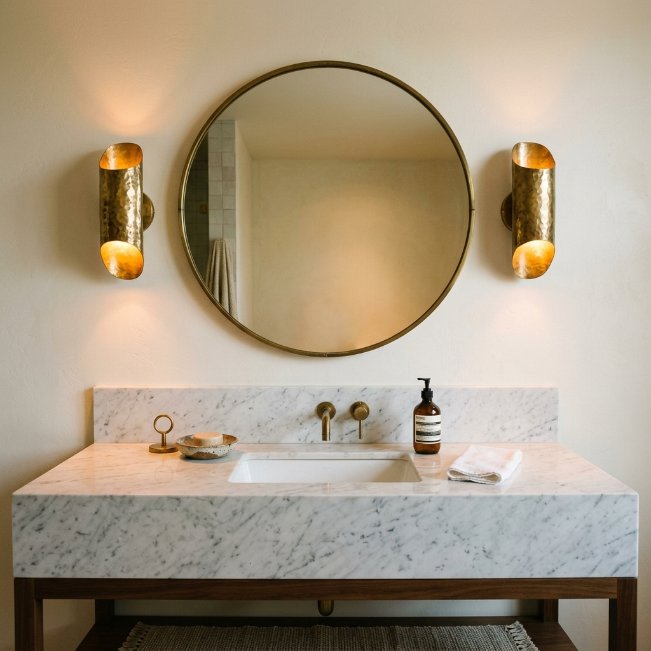
- Frames the mirror with soft, flattering light from both sides
- Sculptural shapes add a decorative element even when fixtures are off
- Eliminates harsh shadows caused by single overhead lighting sources
- Symmetrical placement creates a balanced, polished vanity area
- Small fixture change that significantly upgrades the room’s overall mood
Sconces placed on either side of the mirror do something a single overhead light never can, they eliminate the harsh shadows that fall across the face when light comes from only one direction above. This kind of flattering, symmetrical lighting is exactly what boutique hotels use in their bathrooms, and it’s surprisingly simple to recreate at home. Choosing sculptural, curved sconce designs adds a decorative quality to the wall even when the lights are switched off, turning a purely functional fixture into part of the room’s overall styling and visual rhythm.
That’s why many designers recommend this placement over a single vanity light bar whenever wall space allows it. The warm, layered glow from two sconces creates depth and softness that a flat, bright strip simply cannot replicate. Pairing the fixtures in brass or aged brass finishes adds warmth that complements marble, wood, and neutral wall tones equally well. It’s a relatively small investment in terms of cost and installation time, yet it consistently elevates the entire vanity area into something that feels considered, balanced, and genuinely luxurious.
Bold Wallpaper Ceiling
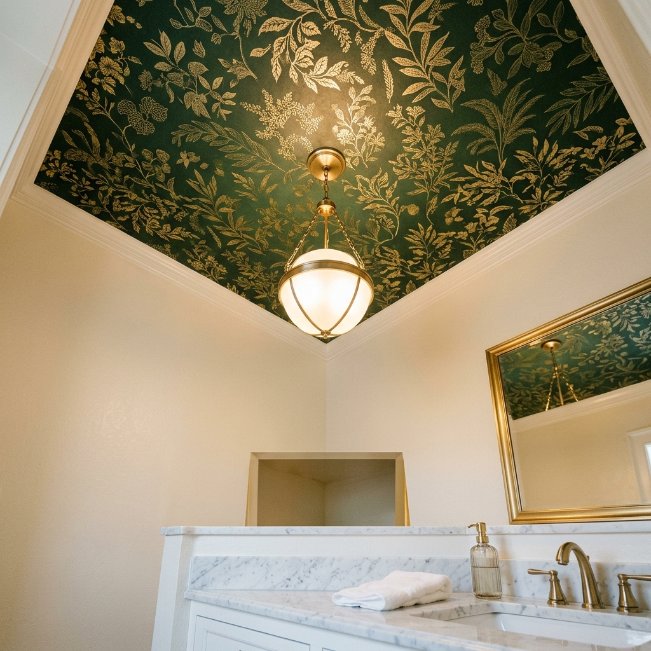
- Turns an overlooked surface into a bold, memorable design feature
- Adds pattern and color without affecting usable wall or floor space
- Creates a dramatic, unexpected moment when guests look upward
- Works well in small powder rooms where a full wallpapered room feels busy
- Pairs nicely with a simple pendant light as a centered focal point
The ceiling is the most overlooked surface in almost every bathroom, which is exactly what makes wallpapering it such an effective idea. Because it doesn’t compete with tile, cabinetry, or countertop space, a patterned or richly colored ceiling adds drama and personality without altering the room’s functional layout at all. This works particularly well in small powder rooms, where wallpapering all four walls can feel overwhelming, but a single bold ceiling creates a striking, unexpected moment instead. It’s a favorite among guest toilet luxury design ideas because it surprises visitors the moment they glance upward.
I’ve noticed that this idea photographs exceptionally well precisely because it’s unexpected, most inspiration content shows walls and floors, so a ceiling shot naturally stands out and draws more attention when saved or shared. Pairing a botanical or metallic-patterned wallpaper with a simple centered pendant light keeps the look intentional rather than chaotic. Keeping the walls below plain and neutral allows the ceiling to remain the clear star of the room. It’s a bold, low-cost choice that consistently generates conversation and adds genuine personality to an otherwise standard small bathroom.
Integrated Shower Bench
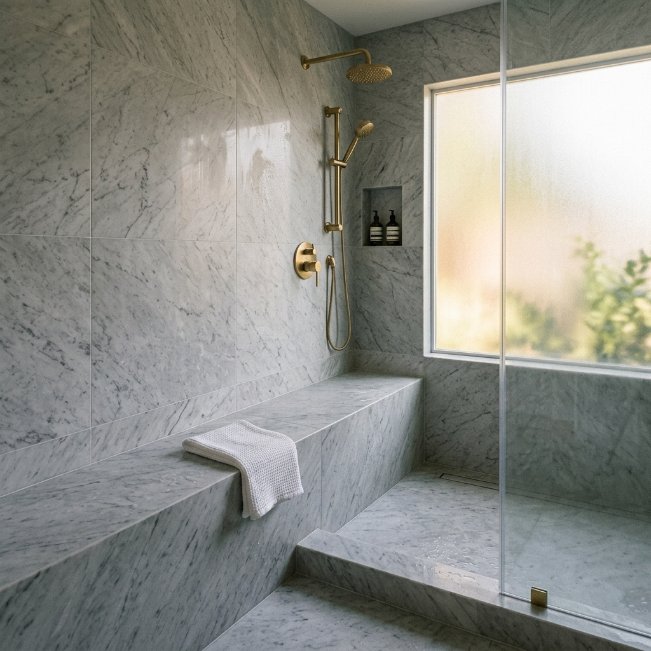
- Adds a practical seating option without needing extra floor space
- Built directly into the wall, keeping the shower’s lines clean and seamless
- Matches surrounding tile for a cohesive, custom-built appearance
- Useful for shaving, relaxing, or simply slowing down during a shower
- Reads as a thoughtful, higher-end feature in real estate listings
A built-in shower bench solves a practical problem while quietly adding to the room’s overall sense of luxury. Rather than placing a separate stool or seat inside the shower, which can feel like an afterthought, a bench built directly into the wall during construction becomes part of the architecture itself. This keeps the shower’s lines clean and uncluttered, which matters enormously in small bathrooms where every added object affects how spacious the room feels. Matching the bench’s surface to the surrounding wall and floor tile makes it look custom-built rather than added on afterward.
Functionally, this feature gets used far more often than people initially expect once it’s installed. I’ve seen this work well for tasks like shaving, resting during a longer shower, or simply setting down a foot to wash more comfortably. Real estate agents also tend to highlight built-in benches specifically, since buyers associate them with higher-end, custom bathroom renovations rather than standard builder-grade construction. It’s an investment that requires planning during a renovation, but the everyday practicality combined with the polished, seamless look makes it consistently worthwhile.
Curved Glass Shower Enclosure
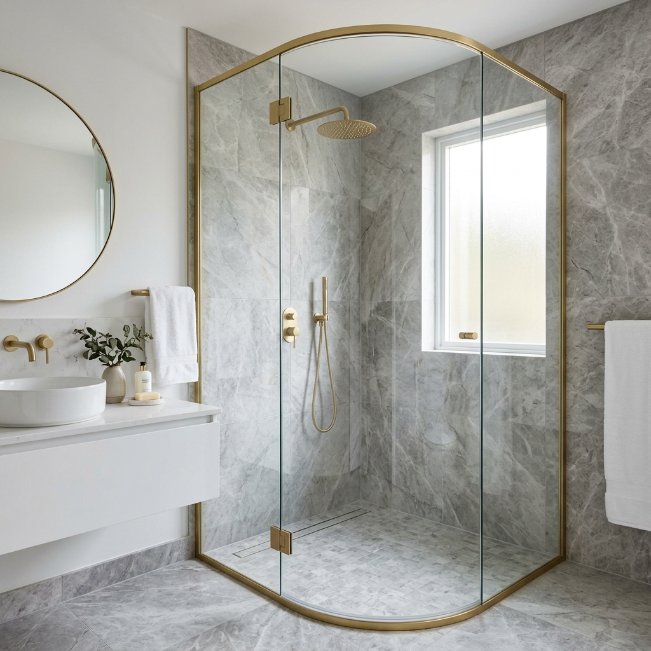
- Softens the room’s straight lines with a rounded, sculptural shape
- Uses less visual space than a squared-off glass enclosure typically requires
- Curved glass creates a more open sightline through the bathroom
- Modern alternative to traditional shower doors or boxy glass panels
- Adds a subtle architectural detail that feels custom rather than standard
Most walk-in showers rely on straight, squared glass panels, which is exactly why a curved enclosure feels so distinctive by comparison. The rounded shape softens a room otherwise filled with sharp countertop edges, rectangular mirrors, and straight cabinet lines, adding a subtle architectural moment that reads as custom rather than off-the-shelf. In small bathrooms, curved glass also tends to open up the sightline more effectively than a boxy enclosure, since there are no hard corners interrupting the view across the room. It’s a detail that immediately signals a more considered, design-forward renovation.
This idea does typically require custom fabrication, since curved glass isn’t a standard stock size like flat panels, but the visual payoff is significant. I’ve noticed that pairing the curved enclosure with brushed gold or matte black framing enhances its sculptural quality even further, making it feel like a deliberate design statement rather than just a functional barrier. Combined with large-format marble tile inside the shower, the rounded glass creates a genuinely spa-like, boutique hotel atmosphere. It’s a striking upgrade that consistently stands out in bathroom transformation photos.
Heated Marble Flooring
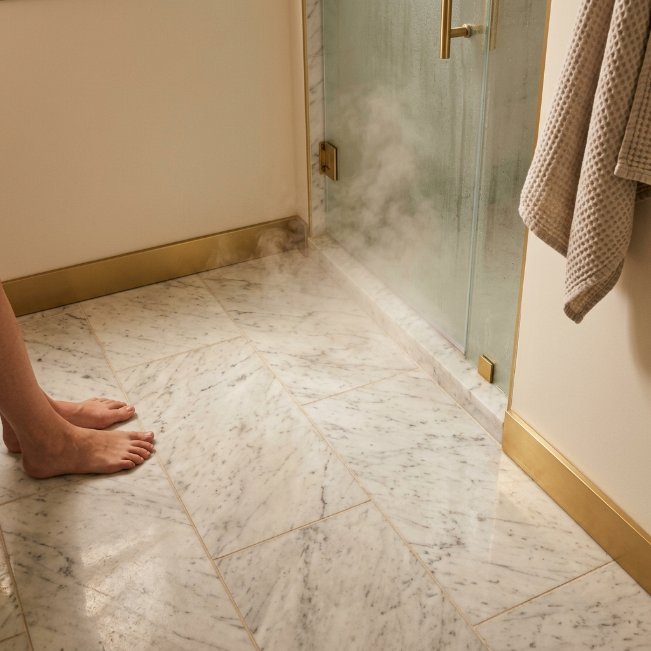
- Solves the common complaint of cold stone floors in colder months
- Marble stays warm underfoot without changing the room’s visual style
- Works especially well paired with heavy stone or tile flooring
- Adds a genuine comfort upgrade that guests and family notice immediately
- Small daily luxury that makes the whole bathroom feel more inviting
Cold marble floors are one of the most common complaints homeowners have about upgrading to stone, and heated flooring solves that problem completely without sacrificing the visual richness marble provides. Installed beneath the tile during renovation, radiant heating keeps the surface comfortably warm underfoot, even during colder mornings, which makes the entire bathroom feel more inviting to actually use. This is one of those luxury bathroom design ideas that guests rarely notice visually, but family members feel the difference every single day. It’s a comfort-driven upgrade rather than a purely decorative one.
In my experience, this is the single upgrade homeowners mention most often when asked what they’d never remove from a renovation. Unlike many design choices that are primarily about appearance, heated flooring directly changes the daily experience of the room itself, making it feel considered and genuinely thoughtful rather than just beautiful in photos. It does require planning ahead of tile installation, since the heating element sits beneath the stone, but the long-term comfort payoff makes it consistently worth the added upfront cost for anyone renovating a small bathroom from the ground up.
Botanical Accent Styling
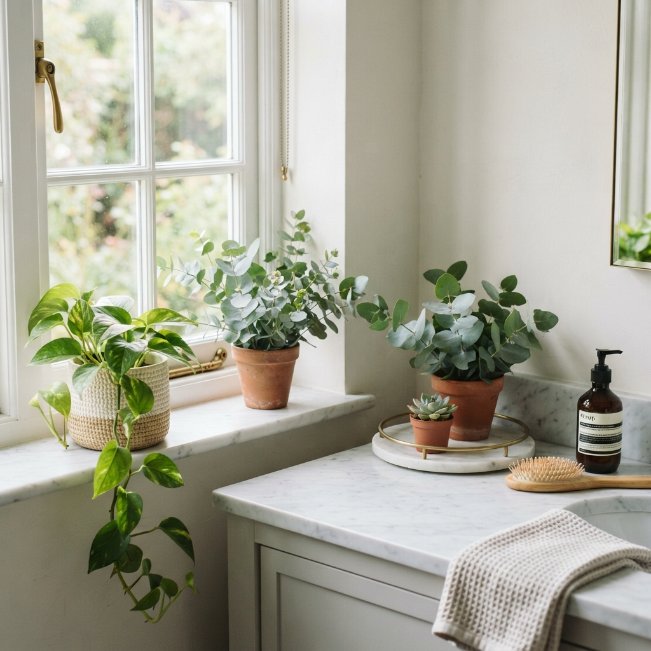
- Adds life and softness to a room otherwise filled with hard surfaces
- Small plants introduce color and texture without any renovation required
- Low-maintenance varieties like pothos thrive well in humid bathroom air
- Creates a fresh, spa-like feeling that photographs beautifully in natural light
- Inexpensive styling detail that instantly makes a space feel more finished
Plants do something no tile, marble, or fixture can, they introduce living texture and gentle movement into a room that’s otherwise composed entirely of hard, static surfaces. A small eucalyptus stem in a simple vase or a trailing pothos on the windowsill softens the overall look instantly, adding a fresh, organic quality that pairs beautifully with stone and metal finishes. This idea costs very little compared to almost anything else on this list, yet it’s consistently one of the most saved styling details across small luxury bathroom design inspiration, precisely because it’s achievable in literally any home, rented or owned.
I’ve noticed that choosing the right variety matters more than people initially expect, since not every plant tolerates a humid, low-light bathroom environment well. Pothos, snake plants, and eucalyptus tend to thrive in these conditions with minimal care, making them reliable choices rather than short-lived decoration. Placing greenery near natural light, even indirect light from a frosted window, keeps the styling looking fresh rather than wilted. It’s a simple, low-cost finishing touch that consistently completes the room’s overall aesthetic and photographs beautifully.
Minimalist Floating Shelves
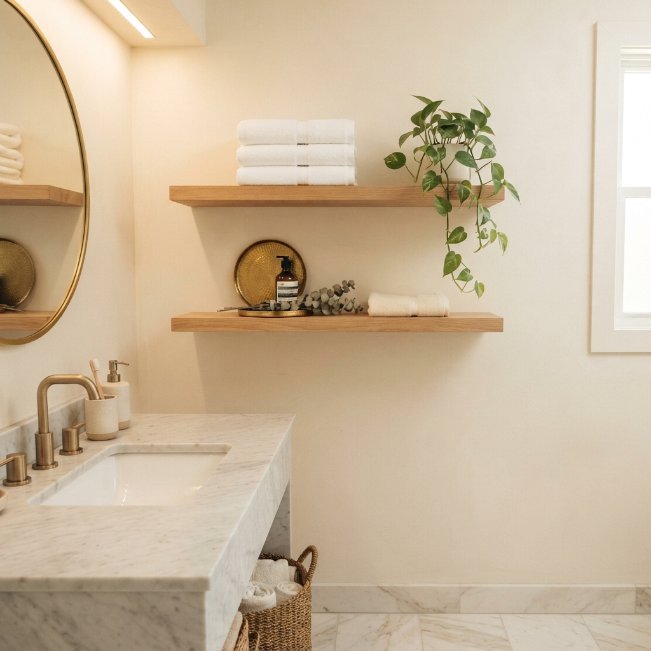
- Provides open storage without the bulk of a full cabinet or shelving unit
- Thin profile keeps the wall feeling light and uncluttered visually
- Styled sparingly, shelves become part of the room’s decoration
- Easy to install without major renovation or plumbing adjustments
- Works well above the toilet or beside the vanity mirror
Floating shelves solve a common small-bathroom dilemma, needing extra storage without adding visual bulk to an already tight space. Unlike a full cabinet, a thin wooden or floating shelf sits close to the wall, taking up minimal depth while still providing a place for folded towels, small trays, or a single plant. The key to making this idea feel intentional rather than cluttered is restraint, styling only a few carefully chosen items rather than filling every inch of available space. This is why many designers recommend fewer, larger objects over several small scattered ones.
I’ve seen this work well above toilets, beside vanity mirrors, or in awkward corners where a full cabinet simply wouldn’t fit comfortably. Choosing a wood tone that complements existing cabinetry, paired with a small brass tray or folded linen towels, ties the shelf into the room’s broader color palette. Because installation only requires a few wall anchors, this is one of the most accessible upgrades on this entire list, requiring no plumbing, no permits, and very little time to complete, yet it consistently adds both function and finished styling to the room.
Conclusion
A truly luxurious bathroom isn’t about size, it’s about intention. From floating vanities to layered lighting and sculptural details, these luxury bathroom design ideas prove that even the smallest room can feel like a private retreat. I’ve seen how small changes like these can completely transform a space, often faster and more affordably than homeowners expect. Now it’s your turn. Pick one idea that speaks to you, try it in your own bathroom, and watch how much richer the space feels. Save this post to your Pinterest board for later, and share it with anyone dreaming of a more beautiful, elevated home.