Transform Your Outdoor Space with these Backyard Garden Ideas!
Your home isn’t the four walls that you live in, it’s everything around it. When you begin to think of your own lawn like a living room, instead of ‘the space outdoors,’ you’ll see what wonderful possibilities are right out your door waiting to be tapped. From the biggest backyard to the smallest balcony, a garden can be your personal retreat.
The good news? This is an inexpensive solution that requires no large sums of money. A few inventive and inexpensive garden ideas and a weekend or two of hands-on work can transform your outdoor space. But if you’re more environmentally conscious, a sustainable system allows you to keep your outdoor garden alive for years with minimal expense.
If you have a yard, here is an easy-to-follow guide that helps you identify and understand your yard, as well as choose plants, lighting, water features, and even those little home charm decor items that make a space feel like you! Let’s dig in.
Before planting, you need to make sure you know what size your outdoor garden space is.Before planting, you need to be aware of the size of your outdoor garden space.
Take a moment to thoroughly analyze your yard before purchasing any plants or paver stones. This is the aspect that most people overlook, and that’s why many garden makeovers go unfinished or unfulfilling.
Watch the sunlight. Follow the path of light in your yard for a day or two. Some locations receive full sun for the entire day, some are shaded most of the day and some are in partial shade. This single detail will determine which plants will live in your garden.
Check your soil. The most basic soil test will report both the pH and the soil’s drainage characteristics. If your soil is too compact or too loose (sandy), you will need to loosen up your soil before planting permanent crops.
Map the layout. Do you have an inclined, sloped or odd-shaped yard? These are important details to consider regarding water accumulation following rain and where heavy furniture/structures can be safely placed. Even if you draw out a sketch of the layout, if that’s on paper, it’s going to save you some costly errors later.
Knowing your yard personality allows you to design your garden space to do what the yard wants, rather than what it doesn’t want.
Design a serene garden with a single container planter.4. Design a calm garden using one container planter.
Sometimes you don’t have a big backyard and this is okay. Making the best of limited space can create some of the most appealing yards. With small garden designs, it’s important to understand how to make use of height, rather than space.
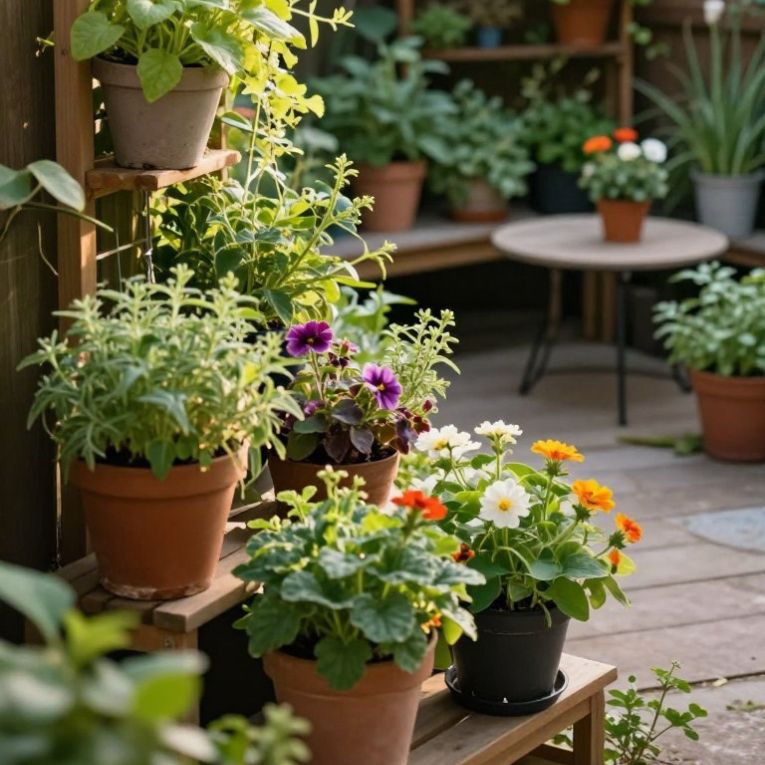
Go vertical. Grow vines and flowers without taking up too much ground space with a trellis, hanging basket or wall-mounted planter. In the footprint of a single pot, a tiered shelf against a fence will accommodate a dozen plants.
Try container gardening. Pots and planters are a gardener’s best friend. Can be relocated as to follow the sun, can be changed to suit the season, can be reconfigured in an afternoon. The use of various materials, including terracotta, ceramic and resin, also brings in a sense of texture without taking up too much space.
A few square feet, when thoughtfully arranged, can be luxuriant and purposeful, not cramped.
Easy DIY Garden Projects for Budget Conscious People
It doesn’t have to cost a lot of money to create a yard that will turn heads. Here are some inexpensive garden ideas that will give you a large return on your garden investment:
Use old crates, pallets or buckets as planters, rather than purchasing new ones.
Don’t buy established plants; use cuttings instead.
Consider gravel or mulch paths rather than a stone or pavers.
As the season ends, buy perennials that will regrow every year.
Replace mass-produced decor with DIY elements like painted pots, driftwood decorations, or repurposed furniture.
You don’t have to sacrifice beauty and quality in your garden when you’re on a budget! It’s a testament to the fact that good design is not only a function of available budget but of creativity.
Create Relaxation and Dining Areas that are Cozy
After you have your basics sorted out, consider how you will use the space on a daily basis. Zoning your yard into sections with meaning transforms your yard into a real extension of your house.
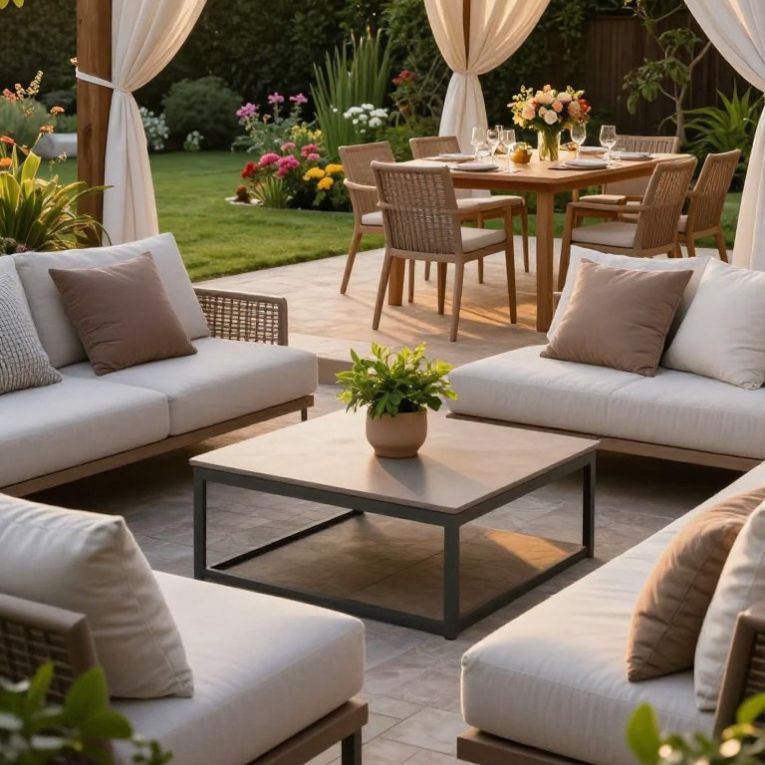
Create outdoor living rooms. To delineate different spaces, such as a reading area in one corner of the room and a dining area in another corner, use low hedges, fencing or tall planters. Use a straightforward path to tie them together, to make the whole yard come together naturally.
Select furniture that can withstand the weather. Check for teak or cedar wood, as these types of wood are naturally resistant to rot and insects. Solution dyed fabrics do not fade in the sun and powder-coated aluminum frames will not rust in humid climates; all-weather wicker is another good option that will look polished for years with very little care.
Consider creating distinct spaces, such as a dining area by the kitchen door and a peaceful area nestled away from the hustle and bustle to make your yard more intentional than unintentional.
Add Hardscaping Elements for Structure (5)
Plants provide life to your garden, hardscaping provides form. The whole piece is held together with paths, patios and walls.
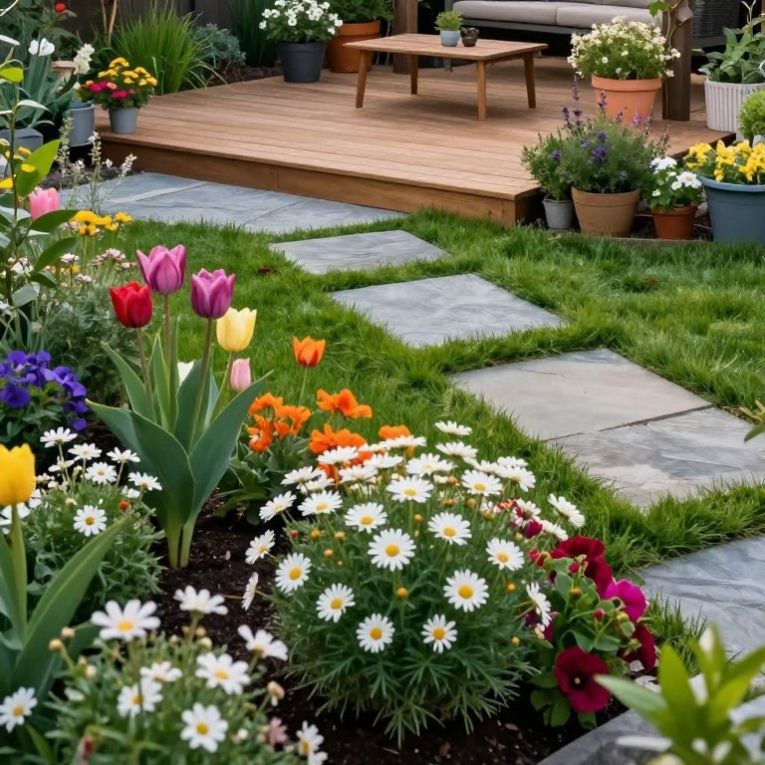
Choose the materials that are suitable for your style and budget. A variety of different textures such as smooth pavers with natural stone creates interest and helps avoid “flatness” in walkways. Smart choice is also permeable pavers which allow rain water to percolate through and into the soil, rather than standing in puddles.
Plans for sloped yards should include consideration of retaining walls. They transform an awkward hill into usable, tiered space you can plant or sit on. Stone borders around the garden beds are an easier choice – they will retain the mulch and make an overall yard look cleaner, with almost no effort.
If the garden looks like it is “nice,” but not real professional, then it is because of the quality of the hardscaping.
Select plants for year round color.
Spring garden is boring if it’s just as beautiful in spring. A variety of plants provides variety in all seasons.
Manage perennial and annual crops. Perennials are the backbone of your garden — they come back year after year with little or no effort. Annuals grow in quickly and with bold color to fill in the spots during the growing season. Make sure to have a succession of blooms to ensure flowers are always present.
Use native species. They can adapt to local weather conditions and only require minimum watering, fertilizing, and maintenance. As a bonus, local bees, birds and butterflies visit your yard as well, creating a place for wildlife in your own yard and reducing maintenance without a lot of work.
The color and texture of this combination brings life to your outdoor garden space in all seasons—even in the colder ones.
Incorporate Water Features for a soothing atmosphere.
The sound of flowing water has a calming effect on any space. It also makes a fine job of muffling street noise or neighbour noise.
The first place to start is with the self contained fountain which requires no plumbing, and all done in one. You can even incorporate a tiny fountain in a decorative pot to be included with your container garden.
A little more work but much more atmosphere is created with small ponds. Installation is easy with a pre-formed liner and partial shade will limit algae growth. A few water lilies will do the trick and attract birds and butterflies naturally and you have a mini ecosystem.
Remember, do not overpower your yard with a water feature.
Create a beautiful garden with Smart Lighting after dark.
You don’t want to waste a gorgeous day garden just because it’s nighttime. Layered lighting extends your lighting hours well into the night.
Ambient lighting provides you with overall light in order to move around comfortably.
Task lighting provides light for a particular area – grills, dining tables, reading corners.
Path lighting allows for safe walking without the need for wiring and provides path lighting using solar lights.
Accent lighting brightens an area such as a favorite tree, statue or feature wall for added drama after dark.
One of the best low cost garden concepts is solar path lights – they’re charged during the day and automatically turn on at dusk, but they don’t require any electricity.
Don’t miss this opportunity to plant an edible garden.Plant your own food with an edible garden.
Why not share your garden with you, as well? Edible gardening is a combination of beauty and practical utility.
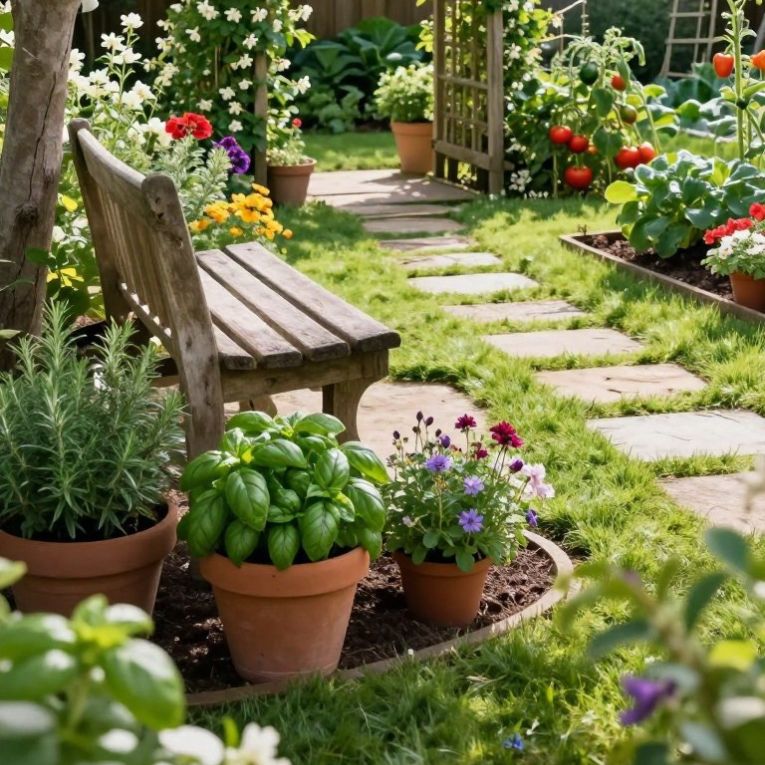
Raised beds are the best beginning. They allow for better soil quality and soil drainage; they are easier on your back to plant and weed; and they even allow you to get a head start on your growing season in the spring.
Fruit trees and berry bushes provide food and landscape. Use them to edge a property, or as a standout in a lawn. Ensure they receive 6-8 hours of direct sunlight per day, cluster together plants with similar water needs and mulch around the base to help retain moisture.
There are few things more satisfying than going for your backyard dinner ingredients.
Top it all off with Home Charm Decors, Privacy & Sustainable Touches.
The final layer is the personal touches and sustainable living changes that are the finishing lines of a garden — those small items, which make a garden so personal.
Add privacy naturally. Boxwood or arborvitae evergreen hedges provide a barrier that prevents sight and sound all year round. In more confined areas, a living wall made of vertically stacked planters serves the same purpose, but doesn’t consume floor space. Climbing vines (jasmine or clematis, for instance) lend a soft green screen with an esthetic as well as practical purpose to trellises.
Do sustainable where you can. Create a basic compost pile to convert food waste into organic matter that’s rich in nutrients and free of costs. Set up a rain barrel at the end of your gutter to water your plants with free water. Mulch beds to retain water and reduce watering.
Remember to add details! A few carefully chosen home charm decor items, such as a hand painted planter, a used bench, string lights through a trellis, is what can transform a garden into a space that is uniquely yours.
Incorporate Water Features for a soothing atmosphere.
The sound of flowing water has a calming effect on any space. It also makes a fine job of muffling street noise or neighbour noise.
The first place to start is with the self contained fountain which requires no plumbing, and all done in one. You can even incorporate a tiny fountain in a decorative pot to be included with your container garden.
A little more work but much more atmosphere is created with small ponds. Installation is easy with a pre-formed liner and partial shade will limit algae growth. A few water lilies will do the trick and attract birds and butterflies naturally and you have a mini ecosystem.
Remember, do not overpower your yard with a water feature.
Final Thoughts
Creating a true retreat doesn’t need to be an all-out effort with a wide array of expensive components or a crew of professionals — it simply calls for a little planning and a little experimentation. First, know your space, then select a couple of small garden ideas or low budget garden ideas that you are excited about, and then work outward from those.
Arranged together, they form an outdoor garden landscape, which becomes more beautiful each year, with the help of native plants, a water feature, some smart lighting, and a few thoughtful home decors. Take a sheet of paper, make a rough sketch, and begin creating your dream retreat in that blank yard.
Frequently Asked Questions (FAQs)