
23 Girls Bedroom Ideas Every Mom Will Fall For
Introduction:
A bedroom should feel like a hug at the end of the day. It’s where imagination runs wild, secrets get whispered under blankets, and a little girl starts figuring out who she is. If you’ve been searching for girls bedroom ideas that feel fresh, cozy, and genuinely doable, you’re in the right place.
In my experience, the best bedrooms aren’t the ones with the biggest budgets — they’re the ones with the most thoughtful little details. A canopy here, a gallery wall there, a warm glow of fairy lights at night. I’ve noticed that parents often overthink this process, assuming a full room makeover requires new furniture or major renovations. It rarely does.
This list of 23 ideas covers every stage, from toddler to teen, small rooms to shared spaces, playful pastels to grown-up neutrals. Whether you’re starting from scratch or just want to refresh a tired corner, there’s something here that will genuinely work in your home — not just in a styled photo.
Canopy Bed Nook
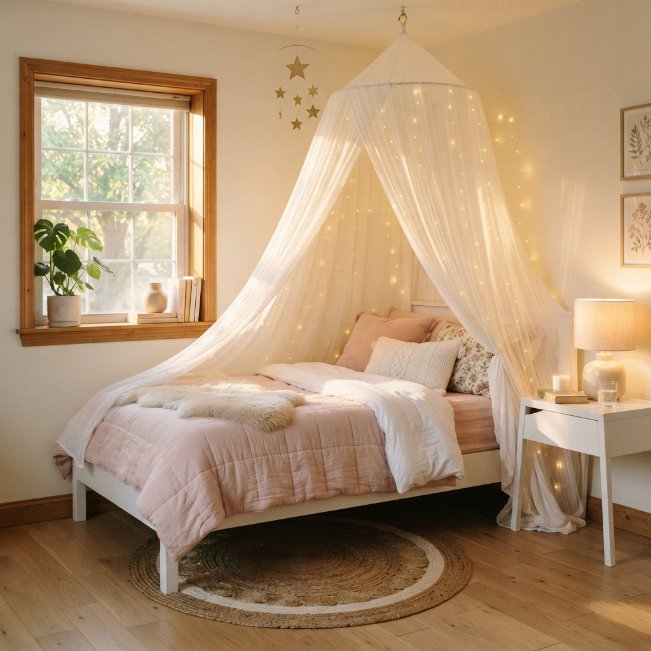
- Creates an instant focal point without needing a headboard
- Adds softness and privacy to an open sleeping area
- Works in both small and large rooms with minimal cost
- Pairs beautifully with fairy lights or pom-pom trim
- Easy to switch out fabric colors as taste changes
Nothing transforms a plain bed faster than a canopy. It takes an ordinary sleeping corner and turns it into a soft, private little world that feels curated and calm. In my experience, canopies work especially well in rooms with high ceilings or awkward corners, since the draped fabric naturally softens hard architectural lines. For girls who love a touch of fantasy, this idea adds movement and texture without requiring any structural changes, making it one of the easiest upgrades to attempt on a weekend.
A canopy also solves a common problem in shared or open-plan rooms: the need for a sense of enclosure. Kids often sleep better when their bed feels like its own defined space rather than floating in the middle of a room. I’ve noticed that even simple tension-rod canopies, under $30, create the same cozy effect as expensive four-poster frames. This makes the look accessible for almost any budget while still delivering that scroll-stopping, Pinterest-worthy visual that photographs beautifully in natural light.
Pastel Accent Wall
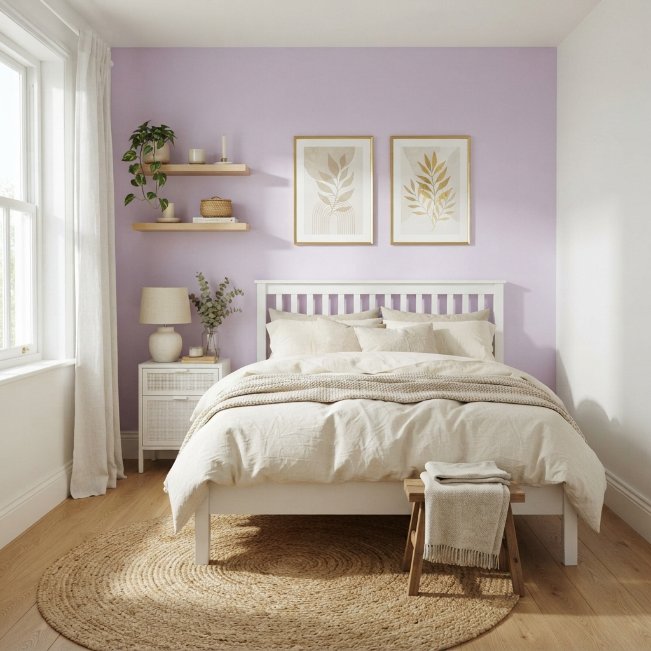
- Adds color without overwhelming the whole room
- Easy weekend project with low material cost
- Works for toddlers through teens by adjusting the shade
- Creates a natural photo backdrop for the space
- Pairs well with white or neutral furniture pieces
A single painted wall does more visual work than people expect. Instead of committing to full-room color, one pastel accent wall gives just enough personality to feel intentional and styled. That’s why many designers recommend this approach first when a client is unsure about bold choices — it’s low-risk and easy to repaint later. The color instantly becomes the room’s anchor, tying together bedding, art, and decor choices without making the space feel busy or overdone.
Soft tones like lilac, sage, or blush read as calming rather than childish, which is part of why this idea suits such a wide age range. A six-year-old’s room and a tween’s room can use the exact same wall color and feel completely different depending on the furniture and accessories layered on top. I’ve seen this work well in real homes where parents wanted a design that could grow with their daughter for years, saving both money and future repainting effort.
Reading Corner Nook
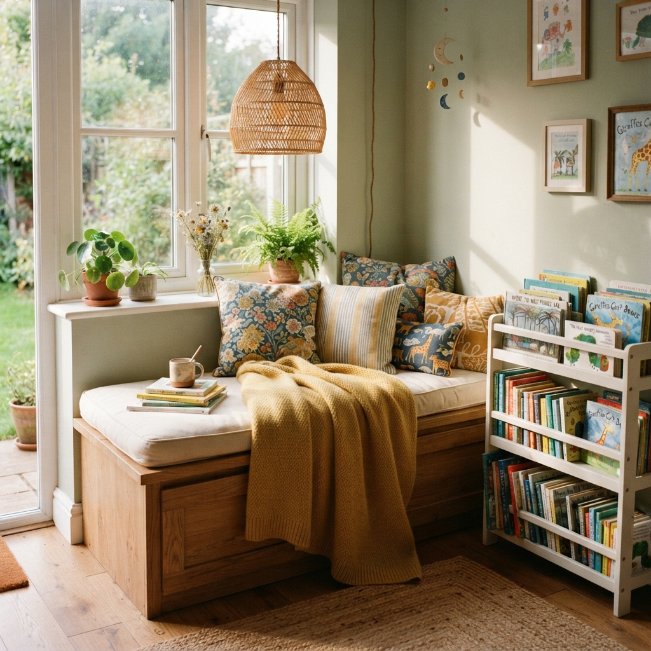
- Encourages independent play and quiet time away from screens
- Uses awkward corners or window nooks that often go to waste
- Adds texture through layered pillows and soft textiles
- Doubles as extra seating for guests or siblings
- Simple to build using just a bench and cushions
A reading nook gives a bedroom purpose beyond sleeping. It carves out a quiet, dedicated spot where a child can settle in with a book, away from the main play area or desk. Parents often underestimate how much a defined “quiet corner” helps with winding down before bedtime. In my experience, nooks placed near natural light get used the most, since daylight naturally draws kids toward that part of the room throughout the day, making it feel like a favorite little escape rather than a forgotten corner.
Building one doesn’t require carpentry skills or a big budget. A window seat cushion, a few floor pillows, or even a repurposed armchair can create the same cozy effect. The key visual trick is layering — mixing textures like knit blankets, patterned cushions, and a soft rug underfoot. This layered look is exactly what performs well on Pinterest, since it feels warm and lived-in rather than staged, giving readers a realistic and achievable version of the idea for their own home.
Fairy Light Canopy
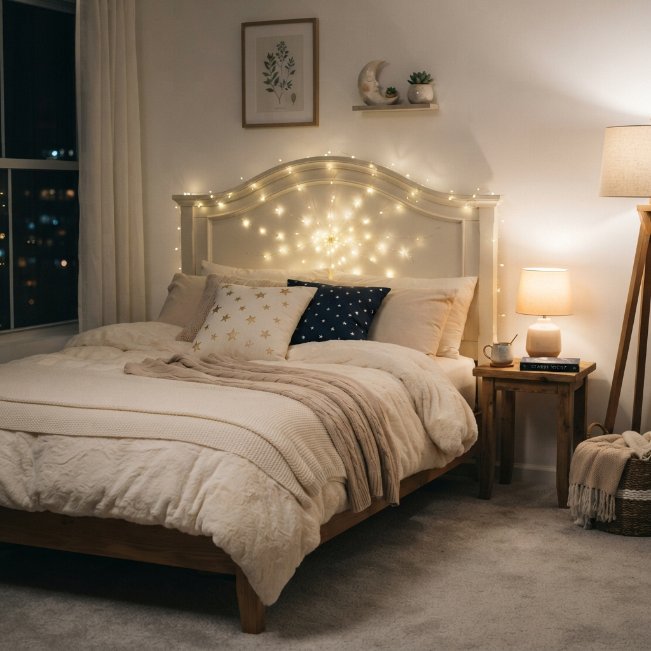
- Adds instant warmth and magic without major renovation
- Works as both decor and a functional nightlight
- Inexpensive and battery or plug-powered options available
- Creates a soft glow that photographs beautifully at night
- Easy to reshape into hearts, stars, or curtain styles
String lights have become one of the most requested bedroom features, and it’s easy to see why. They add a soft, magical glow that transforms a plain wall into something that feels handmade and personal. Unlike overhead lighting, fairy lights create a gentle ambiance that many kids find comforting at bedtime. I’ve noticed that girls especially love shaping the lights into hearts or initials above their headboard, turning a simple string light into a personalized art piece that changes the entire feel of the wall behind the bed.
Beyond the visual appeal, fairy lights solve a real nighttime problem: harsh overhead lighting that makes winding down difficult. A soft glow signals to the brain that it’s time to relax, which is why so many bedtime routines benefit from this small addition. Battery-powered strands with removable adhesive hooks make this one of the safest and most rental-friendly upgrades available. It requires no wiring, no tools, and can be completely repositioned whenever the room’s layout or theme changes.
Gallery Wall Display
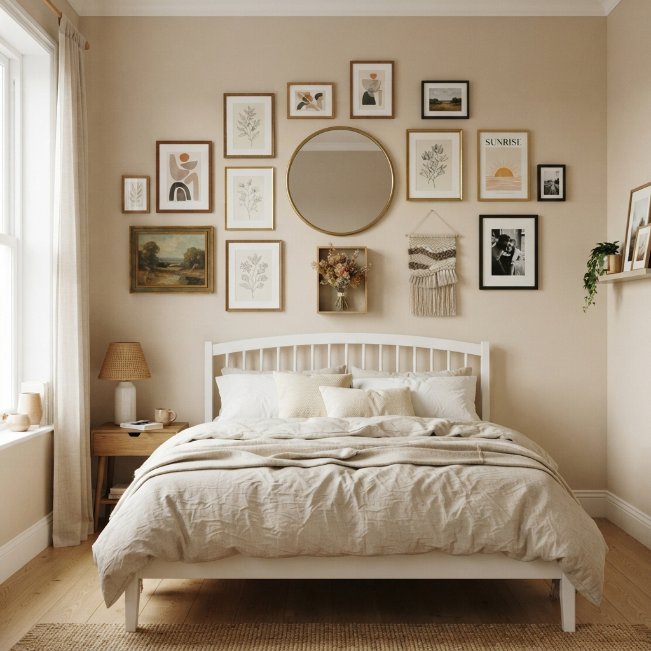
- Personalizes the space with meaningful photos or art
- Fills empty wall space above the bed or desk
- Mixes frame sizes and shapes for visual interest
- Grows and changes easily as interests shift over time
- Budget-friendly using printable art or thrifted frames
A gallery wall turns blank space into a personal story. Instead of one large piece of art, a mix of smaller frames, mirrors, and textures creates depth and makes the room feel collected over time rather than bought all at once. That’s why many designers recommend starting with a paper template on the floor before committing to nail holes — it prevents costly mistakes and awkward spacing. This idea also gives kids a chance to be involved, choosing which pictures or prints matter most to them.
What makes this approach so popular on Pinterest is how endlessly customizable it is. A gallery wall can lean into botanical prints, family photos, inspirational quotes, or all three combined without ever looking cluttered, as long as spacing stays consistent. I’ve seen this work well even in rental homes using removable adhesive strips instead of nails. It’s one of the few decor ideas that genuinely evolves with a child, since frames can be swapped out individually as tastes or milestones change.
Floating Wall Shelves
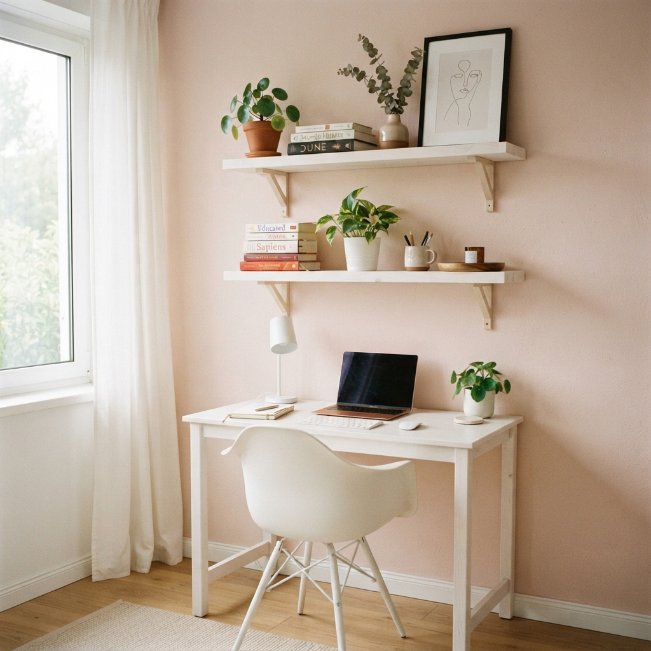
- Adds storage without taking up floor space
- Keeps favorite items visible and easy to reach
- Creates a styled focal point above a desk or bed
- Works well in small rooms needing extra function
- Simple to install with minimal wall damage
Floating shelves solve one of the most common bedroom challenges: not enough storage without sacrificing floor space. Mounted above a desk or bed, they give kids a place to display favorite books, small plants, or keepsakes while keeping the surfaces below clear and functional. This idea works particularly well in smaller bedrooms, where every inch of floor space matters. Unlike bulky bookcases, shelves keep the room feeling open and airy while still offering practical storage that grows along with a child’s collection of belongings.
Styling floating shelves is part of what makes them so Pinterest-friendly. A mix of height, texture, and negative space — rather than cramming every inch — creates that clean, curated look readers want to recreate. In my experience, three to five items per shelf, with some empty breathing room, looks far more intentional than a fully packed shelf. This small styling detail makes the difference between a shelf that looks cluttered and one that looks like it belongs in a design magazine.
Bunk Bed Playhouse
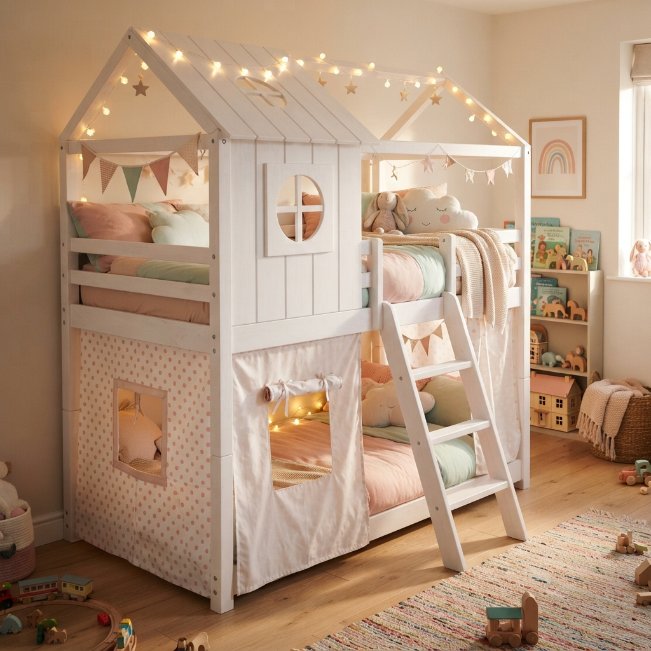
- Maximizes floor space in shared or small bedrooms
- Turns a functional piece into an imaginative play zone
- Bottom bunk can double as a reading or play tent
- Great solution for siblings sharing one room
- Adds a fun architectural element beyond a standard bed
Bunk beds have come a long way from their purely practical roots. Today, they double as a design statement, especially when the lower bunk gets dressed up with a curtain or tent skirt to create a hideaway feel. This idea works exceptionally well for siblings sharing a room, since it gives each child a sense of their own defined space even within one shared piece of furniture. Adding fabric, lights, or a chalkboard panel to the frame turns a purely functional item into one of the most-loved features in the entire room.
Safety and function matter just as much as style here. Guardrails, sturdy ladders, and proper spacing between bunks should always come first before decorative additions. Once the structural basics are covered, styling becomes the fun part. I’ve noticed that kids often gravitate toward the bottom bunk for play, even when the top bunk is where they sleep, which is exactly why designing the lower level as a cozy tent-like nook adds so much everyday value beyond bedtime.
Wallpaper Statement Wall
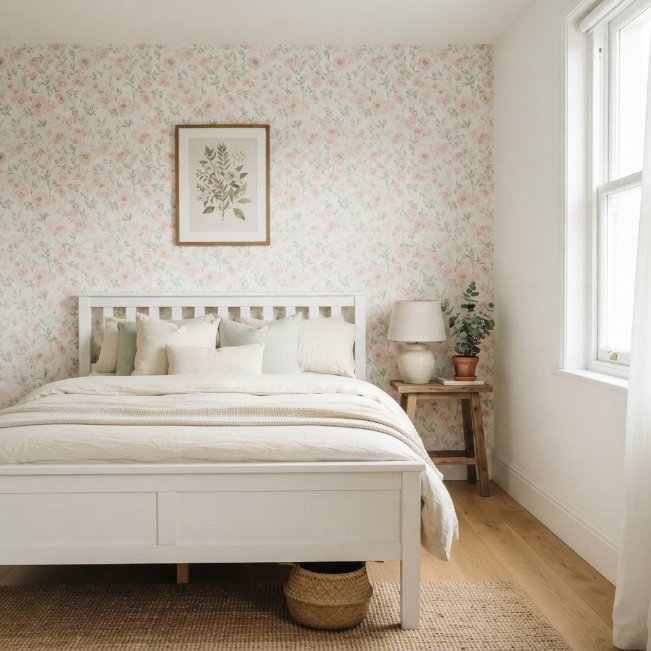
- Adds pattern and personality without full-room commitment
- Removable options make it renter and budget friendly
- Instantly elevates a plain room into a styled space
- Works behind a bed as a natural focal point
- Available in countless themes from floral to celestial
Wallpaper has made a major comeback, largely because peel-and-stick versions removed the biggest barrier: commitment. A single wallpapered wall behind the bed creates instant visual impact without the cost or effort of wallpapering an entire room. This approach lets a bold floral, geometric, or celestial pattern take center stage while the rest of the walls stay neutral, keeping the space from feeling overwhelming. It’s one of the fastest ways to make a plain, builder-grade bedroom feel custom-designed and thoughtfully put together.
What makes this idea especially practical is its flexibility across ages and styles. A soft floral works beautifully for a young child’s room, while the same wall can later be updated with a bolder, more mature pattern as tastes change. That’s why many designers recommend removable wallpaper specifically for kids’ rooms — it allows the look to evolve without damaging walls or requiring repainting. The result is a space that feels fresh, personal, and completely on-trend without demanding a full renovation.
Vanity Corner Setup
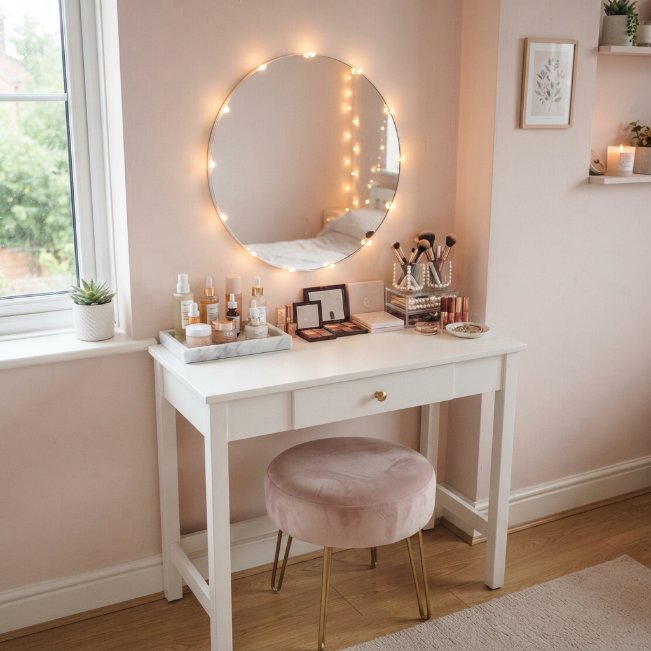
- Gives a dedicated spot for getting ready each morning
- Encourages tidiness by containing beauty items in one area
- Mirror and lighting combo adds a glamorous focal point
- Fits well in a corner or unused wall space
- Scales from simple for tweens to elaborate for teens
A vanity corner gives a bedroom a clear sense of purpose beyond sleeping. For tweens and teens especially, having a dedicated spot to get ready each morning builds a small daily ritual that feels grown-up and exciting. This idea also helps with everyday organization, since hair tools, accessories, and skincare items have one designated home instead of spreading across the whole room. Even a small corner desk with a mirror can deliver this effect, making it achievable in bedrooms that don’t have much extra square footage to spare.
Lighting is what elevates a vanity from purely functional to genuinely photogenic. Ring lights or fairy-light-trimmed mirrors create that soft, flattering glow readers associate with high-end vanity setups, and they’re inexpensive to add. I’ve seen this work well even in tiny rooms by using a fold-down desk or repurposed dresser instead of a bulky dedicated vanity. The finished look consistently ranks among the most-saved bedroom ideas on Pinterest, since it combines function, style, and that coveted “getting ready” aesthetic in one small corner.
Under-Bed Storage Bins
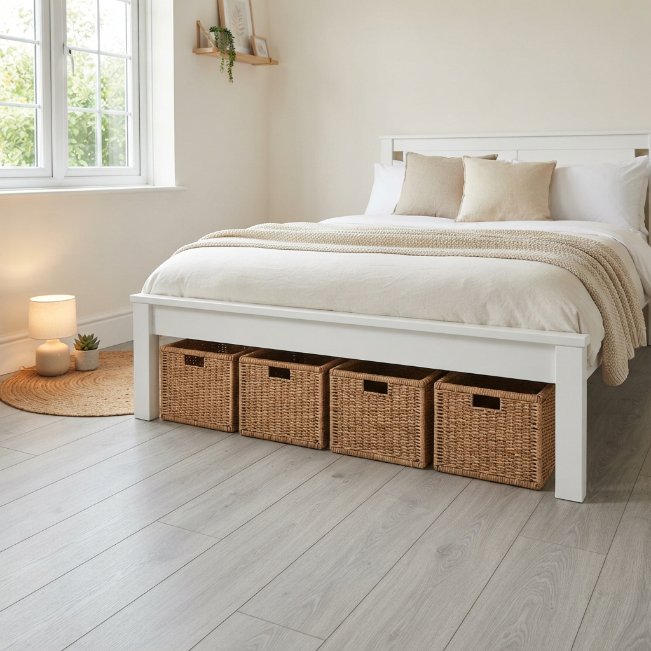
- Uses hidden space that often goes completely wasted
- Keeps toys, shoes, or extra bedding out of sight
- Baskets add texture while staying purely functional
- Ideal for small bedrooms needing extra organization
- Easy to slide out and access without moving furniture
Under-bed space is one of the most overlooked areas in a kids’ bedroom, yet it often has the biggest storage potential. Woven baskets, rolling bins, or drawer units slide neatly out of sight while holding everything from off-season clothes to extra blankets. This solution works especially well in smaller rooms, where every bit of floor space needs to serve a purpose. Instead of a room that constantly feels cluttered, hidden storage keeps surfaces clear while still giving kids easy access to their belongings whenever they need them.
Choosing the right containers makes a bigger visual difference than people expect. Woven or fabric bins add warmth and texture, while clear plastic bins prioritize function over style. In my experience, mixing two matching baskets rather than mismatched containers instantly makes the space look more intentional and pulled together. This small styling choice is often what separates a bedroom that feels chaotic from one that feels calm and organized, even when both rooms technically hold the same amount of stuff underneath the bed.
Ceiling Star Projector
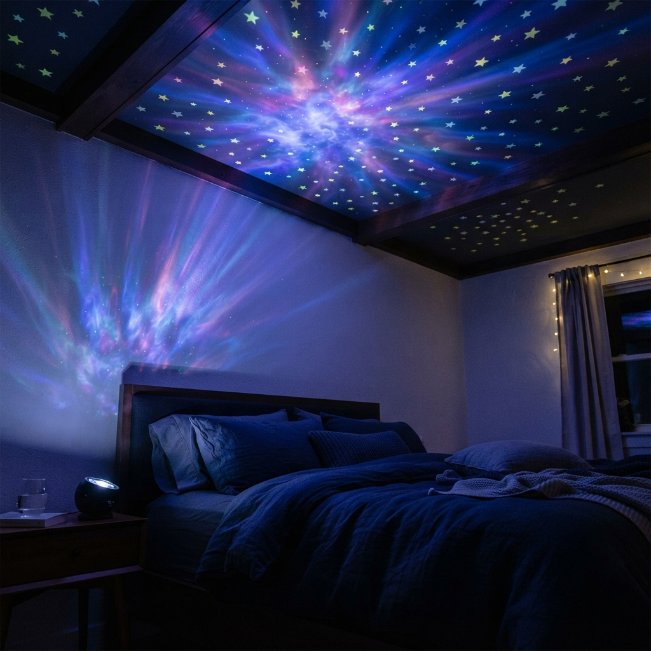
- Creates a calming bedtime atmosphere without harsh light
- Doubles as a nightlight for kids afraid of the dark
- Adds a magical, dreamy element to ceiling and walls
- Affordable and fully removable, no installation required
- Encourages a consistent, screen-free wind-down routine
A star projector does more than look pretty on Pinterest. It genuinely helps with bedtime routines by giving kids something calming to focus on as they settle down for sleep, replacing the harsh glow of a phone or tablet screen. The soft moving light patterns across the ceiling create a sense of wonder without being overstimulating, which is why this idea remains popular across such a wide age range. It transforms an ordinary ceiling into an ever-changing visual feature that costs very little compared to permanent ceiling decor.
Beyond the aesthetic appeal, there’s a practical safety benefit worth mentioning. Many projectors double as gentle nightlights, which helps children who feel anxious in complete darkness fall asleep more easily. I’ve noticed that this small addition often becomes part of a nightly ritual, signaling that it’s time to wind down. Unlike glow-in-the-dark stickers, projectors can be turned off completely during the day, keeping the ceiling looking clean and uncluttered when the magical effect isn’t in use.
Growth Chart Wall Art
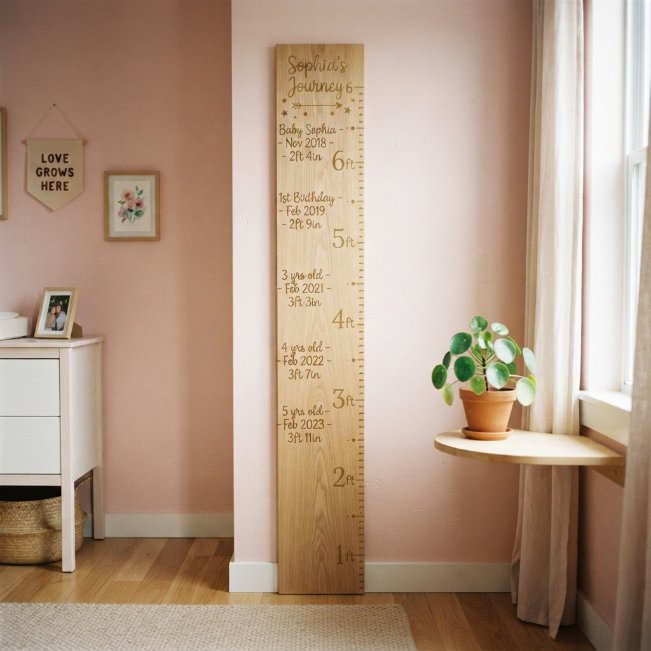
- Tracks height in a decorative, wall-mounted keepsake
- Replaces pencil marks with a reusable, moveable design
- Adds a sentimental, personal touch to the room
- Works as functional decor rather than plain wall art
- Available in styles from rustic wood to modern minimal
A growth chart turns something every parent already does — tracking height on a doorframe — into a piece of decor worth keeping forever. Unlike pencil marks on a wall, a wooden or fabric growth chart moves with the family from house to house, preserving years of memories in one decorative object. This idea adds sentimental value that few other decor pieces offer, since it becomes more meaningful with every mark added over the years rather than losing relevance as trends change.
Styling-wise, a growth chart also fills vertical wall space that’s often difficult to decorate, especially in narrow gaps beside furniture or windows. That’s why many designers recommend it as a practical alternative to standard wall art in kids’ rooms. I’ve seen this work well as a nursery decor piece that later transitions seamlessly into a big-kid or tween room, since the chart itself never goes out of style. It’s a rare example of decor that’s both deeply functional and genuinely emotional for the whole family.
Hanging Macrame Decor
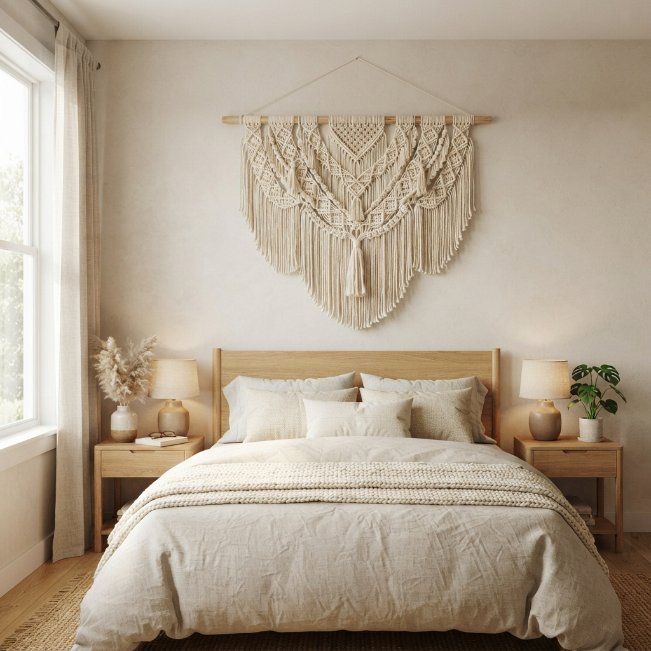
- Adds texture and dimension without using bright color
- Fills empty headboard space in a soft, artistic way
- Complements neutral or boho-themed bedroom palettes
- Lightweight and easy to hang with a single hook
- Suits tweens and teens moving away from childish themes
Macrame brings texture into a room in a way that flat wall art simply can’t. Hung above a bed, it softens the space and adds visual interest through knots, fringe, and natural fiber tones rather than relying on bold color or pattern. This idea works particularly well for tweens transitioning out of a more childlike bedroom theme, since macrame reads as mature and stylish without feeling too grown-up too fast. It’s a subtle way to refresh a headboard wall without repainting or committing to permanent wallpaper.
The neutral, earthy palette macrame typically comes in makes it incredibly easy to style around. It pairs well with pastel, white, or even jewel-toned bedding without clashing, which is part of why it photographs so well for Pinterest boards. In my experience, a slightly oversized piece makes more visual impact than a small one, even in modest-sized rooms. The layered, handmade look gives the wall a cozy, artisanal quality that feels far more expensive than the piece typically costs.
Canvas Tent Play Area
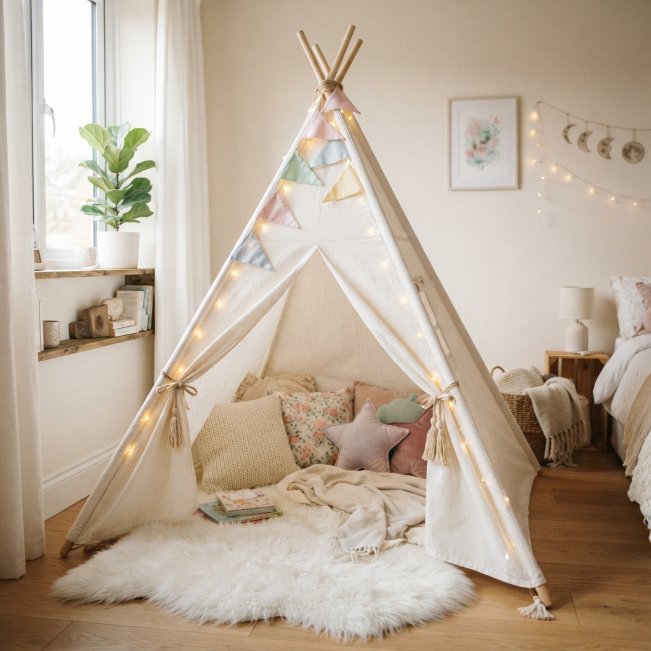
- Creates a dedicated play zone separate from the sleeping area
- Adds a whimsical, imaginative element kids genuinely use
- Folds away or relocates easily when not needed
- Doubles as a reading or quiet time retreat
- Works well in corners that otherwise sit empty
A play tent gives a bedroom something a plain floor space never can: a sense of adventure. Tucked into an unused corner, a canvas teepee becomes a favorite retreat for reading, playing, or simply having a quiet moment away from the rest of the room. This idea works especially well for younger girls, since it taps into imaginative play while still looking polished enough to feature as intentional decor rather than a scattered toy. It fills dead space that would otherwise go completely unused.
What makes tents such a practical choice is how easily they adapt to a growing child. Fill it with stuffed animals and picture books for a toddler, or restyle it with fairy lights and floor cushions for an older kid who wants a cozy hangout spot. I’ve seen this work well as a transitional piece that stays relevant for years, simply by changing what’s placed inside. It also gives kids a small, contained space that feels like their own, which many parents find helps with independent play.
Themed Bedding Set
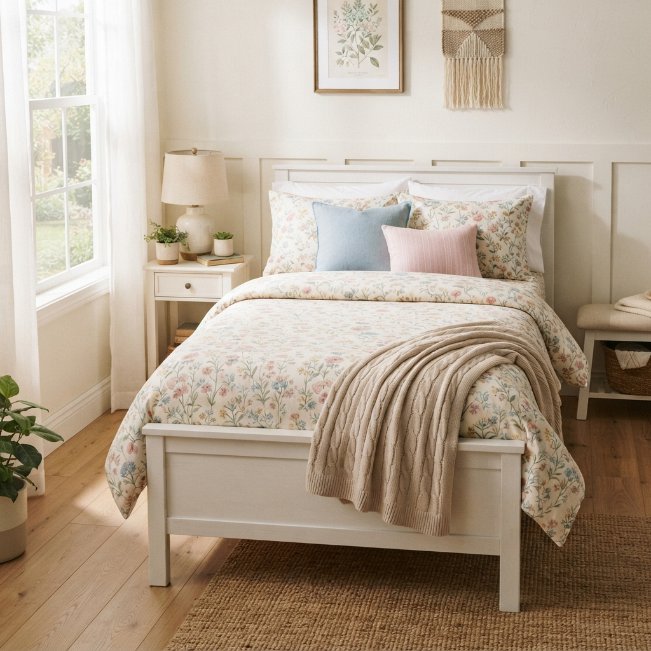
- Ties the entire room’s color scheme together instantly
- Easiest and most affordable way to refresh a room
- Sets the tone for every other decor choice
- Available in countless patterns to match personality
- Simple to swap seasonally without major redecorating
Bedding is the fastest way to transform a bedroom’s entire mood, and it requires no tools, painting, or installation. A coordinated set instantly sets the color palette and style direction for the whole room, which makes every other decor decision easier afterward. This idea is often the very first step designers suggest when refreshing a kids’ room, since it delivers the biggest visual impact for the lowest cost and effort. A single new bedding set can make a room feel completely redesigned in under an hour.
Choosing a set with two or three coordinating patterns, rather than one flat design, adds depth without looking mismatched. That’s why many designers recommend layering a solid sheet, a patterned duvet, and a few textured throw pillows instead of buying one single matching bundle. I’ve noticed that this layered approach photographs far better and feels more personal than an all-in-one boxed set. It also gives kids room to mix in their own favorite colors or characters through the pillow layer alone.
Ombre Wall Paint
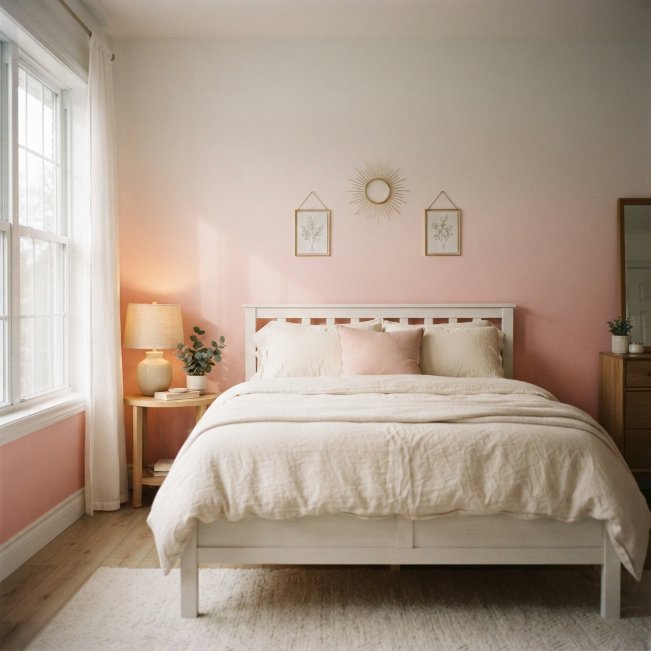
- Adds a soft gradient effect without needing wallpaper
- Creates a dreamy, artistic backdrop behind the bed
- Works well with minimal furniture and decor
- Achievable as a DIY project over a weekend
- Suits both playful and more mature room styles
An ombre wall brings a painterly, artistic quality to a bedroom that flat color simply can’t achieve. Blending one shade into white or another pastel tone creates a soft gradient that feels custom-made, even though it only requires paint and a sponge or blending brush. This idea works particularly well as a headboard backdrop, since the gradient draws the eye upward and adds visual interest without competing with bedding or furniture. It’s a step up from a single-color wall for anyone wanting something a little more distinctive.
Getting a smooth blend does take some patience, and I’ve noticed that working in thin layers rather than rushing the transition makes the biggest difference in the final look. Painter’s tape isn’t needed here since the whole point is a soft, blurred edge between tones. This technique also ages well, since the color can be deepened or lightened later with an additional coat rather than requiring a full repaint, making it a flexible choice for a room that will change over several years.
Hanging Swing Chair
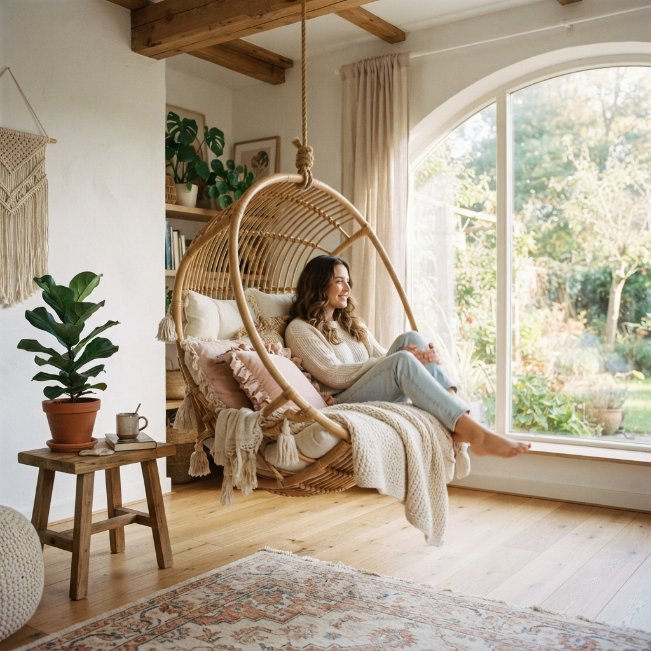
- Adds a fun, functional seating alternative to a desk chair
- Creates a cozy spot for reading, relaxing, or hanging out
- Doubles as a striking visual focal point in the room
- Requires ceiling mounting or a sturdy freestanding frame
- Popular among tweens and teens wanting a unique feature
A hanging chair turns an unused corner into one of the most-used spots in the entire room. Unlike a standard desk chair, a swing chair invites lounging, reading, or scrolling through a phone in a way that feels playful rather than purely functional. This idea has become especially popular among tweens and teens looking for a bedroom feature that feels uniquely theirs, something that stands out from a typical furniture setup. It brings movement and softness into the room simply through its shape and the way it gently sways.
Installation matters more here than with most decor ideas, since the chair needs either a ceiling stud or a freestanding metal frame rated for the weight. That’s why many designers recommend the freestanding frame option for renters or anyone unsure about ceiling support. Once secured, layering the seat with cushions and a soft throw makes it look finished rather than sparse. I’ve seen this work well even in smaller rooms, since the chair’s open, airy shape doesn’t visually crowd the space the way a bulky armchair would.
Chalkboard Wall Panel
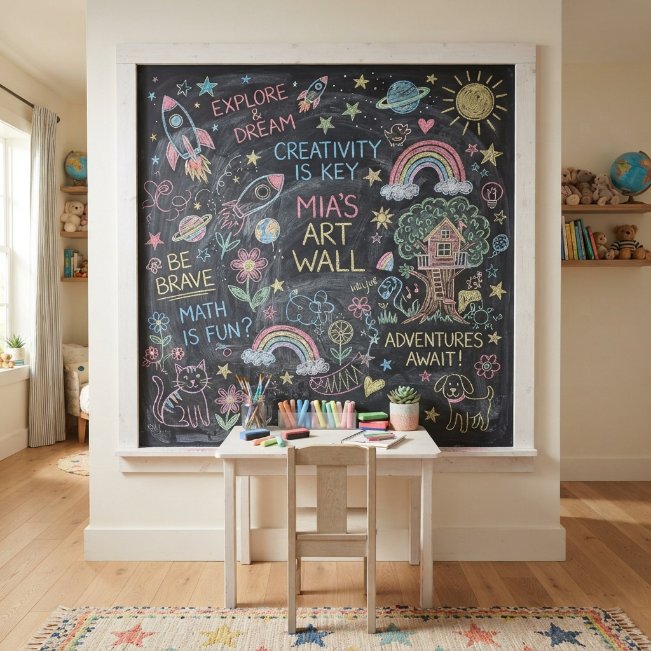
- Gives kids a space to draw, write, or doodle freely
- Keeps creative mess contained to one designated area
- Easy to update or completely erase and restart
- Works well near a desk or homework area
- Encourages self-expression as part of the room’s design
A chalkboard wall gives kids permission to be creative directly on the walls, without any of the usual worry about marker stains or crayon marks elsewhere in the room. Framed like a piece of art rather than left as a plain painted rectangle, it becomes a functional design feature rather than looking like an afterthought. This idea works especially well for younger girls who love to draw, since it gives them full ownership over one part of their space, something that can change daily depending on their mood or current interests.
Placement makes a real difference in how much use this feature gets. I’ve noticed that chalkboard panels installed near a desk or homework nook get used far more consistently than ones placed in a random corner, since kids naturally reach for it during other tasks. A small shelf or drawer nearby to store chalk keeps the area tidy between uses. Over time, this becomes one of the most personal features in the room, since the artwork on it constantly reflects whatever the child is currently into.
Floral Ceiling Decal
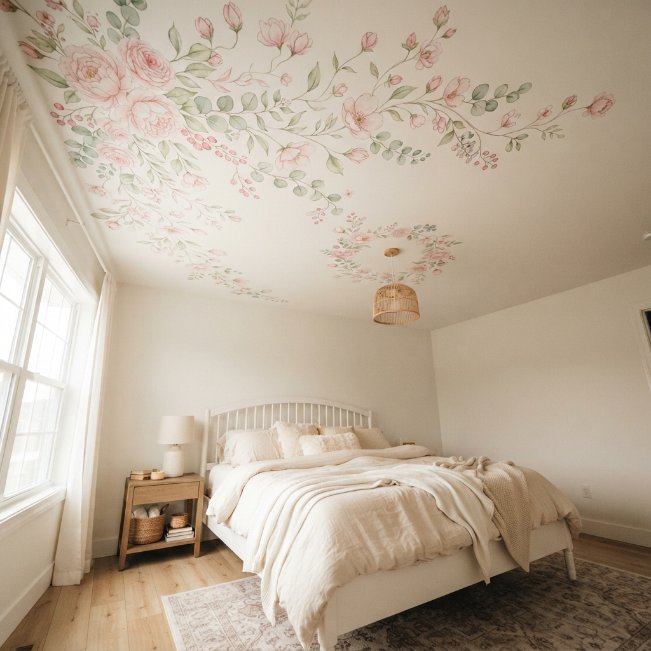
- Turns an overlooked surface into a decorative feature
- Adds charm without covering any wall space
- Removable decals make this a renter-friendly option
- Creates a magical effect when viewed from the bed
- Simple to apply in an afternoon with no special tools
The ceiling is one of the most overlooked surfaces in a bedroom, yet it’s the view a child sees every night before falling asleep. A scattering of floral or vine decals across one corner adds whimsy without demanding any wall space or furniture rearranging. This idea works particularly well in rooms where the walls are already busy with shelves, art, or a headboard, since the ceiling offers a completely fresh canvas. It’s a small, often-missed detail that consistently surprises people the first time they see it done well.
Application is simpler than most people expect, and removable vinyl versions mean there’s no long-term commitment involved. I’ve noticed that starting the pattern from one corner and letting it trail outward, rather than centering it, creates a far more natural and organic look than a symmetrical design. This detail alone photographs beautifully for Pinterest, since the upward angle feels unexpected and fresh compared to typical wall-focused bedroom shots. It’s an easy way to add polish to a room that already has most of its major elements in place.
Built-In Window Seat
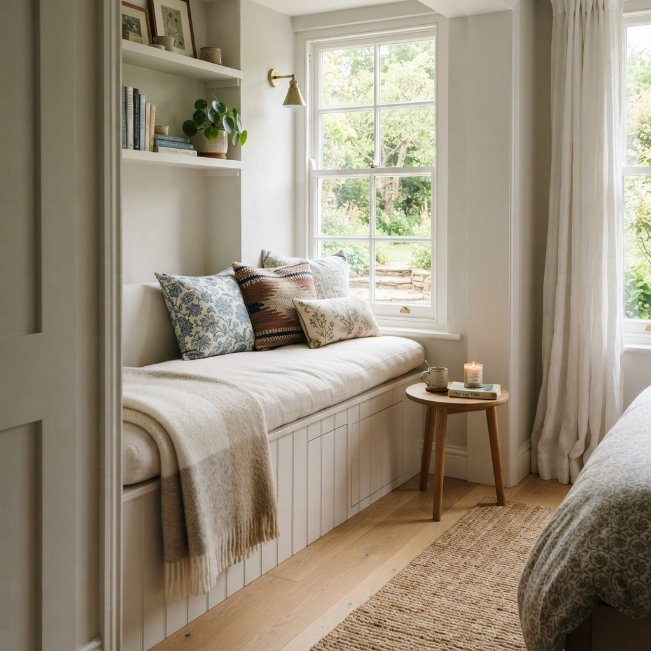
- Makes use of an existing window nook or alcove
- Adds seating without taking up additional floor space
- Creates a naturally bright spot for reading or relaxing
- Often includes built-in storage underneath the cushion
- Elevates a plain window into a design feature
A window seat takes a feature most rooms already have and turns it into one of the most-loved spots in the house. Rather than leaving a window nook empty or blocked by furniture, a built-in cushioned seat makes use of that space while adding natural light-filled seating that kids genuinely gravitate toward. This idea works particularly well in older homes with deeper window frames, though even a simple platform and cushion can recreate the effect in newer builds without existing architectural nooks.
Storage is often the most practical bonus this idea offers. I’ve seen this work well when the seat base includes lift-top storage or drawers underneath, giving extra space for toys, books, or linens without adding a separate piece of furniture. The natural light pouring in from the window also makes this one of the best-photographed spots in a bedroom, since soft daylight naturally flatters the cushions and textures in a way that artificial lighting rarely matches.
Neutral Boho Palette
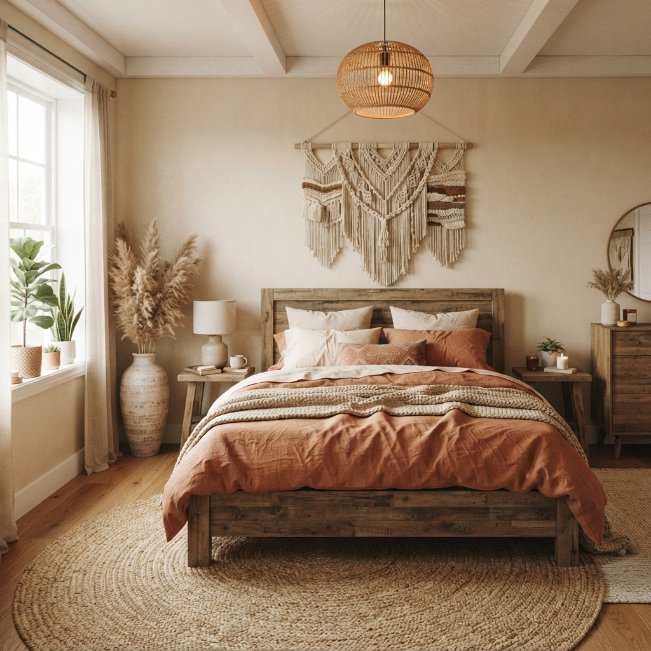
- Creates a calming, timeless look that ages well
- Mixes natural textures like rattan, jute, and wood
- Suits tweens and teens moving past bright, childish colors
- Easy to accessorize with plants and woven decor
- Works as a long-term palette that rarely needs updating
A neutral boho palette solves a problem many parents run into: choosing colors that won’t feel outdated or too young within a year or two. Warm terracottas, creams, and soft browns create a look that feels grown-up and calming, which makes it especially popular for tweens transitioning out of bright, primary-colored rooms. This idea also photographs exceptionally well, since the natural textures and muted tones create depth without relying on bold pattern or color contrast to hold visual interest.
What makes this palette so practical is its longevity. Unlike trend-driven color schemes, a neutral boho base rarely needs a full redo, since new pieces can simply be layered in over time. That’s why many designers recommend this direction for teens specifically, as it bridges the gap between a kid’s room and an adult-style bedroom. I’ve noticed that adding just one or two natural texture pieces, like a jute rug or rattan light fixture, is often enough to shift an entire room toward this aesthetic without a complete overhaul.
Peg Board Storage Wall
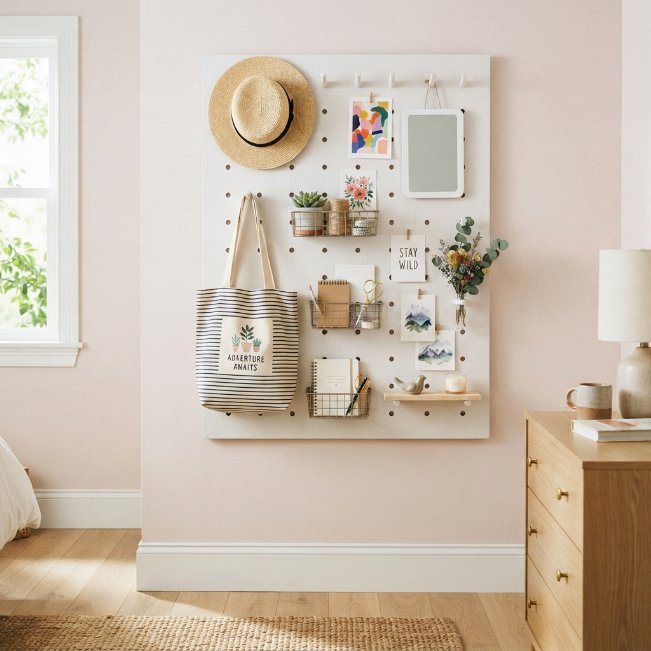
- Combines storage and decor in one customizable feature
- Adjustable layout grows with changing needs and interests
- Keeps everyday items accessible instead of hidden in drawers
- Works well above a desk or beside a closet
- Inexpensive to install compared to built-in shelving
A pegboard wall gives kids a flexible storage system that adapts as their needs change, something fixed shelving simply can’t offer. Hooks, small baskets, and shelves can be rearranged in minutes, which makes this idea especially useful for growing kids whose interests and belongings shift constantly. Mounted near a desk or closet, it keeps frequently used items like bags, hats, or art supplies within easy reach instead of buried in a drawer. It’s a rare storage solution that doubles as genuine wall decor rather than looking purely utilitarian.
Painting the pegboard to match the wall color, rather than leaving it raw wood, is what makes this idea look intentional rather than like garage storage repurposed for a bedroom. I’ve noticed that mixing a few decorative items, like small prints or a fabric banner, in with the functional hooks keeps the display from feeling too utilitarian. This balance of form and function is exactly why the idea performs so well on Pinterest, since it solves a real organizational problem while still looking styled and deliberate.
Curtain Bed Divider
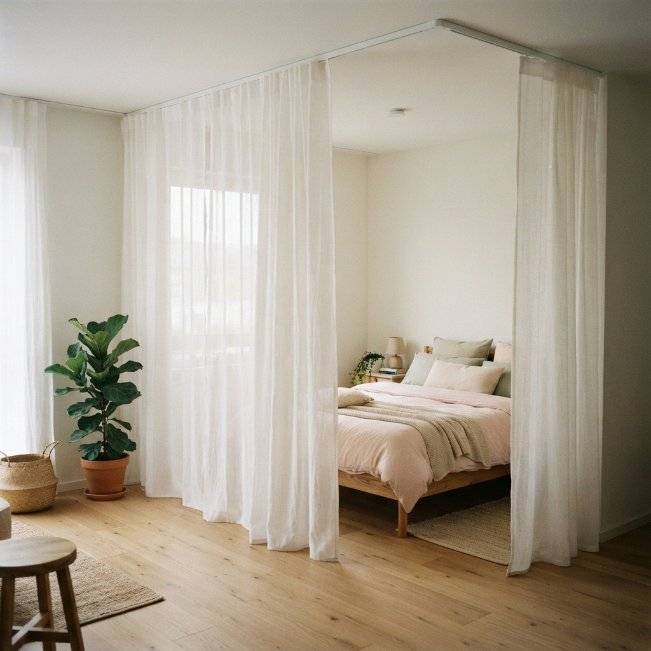
- Creates privacy in shared or open-concept bedrooms
- Softens the room visually without adding solid walls
- Easy to install using a ceiling track or tension rod
- Fully removable, making it ideal for rentals
- Allows light to pass through while still defining space
Curtain dividers solve a challenge many families face without any need for construction: how to give each child a sense of privacy in a shared room. A sheer panel hung from a simple ceiling track creates a visual boundary around a bed without blocking natural light or making the room feel closed off. This idea works particularly well in larger shared bedrooms, where two beds on opposite walls can each get their own defined nook simply by hanging fabric down the center of the room.
Choosing a lightweight, sheer fabric rather than a heavy blackout curtain keeps the divided space feeling open rather than cramped. I’ve seen this work well even in modest apartment bedrooms, where a simple tension rod and curtain panel created enough separation for two siblings to each feel like they had their own space. It’s a low-cost, fully reversible solution, which makes it especially appealing for renters or families who anticipate needing the room’s layout to change again down the line.
Rainbow Accent Details
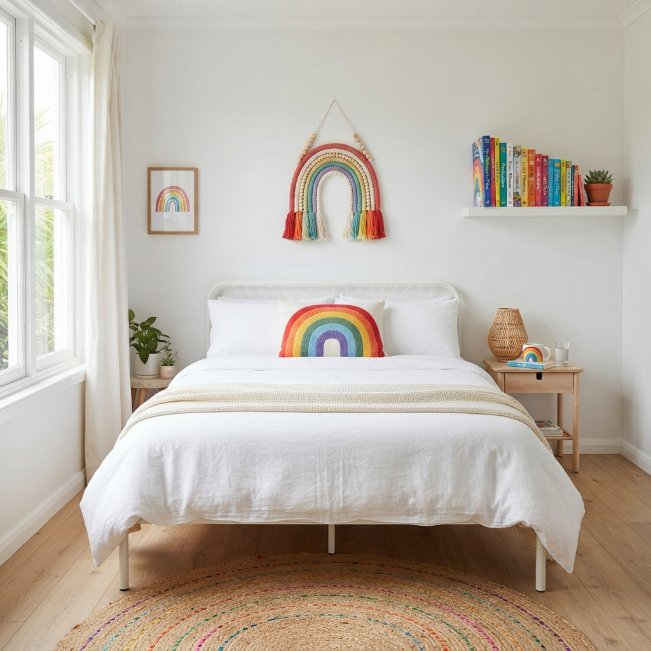
- Adds playful color without overwhelming the whole room
- Easy to update seasonally through small accent pieces
- Works well layered onto an otherwise neutral base
- Appeals to a wide range of ages and tastes
- Simple entry point for kids to express personality
Rainbow accents let color take center stage without committing to a fully rainbow-themed room, which can feel overwhelming or too juvenile as kids get older. Keeping the walls and bedding neutral, then layering in color through a pillow, wall hanging, or shelf styling, gives the room personality while staying easy to update later. This idea works well for younger girls who love bright color but whose parents want a design that can mature over the following few years without a full redo.
The key to making this look polished rather than chaotic is restraint. I’ve noticed that limiting rainbow elements to two or three spots in the room, rather than scattering color everywhere, creates a much more curated result. A striped pillow, one wall piece, and colorful book spines are often enough to read as playful and cheerful without tipping into cluttered. This balanced approach is part of why the look translates so well into real homes, not just styled photos.
Personalized Name Sign
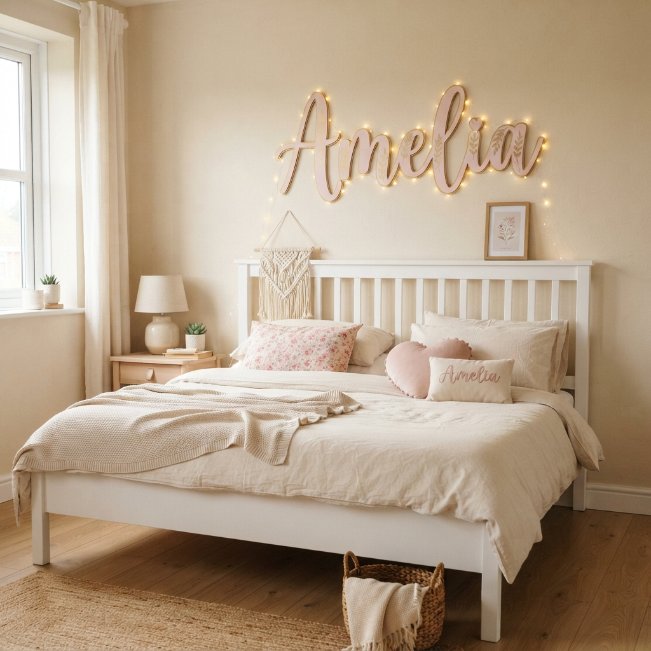
- Adds a personal touch that instantly makes the space feel like theirs
- Works as a statement piece above the bed or on the door
- Available in countless fonts, colors, and materials
- Simple to install with just a few wall hooks or nails
- Doubles as a keepsake that can move rooms over time
A name sign is one of the simplest ways to make a bedroom feel truly personal, and it’s often the first thing kids point to when showing off their room. Mounted above the bed, it acts as a focal point that ties together the color scheme while giving the space a sense of identity beyond generic decor. This idea works well at almost any age, since the sign itself can be restyled by swapping out lighting, ribbon, or surrounding decor as tastes change, without ever needing to replace the piece.
I’ve noticed that wooden or laser-cut signs tend to age better than trendier acrylic or neon versions, both visually and in terms of durability over the years. Positioning the sign slightly above eye level, centered over the headboard, creates the most balanced look and photographs well for Pinterest boards. It’s a small addition, but it consistently ranks as one of the most sentimental pieces in a room, since it often gets kept and displayed again even after a full bedroom redesign.
Layered Textile Rug
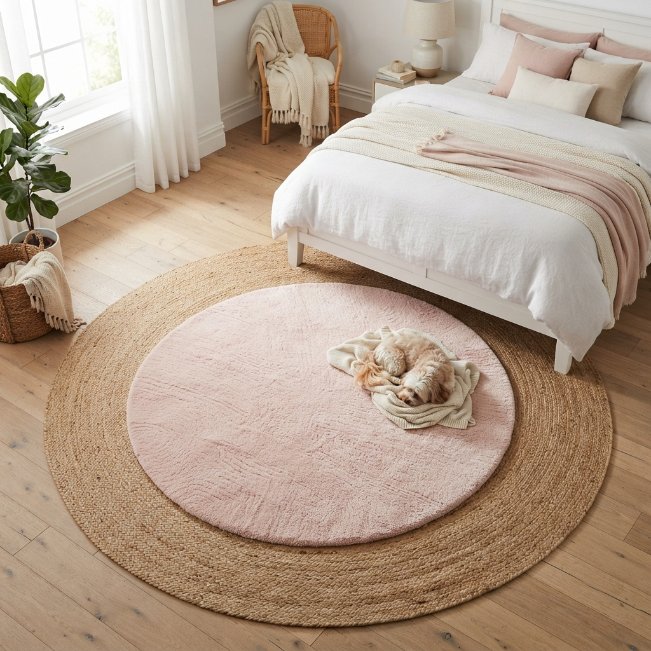
- Adds warmth and texture underfoot in one simple step
- Layering two rugs creates depth without repainting or redecorating
- Softens hard flooring in bedrooms without carpet
- Easy to update by swapping just the top layer
- Anchors the room’s color palette from the floor up
Layering rugs is a trick borrowed from professional interior styling that translates beautifully into a kids’ bedroom. A neutral jute or woven base rug adds texture and grounds the room, while a smaller, softer rug on top introduces color and pattern right where little feet land first thing in the morning. This idea works particularly well in bedrooms with hardwood or laminate flooring, since it adds warmth and sound absorption that a single flat rug often can’t achieve on its own.
What makes this approach so useful long-term is how easily it adapts. I’ve seen this work well as a low-effort refresh, where simply swapping the smaller top rug updates the entire room’s color story without touching walls, furniture, or bedding. The layered look also adds a sense of coziness that flat, single rugs rarely achieve, which is part of why it photographs so well and consistently performs among the most-saved styling details on Pinterest boards.
Conclusion
A bedroom this thoughtful doesn’t happen overnight, and it doesn’t need to. Start with one idea — a reading nook, a string of fairy lights, a single accent wall — and let the room grow from there. I’ve seen how small changes like these can completely transform a space, turning a plain room into somewhere a child genuinely loves spending time. These girls bedroom ideas are meant to inspire, not overwhelm, so pick what fits your space and your daughter’s personality. Save this post for later, try a few ideas at your own pace, and share it with a friend who’s dreaming up their own redesign too.