
21 Small Garden Ideas Perfect for Beginners Too
Introduction:
Think your yard is too small to matter? Think again. Some of the most beautiful outdoor spaces I’ve come across weren’t big at all, they were just planned with intention. That’s the whole idea behind small garden ideas: proving that limited space doesn’t mean limited beauty. Whether you’re working with a narrow side yard, a cramped balcony, or a small front strip near the door, there’s a way to make it feel full, alive, and genuinely yours.
In my experience, most people overestimate how much space a great garden actually requires. A few well-placed pots, a smart use of vertical walls, or a simple gravel path can completely change how a space feels, without a major renovation or a big budget. This article walks through 21 practical, beginner-friendly ideas, from raised beds to hanging baskets to cozy patio corners, each one designed to help you get more beauty, function, and joy out of the space you already have.
Vertical Pallet Planters

- Turns bare vertical space into a living wall of color
- Costs almost nothing if you repurpose an old pallet
- Keeps plants off the ground, which helps with drainage
- Great for herbs, succulents, or trailing flowers
- Easy to move or reposition as your garden evolves
Vertical space is the most overlooked asset in a small yard, and pallet planters fix that instantly. Instead of crowding your ground-level beds, you build upward, layering pots at different heights for a lush, tiered look. This works especially well for tight budget small garden ideas because reclaimed pallets are often free or cheap from local hardware stores. In my experience, painting the wood first with a simple sealant extends its life through several seasons, even in humid climates.
The visual payoff is immediate and dramatic. A single vertical planter can hold a dozen small pots, giving the illusion of a much fuller, more established garden without expanding your footprint. It’s ideal for narrow side yards, balconies, or fences that currently sit empty and unused. I’ve noticed that homeowners who try this once almost always add a second pallet within a year, because the return on effort is so visible. It’s a small change that reads as a big design statement.
Gravel Pathway Borders

- Defines walking paths without expensive paving
- Improves drainage during heavy rain
- Adds texture that contrasts nicely with greenery
- Low maintenance compared to grass paths
- Works well for both modern and cottage-style yards
Gravel borders solve two problems at once: they look polished and they’re genuinely practical. Unlike poured concrete, gravel requires no curing time and can be laid down in an afternoon, making it one of the more approachable small garden ideas with gravel for weekend DIYers. The stones catch light beautifully throughout the day, shifting from bright white at noon to soft gray at dusk. That subtle texture change adds visual interest that flat paving simply can’t replicate, especially in compact yards where every surface matters.
Beyond looks, gravel paths quietly solve drainage headaches that many small gardens struggle with. Water moves through the stones instead of pooling on the surface, which protects nearby plant roots from rot. I’ve seen this work well in yards prone to soggy patches after storms. Pairing gravel with simple wooden or metal edging keeps everything contained and prevents stones from scattering into lawn areas, giving the whole space a clean, intentional finish that feels far more expensive than it actually was.
Railway Sleeper Raised Beds

- Creates defined planting zones in small yards
- Raises soil level for better root growth
- Adds rustic texture and structure to flat spaces
- Reduces bending and strain during gardening
- Doubles as casual seating around the bed edge
Railway sleepers bring structure to a small garden in a way that feels intentional rather than crowded. Stacked two or three high, they create raised beds that lift your soil above ground level, which matters a lot if your yard has poor drainage or compacted earth. This is one of the more popular small garden ideas with railway sleepers because the timber itself becomes a design feature, not just a container. The weathered grain pairs naturally with almost any planting style, from herbs to flowering perennials.
Practically speaking, raised beds also make gardening physically easier. You spend less time kneeling or bending, which matters if you’re tending your garden daily after work. That’s why many designers recommend sleepers for beginners specifically, since the defined edges make planning simple: you know exactly where soil ends and pathway begins. The wide top edge of a sleeper also doubles as a spot to rest tools or sit for a few minutes, adding function most raised beds don’t offer.
Artificial Turf Patches
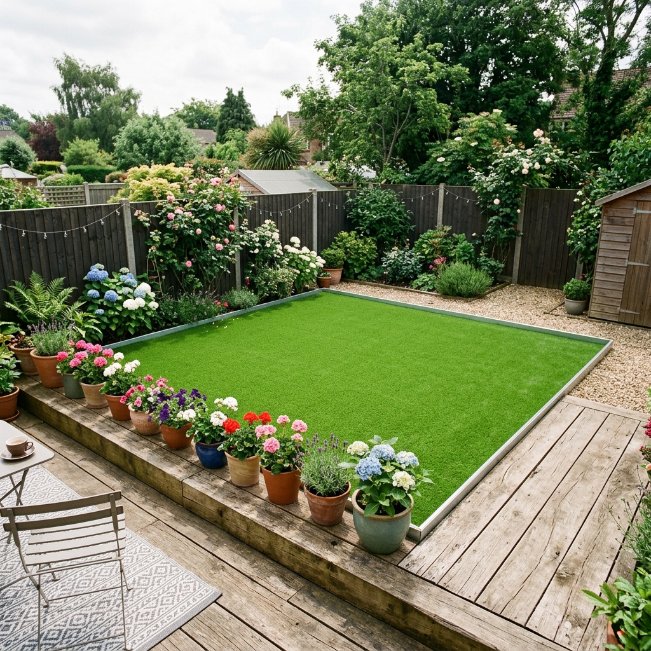
- Keeps the space green year-round with zero mowing
- Handles heavy foot traffic without bare patches
- Pairs well with pots and raised beds nearby
- Cuts down on water use during dry months
- Looks tidy even when the rest of the yard is a work in progress
Artificial grass has become one of the go-to artificial grass small garden ideas for people who want a lawn look without the upkeep. It stays green through every season, resists patchy wear from kids or pets, and never needs mowing, watering, or fertilizing. For small spaces especially, that consistency matters. A tiny patch of real grass often looks stressed or uneven, while synthetic turf holds its color and shape no matter the weather. In my experience, homeowners who switch are surprised by how much time they get back each weekend.
Visually, turf also acts as a unifying base layer for the rest of your garden design. It creates a clean, even backdrop that makes surrounding plants, pots, and furniture stand out more sharply. Because it drains well, it works nicely under seating areas or between stone pavers where real grass would struggle to grow. Many newer turf products now feel soft underfoot and look far more natural than older versions, which has made this option increasingly popular for front yards and small backyard corners alike.
Layered Pot Clusters
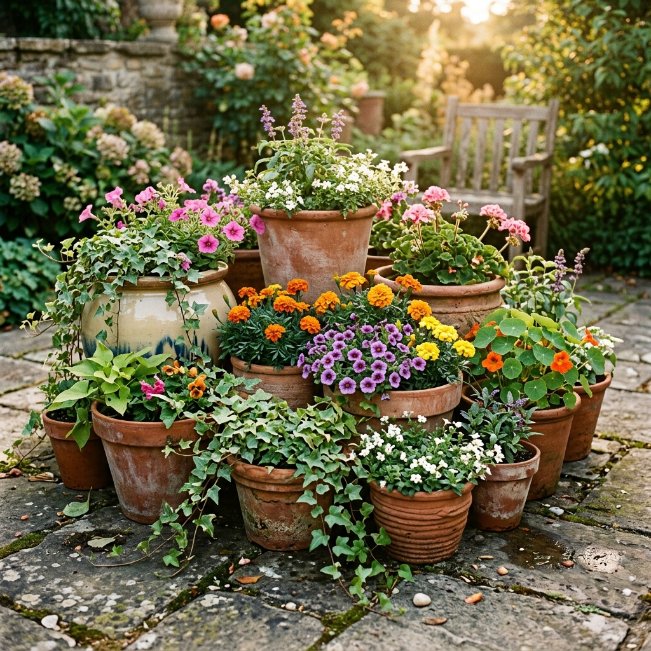
- Adds instant depth and dimension to flat patios
- Lets you mix colors and textures without a full redesign
- Easy to rearrange as plants grow or seasons change
- Perfect for renters who can’t dig into the ground
- Draws the eye upward, making the space feel taller
Grouping pots at different heights is one of the simplest small garden ideas with flowers you can try this weekend. Instead of lining containers in a flat row, stagger them using upside-down crates, small stands, or stacked bricks underneath. This creates visual layers that mimic the look of a professionally landscaped bed, even in a space no bigger than a balcony. The trick works because your eye naturally follows height changes, making the whole area feel more dynamic and considered rather than accidental or sparse.
This approach is especially valuable for renters or anyone unable to plant directly into the ground. I’ve noticed that clustering three to five pots together, rather than spacing them evenly apart, creates a fuller and more intentional look. Mixing textures matters too: pair a spiky plant with something trailing and something round-leafed for contrast. Because everything stays in containers, you can rearrange the whole display in minutes whenever you want a fresh look without touching a single shovel.
Zen Rock Corners

- Brings a calming focal point to unused corners
- Requires almost no watering or ongoing care
- Works beautifully in shaded or awkward spaces
- Adds texture contrast against green plantings
- Creates a peaceful spot to sit or reflect
A rock corner solves one of the most common small garden problems: the awkward leftover space nobody knows what to do with. Rather than forcing plants into a shaded or oddly shaped corner where they’ll struggle, this is one of the quieter japanese small garden ideas that turns limitations into a feature. Smooth stones, raked sand, and a single well-placed plant create calm without demanding sunlight, watering schedules, or constant maintenance, which makes it ideal for tricky spots most people simply ignore.
What makes this idea work so well in real yards is its low commitment. There’s no risk of plants dying from neglect, and the look actually improves with time as stones weather naturally. I’ve seen this work particularly well near seating areas, where the stillness of the arrangement gives the whole garden a sense of intentional pause. Even a modest three-foot corner can hold this design, proving that peaceful, polished landscaping doesn’t require abundant space, just thoughtful placement of a few simple elements.
Tropical Corner Nook
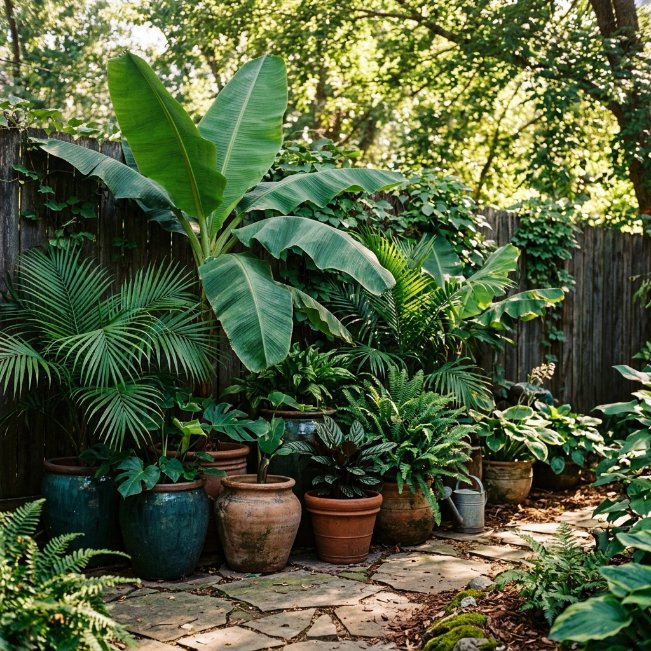
- Turns a plain corner into a vacation-style retreat
- Large leaves make the space feel fuller instantly
- Works well in partial shade where flowers struggle
- Adds privacy through dense, layered foliage
- Requires fewer plants than you’d expect for full impact
Big leaves do more visual work than small ones, which is the secret behind most tropical small garden ideas. A single banana plant or split-leaf philodendron can fill the same visual space as a dozen smaller plants, making it one of the fastest ways to create a lush look without buying in bulk. This matters most in shaded corners, where flowering plants often struggle but leafy tropicals thrive. Layering two or three heights, tall palms, mid-size ferns, low ground cover, builds the kind of depth that makes a small area feel like an escape.
In my experience, people underestimate how much privacy dense foliage can add compared to a fence alone. A cluster of broad leaves softens sightlines from neighboring yards while still letting light through. This works especially well against a plain wooden fence, which acts as a neutral backdrop that makes the greenery pop. Because most tropical varieties are forgiving with irregular watering, this idea suits gardeners who want a bold look without a demanding maintenance routine tied to it.
Front Step Container Display
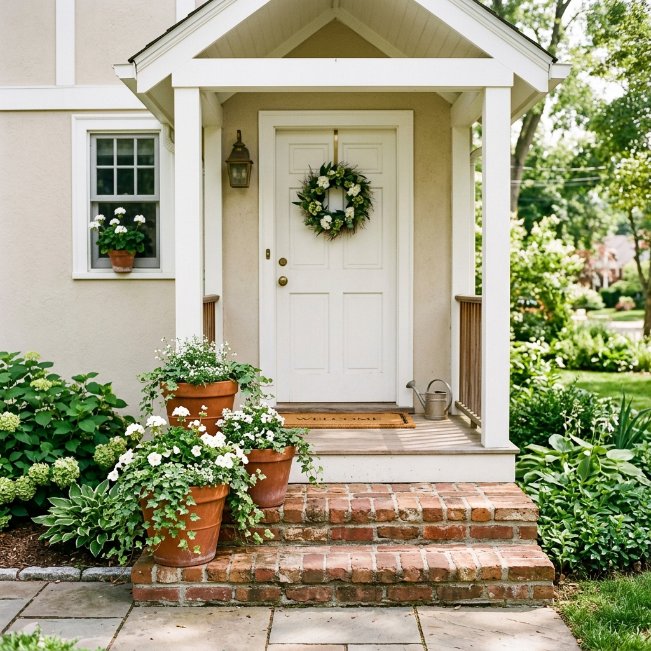
- Instantly boosts curb appeal without touching the lawn
- Draws the eye toward the front entrance
- Easy to refresh seasonally with new blooms
- Requires no digging, perfect for rented properties
- Creates a warm, welcoming first impression for guests
Your front steps are prime real estate that most homeowners leave completely bare, and that’s a missed opportunity. Grouping two or three pots of graduated sizes beside an entrance is one of the simplest small garden ideas in front of house layouts, because it requires no soil work at all, just containers and a bit of planning. The visual effect draws visitors’ eyes straight to your door, which matters more than people realize when it comes to how a home is perceived from the street.
This idea also solves the seasonal boredom that comes with permanent front-yard landscaping. Swap spring bulbs for summer trailing flowers, then switch again for fall mums, all without redesigning anything structural. That’s why many designers recommend container displays specifically for front entrances: they offer flexibility that in-ground beds simply can’t match. I’ve noticed that even a modest one-pot setup, placed at the right height beside a doorway, changes how a whole facade reads, giving tired entryways an updated, cared-for feeling almost overnight.
Hanging Basket Walls

- Uses wall space that would otherwise sit empty
- Adds color at eye level, not just at ground level
- Keeps plants safely out of reach of pets
- Creates a soft, romantic backdrop for patios
- Simple to install with basic wall hooks
Hanging baskets solve the spatial math problem every small garden eventually faces: there’s more wall than floor to work with. Mounting a row of evenly spaced baskets along a fence or patio wall adds color at eye level, which changes how the whole space feels compared to plantings that only exist near the ground. This approach works particularly well for small garden ideas for small spaces where every square foot of soil is already accounted for, but vertical surfaces remain completely untouched and available.
Beyond the visual lift, hanging displays keep trailing flowers safely away from pets or foot traffic, which matters in compact yards where space overlaps constantly. I’ve seen this work especially well on plain, unadorned walls that otherwise feel stark or unfinished. A few basic hooks and a consistent watering routine are really all it takes. Choosing trailing varieties, rather than upright ones, maximizes the cascading effect, letting flowers spill downward and soften hard edges throughout the patio or seating area below.
Modern Minimalist Deck Corner

- Keeps the space feeling open despite its small size
- Uses fewer elements for a sharper, cleaner look
- Works well for outdoor entertaining in tight yards
- Low maintenance compared to lush planting schemes
- Pairs naturally with neutral outdoor furniture
Minimalism works differently outdoors than it does indoors, because in a garden, restraint actually creates the illusion of more space. This is the logic behind most modern small garden ideas: fewer, larger elements instead of many small ones scattered around. A single sculptural plant, one clean bench, and a neutral decking surface can outperform a cluttered mix of pots and ornaments in a tight yard. The eye has fewer things to process, which makes the whole area read as calmer and, counterintuitively, more spacious than it actually is.
Decking also solves a practical problem that grass or gravel can’t in very small yards, it provides a flat, stable surface for furniture without ongoing upkeep. In my experience, composite decking ages far better than natural wood in humid or rainy climates, resisting warping and fading for years. Pairing it with just one or two striking plants, rather than a full garden bed, keeps the aesthetic sharp. This approach suits homeowners who want their outdoor space to feel like an extension of a clean, contemporary interior.
Cottage-Style Flower Border
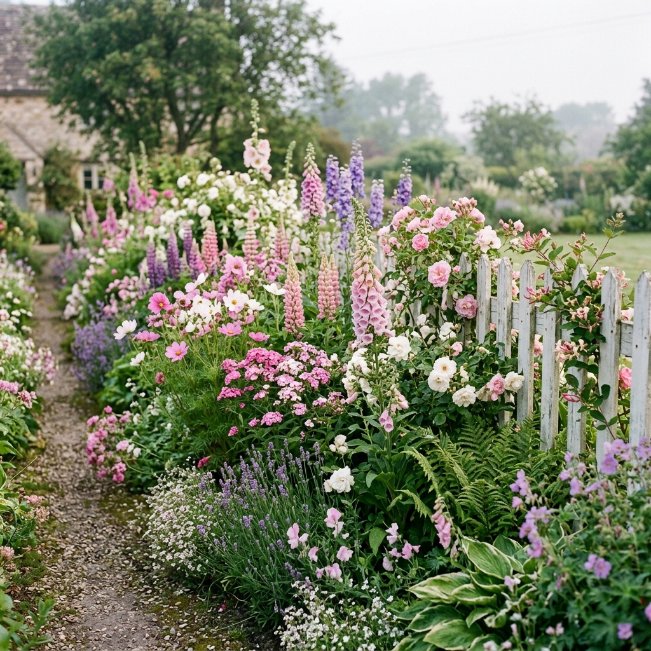
- Fills narrow strips with color without needing depth
- Creates a soft, romantic feel along fences or paths
- Attracts pollinators like bees and butterflies naturally
- Works well even in beds less than two feet wide
- Looks fuller each year as perennials establish
Narrow borders are one of the trickiest small garden ideas and designs to plan for, because most planting guides assume you have depth to work with. Cottage-style borders solve this by layering flowers of different heights, tall spires at the back, mounding blooms in the middle, low trailing varieties at the front, within a strip that might only be eighteen inches wide. This technique creates the appearance of fullness and abundance even in the tightest of spaces, which is exactly why it’s remained popular for generations of small-yard gardeners.
What makes this style especially rewarding is how it improves with time. Perennials like coneflowers, lavender, and salvia return fuller each season, meaning your initial investment pays off more every year rather than requiring constant replanting. I’ve noticed that borders planted this way also tend to attract more bees and butterflies, adding movement and life to a space that might otherwise feel static. Against a simple picket or wire fence, the informal, slightly wild look reads as charming rather than messy.
Small Space Patio Dining Setup

- Turns unused patio corners into a functional dining spot
- Fits comfortably in yards as small as six by six feet
- String lights extend usability into the evening
- Surrounding herb pots add function alongside decoration
- Creates a reason to actually spend time outside
A small patio doesn’t need much to become genuinely usable, and that’s the core idea behind most patio small garden ideas worth trying. A compact bistro set, two chairs and a small round table, fits into corners that would otherwise sit empty, turning wasted space into somewhere you’d actually choose to eat breakfast or unwind after work. The scale matters here: oversized furniture overwhelms a small patio, while a modest two-person setup leaves enough room to move comfortably around it.
Adding string lights above the seating area extends how late you can enjoy the space, since small gardens often lose usability the moment the sun goes down. That’s why many designers recommend layering lighting early in the planning process rather than as an afterthought. Surrounding the table with a few herb pots, basil, mint, rosemary, adds practical value too, letting you snip fresh ingredients while you sit. I’ve seen this simple combination turn a forgotten side yard into the most-used corner of an entire property.
Vertical Herb Ladder
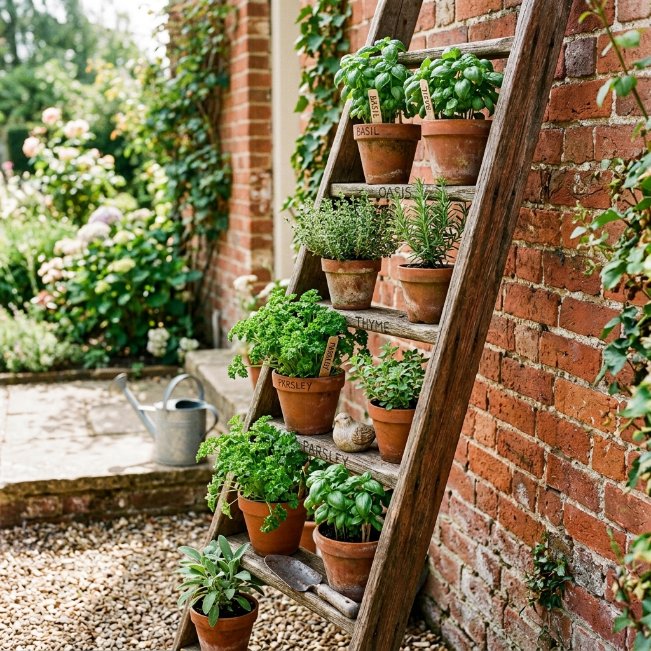
- Turns a leaning ladder into functional garden storage
- Keeps herbs within easy reach of the kitchen door
- Uses almost no floor space at all
- Adds rustic charm without looking cluttered
- Simple to build or repurpose from an old ladder
An old wooden ladder, the kind most people would throw away, becomes genuinely useful once leaned against a sunny wall and loaded with potted herbs. Each rung holds a different pot, creating a staggered display that uses almost no floor space while still fitting six or seven plants comfortably. This is one of the more practical diy small garden ideas on a budget, since ladders can often be found secondhand or repurposed from garage leftovers rather than bought new specifically for this purpose.
Placement matters more than people expect with this setup. In my experience, positioning the ladder near a kitchen door or window makes a real difference in how often the herbs actually get used, since convenience drives habit more than good intentions do. The rustic wood grain also adds warmth that contrasts nicely against brick or painted walls, giving the display a lived-in, farmhouse character. Because it leans rather than mounts, it’s easy to reposition seasonally to follow changing sunlight patterns.
Compact Water Feature Corner
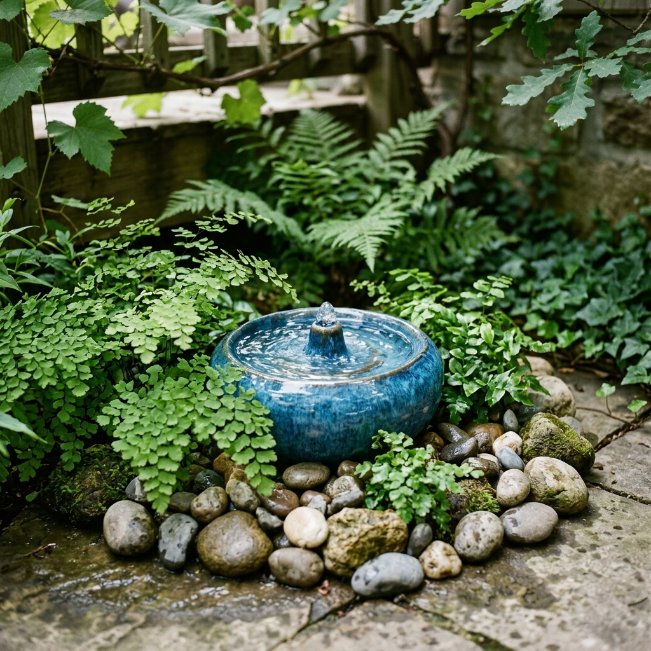
- Adds soothing sound to small outdoor spaces
- Masks street or neighbor noise naturally
- Works in shaded corners where plants struggle
- Requires minimal space, often under two square feet
- Attracts birds without needing a full pond
Sound is an underused design tool in small gardens, and a compact water feature brings it in without demanding much space at all. A tabletop fountain, sometimes no larger than a mixing bowl, creates a gentle trickling sound that helps mask traffic noise or chatty neighbors, something static plantings simply can’t do. Tucked into a shaded corner surrounded by ferns and smooth stones, it turns an underused spot into a small sensory retreat, proving that peaceful garden moments don’t require a pond or major construction.
This idea works particularly well in shaded areas where flowering plants tend to struggle anyway. I’ve noticed that combining moving water with ferns and stones creates a cohesive, spa-like feel that photographs beautifully and holds up well through different seasons. Maintenance stays minimal too, most tabletop units just need an occasional water refill and a rinse to prevent algae buildup. For anyone hesitant about garden ponds due to space or safety concerns, this scaled-down version delivers a similar calming effect.
Raised Bed Vegetable Corner

- Fits real food production into a tiny footprint
- Keeps soil quality controlled and consistent
- Reduces weeding compared to in-ground beds
- Works well tucked against a sunny fence line
- Encourages kids to get involved with growing food
You don’t need a full backyard to grow real food, just one well-placed raised bed against a sunny fence. This is one of the most rewarding small garden ideas for small spaces because it delivers something tangible: actual tomatoes, peppers, and greens you can harvest and eat. Confining plants to a single contained bed also makes soil management far easier, since you control exactly what goes into that limited area rather than fighting existing yard soil that might be compacted or nutrient-poor.
Weeding drops significantly with this approach too, since a contained bed has clearly defined edges that stop grass and weeds from creeping in the way they do with open ground plots. I’ve seen this work particularly well as a family project, kids tend to engage more with a defined, manageable bed than a sprawling garden that feels overwhelming. Positioned along a fence that gets consistent sun, a single four-by-four raised bed can realistically produce enough vegetables to notice a difference in your weekly grocery routine.
Gravel and Grass Checkerboard

- Breaks up a plain lawn with visual interest
- Reduces the total grass area that needs mowing
- Creates a graphic, modern pattern underfoot
- Works well as a transition between patio and yard
- Easy to adapt to any small rectangular space
A checkerboard pattern of alternating grass and gravel squares turns an ordinary small lawn into something genuinely eye-catching. This is one of the more distinctive small garden ideas design enthusiasts gravitate toward, because the geometry itself does the visual work, no elaborate planting scheme required. Each square can be sized to match your space, making it just as effective in a tiny six-foot patch as a larger yard. The contrast between soft green grass and pale stone creates rhythm that a plain, uniform lawn simply can’t offer.
Practically, this layout also cuts down on total mowing time, since half the ground is covered in gravel rather than living turf. In my experience, this pattern works best as a transition zone, placed between a patio and the rest of the yard, where it visually signals a shift from hardscape to softscape. Keeping the grid lines crisp requires occasional edging, but the upkeep is minor compared to the strong graphic impact the pattern delivers. It reads as intentional, modern, and considerably more expensive than it actually costs.
Trellis Privacy Screen
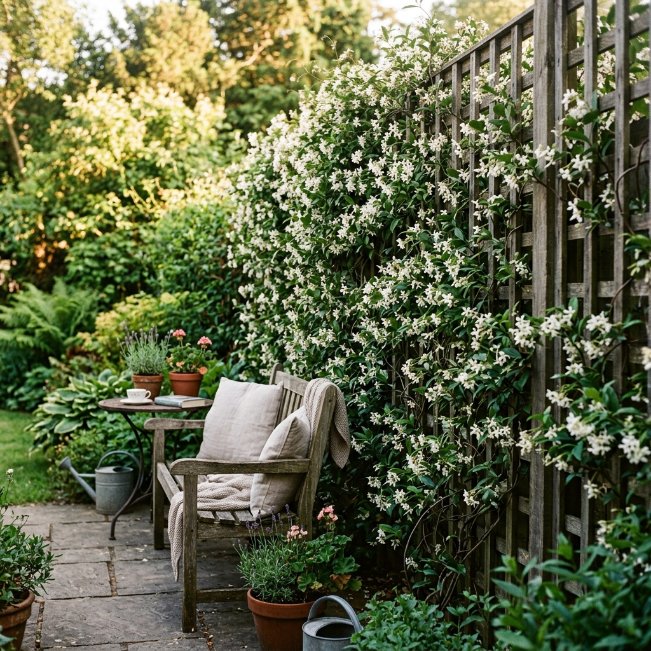
- Blocks unwanted views without a solid, heavy fence
- Adds greenery and privacy in the same structure
- Lets light and air pass through, unlike solid walls
- Supports fragrant climbing plants like jasmine or clematis
- Works well along property lines or patio edges
A trellis covered in climbing vines solves privacy without the heaviness of a solid fence, which matters a lot in a small yard where a tall wall can make the space feel boxed in. Lattice structures let light and breeze pass through while still blocking direct sightlines, which is why this remains one of the most practical backyard small garden ideas for anyone bordering a neighbor’s yard or a busy street. Over a season or two, climbing plants fill in the gaps completely, turning a simple wooden frame into a living wall.
Choosing fragrant varieties like jasmine or clematis adds a sensory layer most privacy solutions miss entirely. That’s why many designers recommend flowering climbers over plain ivy when scent and bloom color both matter to the overall design. I’ve noticed that trellises positioned along a patio edge, rather than the full property line, tend to get more attention and care, since they’re seen daily. The vertical growth also draws the eye upward, which subtly makes the whole yard feel taller and less confined.
Succulent Rock Garden

- Thrives in hot, dry, sunny corners other plants avoid
- Needs little to no regular watering once established
- Adds interesting texture and shape variety
- Works well in small, awkward sunny patches
- Low risk of overgrowth in a tight space
Sunny, dry corners are often the hardest spots to plant in a small yard, and a succulent rock garden turns that limitation into an advantage. This is one of the most forgiving small garden ideas with rocks because succulents actually prefer the exact conditions that make other plants struggle: intense sun, minimal water, and fast-draining soil. Clustering varieties with different shapes, rosettes, spiky types, trailing ones, among sand-toned gravel creates natural-looking texture without demanding the maintenance schedule a flower bed would require.
This setup particularly suits people who travel often or simply don’t have time for daily watering. I’ve seen this work well in gardens where previous plantings kept dying from neglect or inconsistent care, since succulents tolerate being forgotten far better than most alternatives. Because these plants stay relatively compact and grow slowly, there’s little risk of the bed outgrowing its space within a season, which keeps a small area looking tidy and controlled without regular pruning or thinning required.
Foldable Balcony Garden
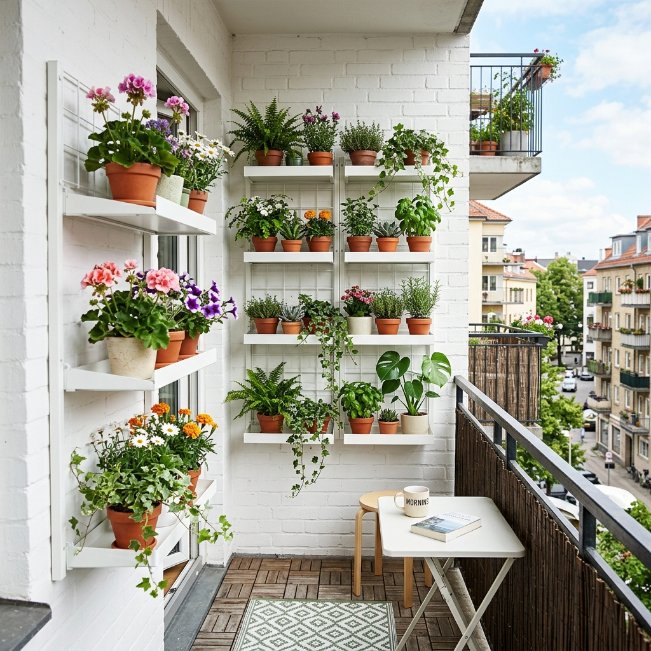
- Fits real gardening into apartment-sized outdoor space
- Folds flat when not in use to save room
- Ideal for renters who need mobile, non-permanent setups
- Adds greenery without blocking balcony walkways
- Simple to install without drilling into structural walls
Balconies present a unique challenge among really small garden ideas, since every inch does double duty as both living space and walkway. Foldable, wall-mounted planter shelves solve this directly: fold them down when you want plants on display, fold them flat against the wall when you need the floor space clear for other use. This flexibility makes balcony gardening realistic for renters who can’t commit to permanent structures or heavy planters that would be difficult to move out later.
I’ve noticed that people underestimate how much a few well-placed plants can transform a bare balcony into a space they actually want to sit in. Choosing lightweight materials, like coated aluminum or resin planters, matters here since weight limits are often stricter on balconies than ground-level patios. Mounting options that use adhesive strips or tension rods, rather than drilled screws, also keep the setup fully reversible. This approach proves that even the smallest urban outdoor space can support a genuine, thriving mini garden.
Budget Pallet Fence Border

- Defines garden zones without buying new fencing materials
- Costs little to nothing using reclaimed wood
- Adds rustic texture that pairs with most planting styles
- Keeps pets or kids out of delicate planting areas
- Simple weekend project requiring basic tools only
Reclaimed pallet wood, stacked and secured as a low border, is one of the most resourceful cheap budget small garden ideas available to anyone with basic tools and a free weekend. Rather than buying new fencing panels, which quickly adds up in cost for even a small yard, repurposed pallets create a rustic, textured boundary that separates planting zones from walkways or play areas. The rough, weathered grain actually works in the design’s favor, giving the border a lived-in character that new lumber can’t replicate.
Beyond the cost savings, this kind of low fencing serves a real practical purpose: keeping pets and kids from trampling delicate seedlings while plants establish themselves. In my experience, a border height of about two feet strikes the right balance, tall enough to signal a boundary, short enough to keep sightlines open across the yard. Sanding rough edges and adding a weatherproof sealant extends the wood’s lifespan considerably, making this budget-friendly project hold up for several growing seasons before needing replacement.
Wraparound Front Yard Border

- Softens hard walkway edges with curved planting lines
- Adds color and texture visible from the street
- Increases curb appeal without a full yard redesign
- Works well in narrow strips beside driveways or paths
- Low-maintenance shrubs keep the look tidy year-round
A curved border wrapping along a front walkway does more for curb appeal than almost any other single change you can make to a small yard. Straight, hard edges between lawn and walkway tend to look stark, while a gently curved planting line filled with layered shrubs and seasonal blooms softens the whole approach to your front door. This is one of the more versatile small garden ideas for front of house layouts because it adapts to almost any lot shape, working equally well beside driveways, walkways, or porch steps.
Choosing a mix of evergreen shrubs and rotating seasonal flowers keeps the border looking intentional through every part of the year, rather than bare in winter and overgrown in summer. That’s why many designers recommend anchoring these borders with two or three structural shrubs first, then filling gaps with flowers afterward. I’ve seen this sequence prevent the common mistake of overplanting early and losing shape within a season. Even a narrow two-foot-wide strip, planned this way, noticeably elevates how the entire front of a home is perceived.
Conclusion
A small yard doesn’t have to feel like a limitation, it can be the start of something genuinely beautiful. From vertical planters to cozy rock corners, these small garden ideas show that creativity and a little planning matter far more than square footage. I’ve seen how small changes like these can completely transform how a space feels and how often people actually use it. Pick one idea that speaks to you and try it this weekend, you might be surprised how much of a difference it makes. Save this post for later, and share it with someone who could use a little garden inspiration too.