
21 Brown Living Room Ideas to Steal for Your Home
Introduction:
Ever walked into a room and instantly felt at home? That’s the quiet power of brown. It’s warm, grounding, and endlessly easy to style around, which is exactly why brown living room ideas keep showing up on everyone’s Pinterest boards this year. Whether you’re drawn to deep chocolate leather, soft cream accents, or a bold navy pairing, there’s a version of this palette that fits your space and your personality.
In my experience, brown gets overlooked because people assume it feels outdated or heavy. It doesn’t have to. I’ve seen small, simple swaps completely change how a room feels, without a full renovation or a big budget. This list walks through 21 real, doable ideas you can start using today, whether you’re refreshing one corner or reimagining the whole room. Grab your favorites, save what speaks to you, and let’s get your living room feeling exactly the way you want it to.
Chocolate Velvet Sofa
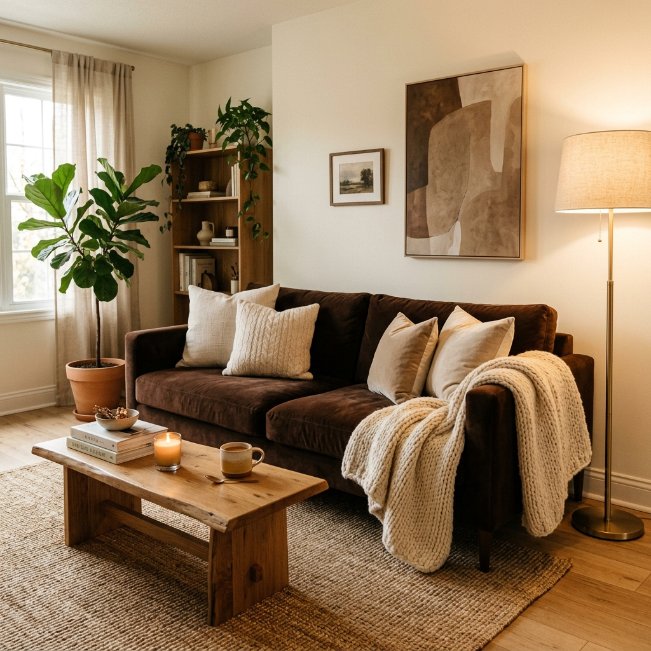
- Adds instant richness and texture to a plain seating area
- Velvet catches light beautifully, making the room feel warmer at night
- Pairs easily with cream, gold, or muted green accents
- A budget-friendly way to upgrade a room without repainting walls
Nothing changes a room’s mood faster than swapping in a chocolate velvet sofa. This single piece becomes the anchor of the entire space, pulling brown living room ideas together without overwhelming the layout. In my experience, velvet in a deep brown shade photographs beautifully because it holds shadow and light differently than flat cotton or linen. It reads as expensive even when the price tag isn’t. Homeowners often worry brown will feel dated, but a plush texture like velvet keeps it feeling current, layered, and worth sinking into after a long day.
The real magic happens when you build around the sofa instead of matching everything to it. A few brass accents, a cream boucle chair, or a soft green plant nearby keep the space from feeling like one flat block of color. I’ve noticed rooms with a single bold anchor piece tend to feel more intentional than ones where every element competes for attention. This approach also gives you room to change smaller decor pieces seasonally without redoing the whole space, which makes it a genuinely practical long-term design choice for real families.
Layered Rug Textures
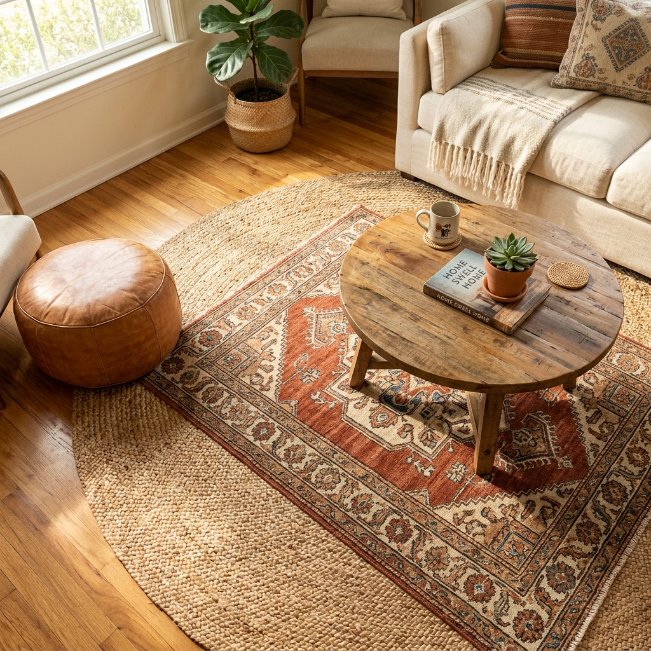
- Adds visual depth without needing new furniture
- Breaks up a large brown or neutral floor area
- Creates a defined seating zone in open-concept spaces
- An easy weekend update that costs less than new flooring
Rugs do more heavy lifting in a brown living room than most people expect. Layering a patterned rug over a plain jute base instantly adds depth, warmth, and a sense of intention to the floor. This technique works especially well in grey and brown living room ideas, where the goal is softening a cooler palette with organic texture. I’ve seen this work well in smaller apartments too, where a layered rug visually expands the seating area and makes the whole room feel more finished, even when the furniture itself stays exactly the same.
Beyond the visual upgrade, layered rugs solve a real functional problem: bare floors can feel cold and uninviting, especially in rental spaces with hardwood or tile. Adding two textures on top of each other muffles sound, adds cushioning underfoot, and gives the eye somewhere to land besides the furniture. That’s why many designers recommend starting a living room refresh at the floor level before touching walls or furniture. It’s one of the fastest, most affordable ways to transform a flat, unfinished-looking space into something that feels curated and lived-in.
Warm Brass Lighting
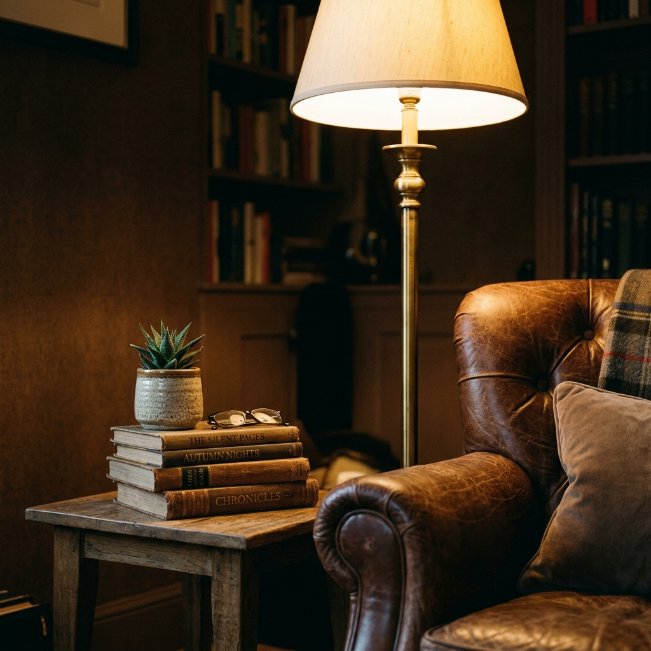
- Softens dark brown walls or furniture instantly
- Adds a touch of glam without feeling overdone
- Creates cozy ambiance for evening hours
- Works well with both modern and traditional decor styles
Lighting changes everything in a dark brown living room, and brass fixtures are one of the easiest upgrades to make. The warm metallic tone reflects light in a way that keeps deep brown tones from feeling heavy or closed in. Instead of relying only on an overhead fixture, adding a brass floor lamp or table lamp creates pockets of warm light throughout the room. This is especially useful for chocolate brown living room ideas, where the goal is coziness rather than brightness. A well-placed lamp does more for mood than most people realize.
In my experience, homeowners underestimate how much lighting affects the perceived color of their walls and furniture. A room painted in rich brown can look muddy under harsh white light but stunning under warm brass-toned bulbs. Layering two or three light sources, rather than one bright overhead light, gives the space a softer, more intentional feel. It also makes evenings in the living room noticeably more relaxing. This small styling shift is often the difference between a room that feels flat and one that feels genuinely inviting.
Cream Bouclé Armchair
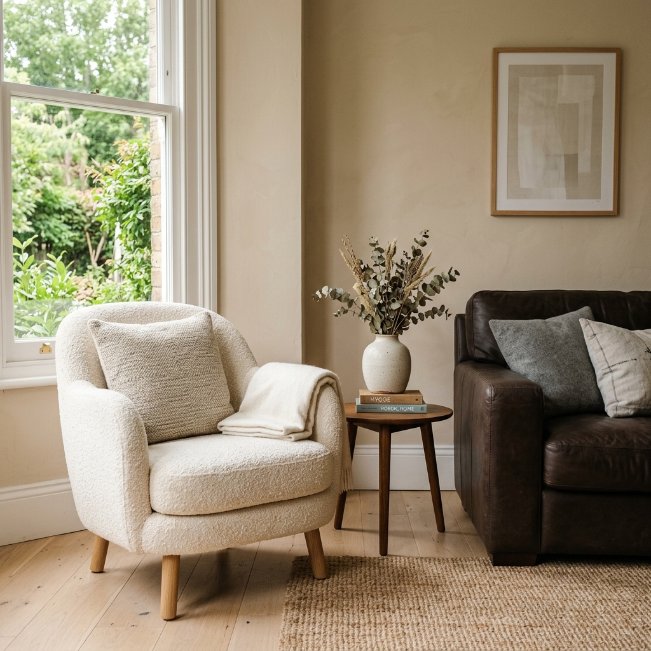
- Softens a heavy brown color scheme with lighter texture
- Bouclé fabric adds tactile warmth without extra pattern
- Balances dark furniture pieces in smaller rooms
- Creates a reading nook feel in one corner
A cream bouclé armchair is one of the simplest ways to lighten a brown living room without losing its cozy character. Placed beside a dark leather or velvet sofa, it breaks up heavy tones and gives the eye a place to rest. This pairing works especially well in cream and brown living room ideas, where the goal is softness rather than contrast. I’ve noticed that textured fabrics like bouclé photograph beautifully in natural light, which makes them a favorite for Pinterest-style rooms that still feel practical and comfortable for everyday living.
Beyond looks, a single accent chair solves a common layout problem: awkward empty corners. Instead of leaving a gap unused, a bouclé chair fills the space with personality and function, whether it becomes a reading spot or extra seating for guests. That’s why many designers recommend adding at least one lighter-toned piece to balance darker furniture. It keeps the room from feeling one-note. The texture also adds a subtle layer of interest that photographs well, without requiring bold pattern or color to make a visual impact.
Textured Stone Accent Wall
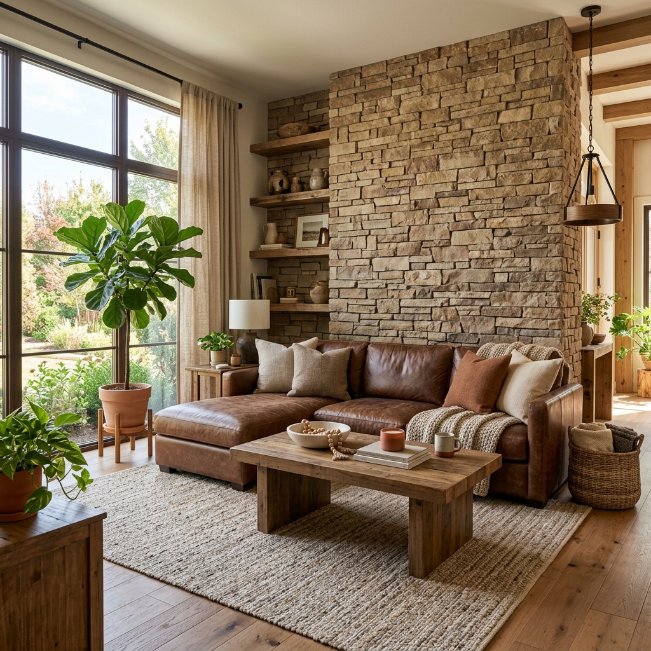
- Adds dimension without needing paint or wallpaper
- Creates a natural focal point behind seating
- Complements both modern and rustic-style rooms
- Brings an outdoorsy, grounded feel into the space
A textured stone wall brings a completely different kind of depth to a brown living room than paint or fabric ever could. It introduces natural variation in color and shadow, which keeps the space from feeling flat, even when the rest of the palette stays fairly simple. This idea works particularly well for modern brown living room ideas, where clean lines need a little raw texture to feel warm instead of cold. In my experience, one textured wall is often enough; surrounding surfaces should stay simple so the stone remains the visual anchor.
Homeowners often assume a feature wall like this requires a full renovation, but peel-and-stick stone panels have made the look far more accessible. The payoff is a space that feels grounded, earthy, and intentional, almost like it was designed by someone who understands materials and light. It pairs beautifully with leather furniture and green plants, both of which echo the natural, organic feel of the stone. This is a strong option for anyone who wants their living room to feel elevated without leaning too formal or overly styled.
Mixed Wood Tones
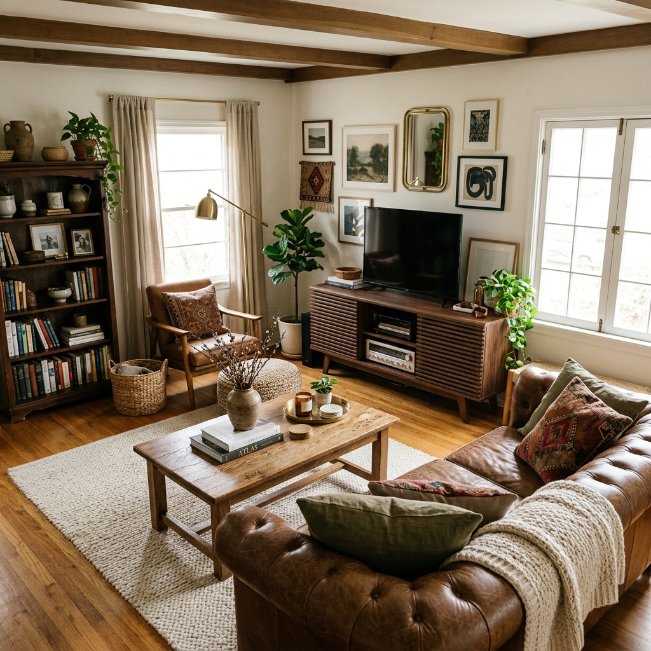
- Prevents a matchy-matchy, showroom-like look
- Adds visual interest through varied wood grain and tone
- Makes furniture feel collected over time, not bought as a set
- Works well in both small and large living rooms
Mixing wood tones is one of the most underrated tricks for making a brown living room feel collected rather than staged. Pairing a lighter oak coffee table with a darker walnut console creates natural contrast, similar to how a well-designed home evolves over the years instead of arriving all at once. This approach fits naturally into tan brown living room ideas, where warmth is the goal but sameness should be avoided. I’ve seen this work well even in small apartments, where two wood tones add depth without requiring any additional furniture pieces.
The key is choosing an undertone to repeat, whether warm gold or cool grey, so the mix still feels cohesive rather than random. Brass hardware or lighting fixtures can help tie mismatched wood pieces together visually. This technique also gives renters and homeowners more flexibility, since new furniture doesn’t need to match existing pieces exactly. That flexibility often leads to better long-term design decisions, because rooms styled this way tend to age more gracefully and feel less like they’ll go out of style within a few short years.
Green Velvet Accent Pillows
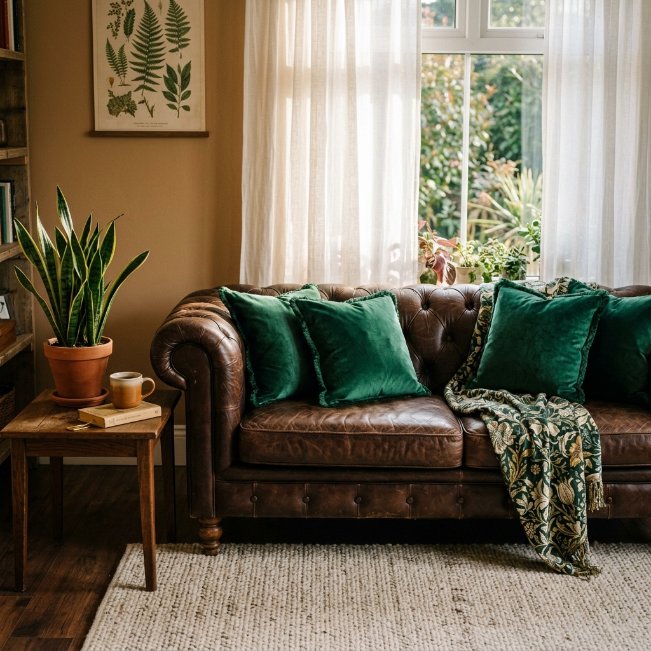
- Adds a pop of color without repainting or new furniture
- Green and brown together create a natural, calming palette
- Velvet texture adds richness against leather or linen sofas
- An easy, low-cost seasonal refresh option
Green and brown living room ideas work so well together because both colors come straight from nature, so the pairing never feels forced. A few emerald or sage velvet pillows on a brown leather sofa instantly add richness without requiring a full redesign. This is one of the easiest updates on this list, and it’s also one of the most flexible, since pillow covers can be swapped seasonally for very little cost. I’ve noticed that even just two or three well-placed pillows can shift a room’s entire mood.
The contrast between deep green and warm brown also photographs beautifully, which is part of why this combination performs so well on Pinterest boards. Beyond aesthetics, it’s a practical choice for anyone hesitant to commit to bold color on walls or large furniture. Pillows let you test a palette before investing further. Pairing this with a nearby plant or two reinforces the natural theme and ties the whole seating area together, making the space feel deliberately styled rather than randomly decorated.
Navy and Brown Color Blocking
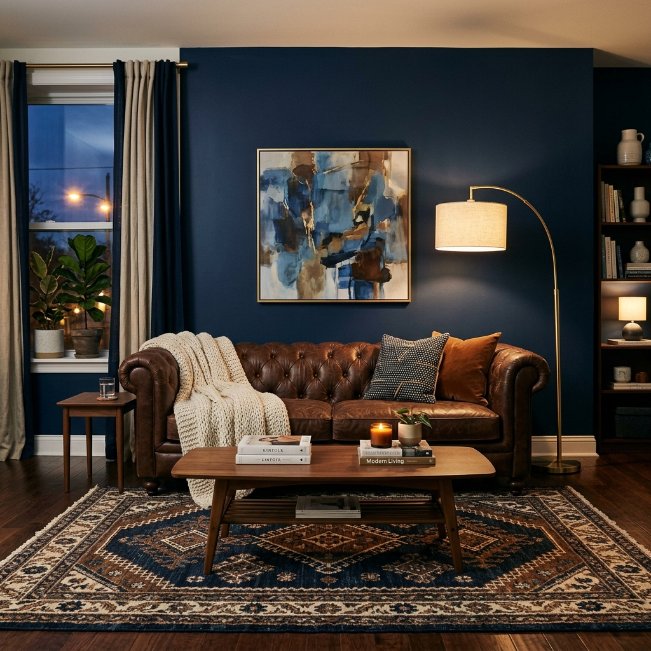
- Creates a bold, editorial-style focal point
- Navy deepens brown tones instead of competing with them
- Works well in rooms with strong natural light
- Adds a modern, slightly formal edge to a cozy space
Navy blue and brown living room ideas bring a level of sophistication that’s harder to achieve with neutrals alone. Painting one wall navy behind a brown leather sofa creates immediate contrast while still keeping the room feeling warm rather than cold. This pairing works particularly well in rooms that get plenty of natural light during the day, since navy can read as too dark in dim spaces. That’s why many designers recommend testing paint swatches at different times of day before committing to a full wall.
What makes this combination stand out is the balance between boldness and warmth. Navy adds drama and depth, while brown furniture keeps the space grounded and livable rather than overly formal. Brass or gold accents bridge the two colors nicely, adding a subtle shimmer that catches the eye without stealing focus from the seating area. This is a strong choice for anyone who wants their living room to feel more elevated and intentional, especially in homes where the living room doubles as a space for hosting guests.
Woven Rattan Furniture
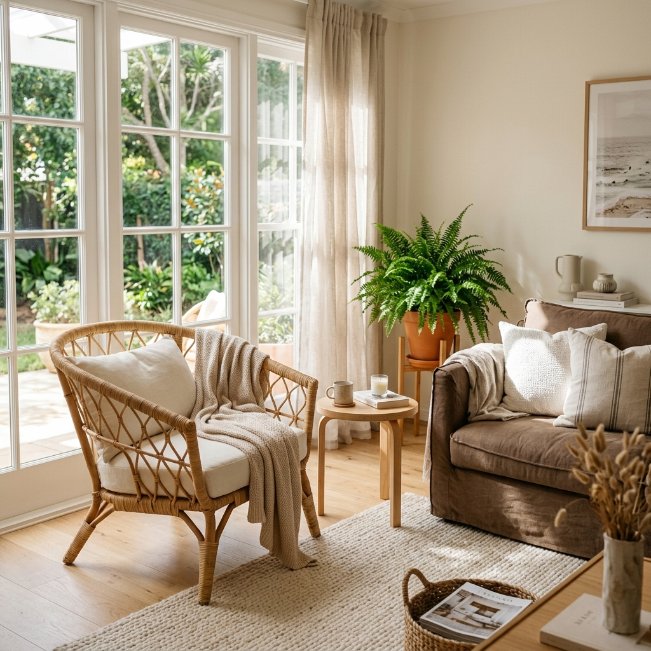
- Adds texture and lightness to a heavier brown palette
- Brings a relaxed, airy feel into the room
- Pairs beautifully with linen, cotton, and natural fibers
- Great for sunrooms or living rooms with lots of light
Rattan furniture brings a lighter, breezier energy into a brown living room without losing any of its warmth. A single woven accent chair paired with a linen sofa softens the overall palette and adds natural texture that heavier furniture simply can’t replicate. This idea works especially well in beige and brown living room ideas, where the goal is a relaxed, sunlit feel rather than a dramatic or formal atmosphere. In my experience, rattan pieces photograph beautifully in natural light, which is part of why they’ve become such a popular Pinterest search.
Functionally, rattan is also a practical choice for households that want furniture with real texture but not added bulk. It’s lightweight, easy to move for cleaning or rearranging, and pairs well with both modern and boho-inspired decor. Adding a fern or trailing plant nearby reinforces the natural, relaxed theme. This combination works particularly well in rooms with large windows, where sunlight highlights the woven texture and creates soft, natural shadows throughout the day, giving the space an effortless, lived-in charm.
Beige Linen Curtains
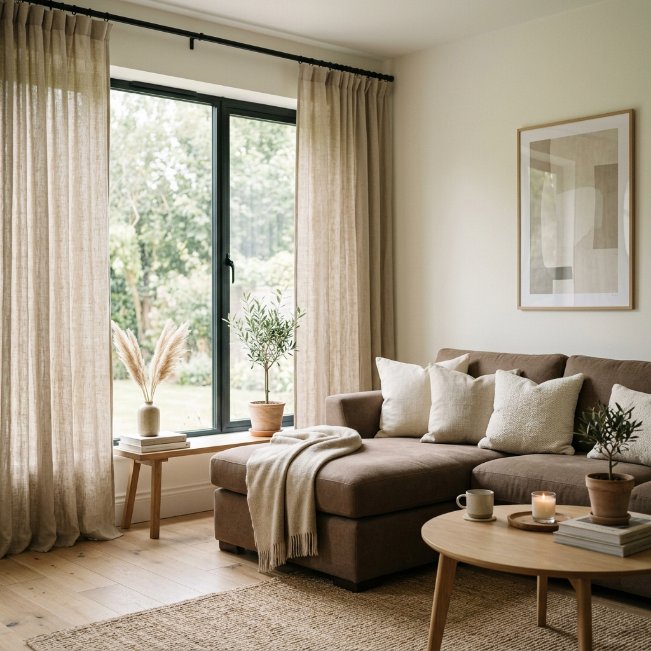
- Softens harsh window light without blocking it completely
- Adds height and elegance to a room with low ceilings
- Neutral tone keeps the focus on brown furniture pieces
- Simple upgrade that instantly elevates a room’s finish
Curtains are one of the most overlooked upgrades in a brown living room, yet they make a noticeable difference in how finished a space feels. Beige linen panels soften daylight, adding a gentle glow instead of harsh glare, while keeping the palette calm and cohesive. This works especially well alongside beige and brown living room ideas, since the fabric tone bridges the wall color and furniture without introducing anything jarring. I’ve noticed that hanging curtains closer to the ceiling, rather than right above the window frame, instantly makes a room feel taller and more polished.
Linen specifically has a slightly imperfect, relaxed texture that suits brown interiors better than stiffer fabrics like polyester blends. It drapes naturally and catches light in a soft, flattering way throughout the day. Beyond aesthetics, curtains also add a layer of privacy and insulation, which is a practical bonus many homeowners appreciate. This is a low-effort, high-impact change that works in rented apartments and owned homes alike, since curtain rods rarely require any permanent modification to walls or window frames.
Gallery Wall of Earth Tones
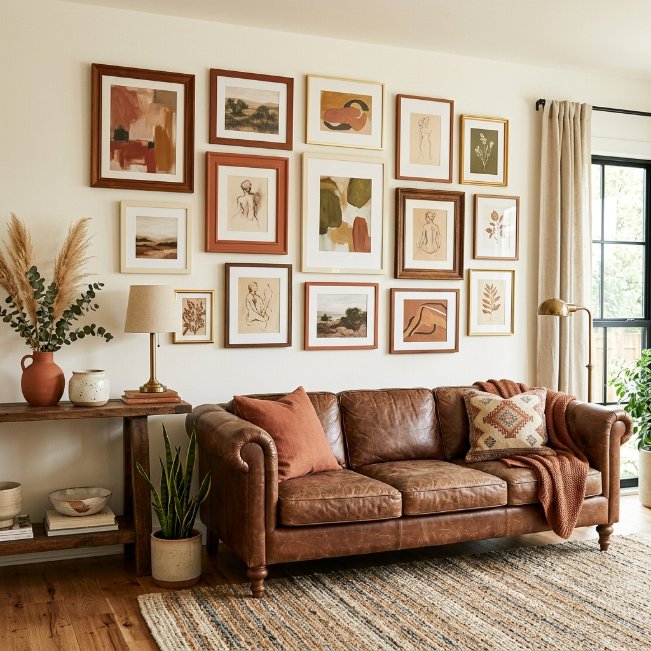
- Adds personality and visual interest above seating
- Ties multiple warm tones together in one focal point
- Makes a plain wall feel intentional and curated
- Easy to update or rearrange over time
A gallery wall gives a brown living room a personal, curated feel that a single large piece of art often can’t achieve. Mixing frames in warm tones like rust, terracotta, and cream above a leather sofa creates a cohesive focal point that still feels layered and collected. This idea suits red and brown living room ideas particularly well, since art can introduce those warmer accent colors without committing to paint or large furniture. That’s why many designers recommend starting with a mix of print sizes and frame finishes rather than matching everything exactly.
The flexibility of a gallery wall is part of what makes it so practical. Pieces can be swapped, added, or rearranged as your taste changes, without needing to redo the whole room. It also works as an affordable way to fill a large wall that would otherwise feel empty or unfinished. Grouping four to six pieces with varied but complementary tones creates rhythm and movement on the wall, drawing the eye upward and making the entire seating area feel more considered and complete.
Tan Leather Sectional Layout
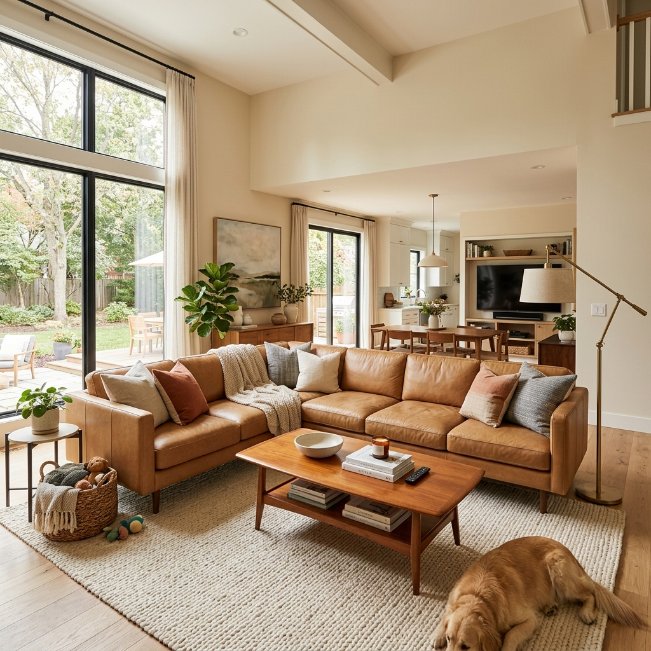
- Maximizes seating without overwhelming the room visually
- Tan leather ages beautifully and hides everyday wear
- Sectional shape works well for open-concept layouts
- A practical choice for families and frequent hosting
A tan leather sectional solves two problems at once: it provides ample seating and keeps the room’s overall tone warm and inviting. This layout works particularly well in tan brown living room ideas, where the goal is comfort that still looks polished. Unlike darker leather, tan tones stay visually lighter, which helps prevent large sectionals from making a room feel cramped or heavy. In my experience, this is one of the most requested layouts from families who need durable, practical furniture that still photographs beautifully for everyday living.
Leather also holds up remarkably well over time, developing a natural patina that many homeowners actually prefer to a brand-new look. Positioning the sectional to face a low coffee table, rather than against a wall, creates a more open, conversational layout that suits open-concept homes. Adding a rug beneath anchors the furniture and defines the seating zone within a larger space. This setup balances practicality and style, making it one of the more functional ideas for households with kids, pets, or frequent guests.
Dark Brown Wainscoting
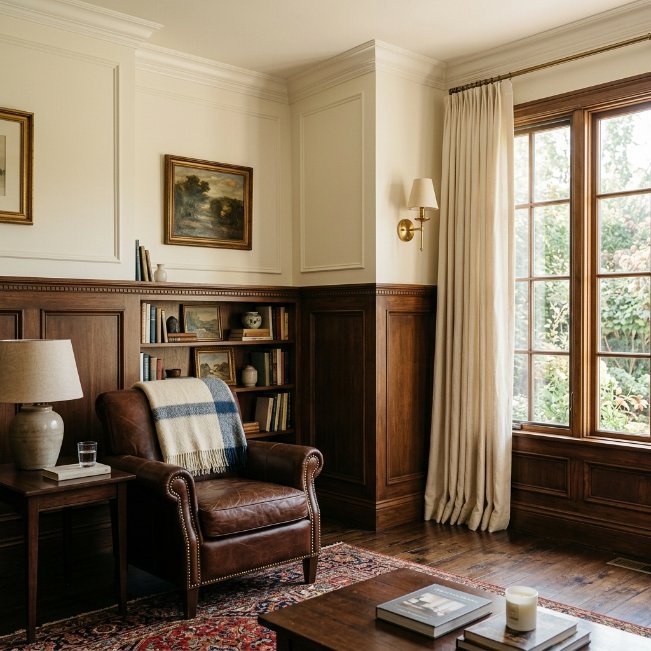
- Adds architectural detail without a full remodel
- Grounds the room with a defined lower wall tone
- Works beautifully in both traditional and modern spaces
- Creates contrast that makes ceilings feel taller
Wainscoting painted in dark brown brings a level of architectural interest that flat walls simply can’t offer. Pairing it with a lighter cream tone above creates a natural visual break, which is a favorite technique in dark brown living room ideas where depth and dimension matter. This works especially well in older homes with existing trim, though newer builds can achieve the same look with pre-cut panel kits. I’ve noticed that this detail alone can make a builder-grade room feel custom, without touching flooring, furniture, or ceiling height.
The two-tone wall effect also has a practical benefit: it hides scuffs and marks near the floor far better than an all-white wall would. This makes it a smart choice for high-traffic living rooms, especially in homes with kids or pets. Adding brass sconces or picture lights above the wainscoting line reinforces the classic, layered feel while providing extra ambient lighting in the evening. This combination of style and function is exactly why the look continues to trend across home renovation searches.
Cognac Leather Recliner
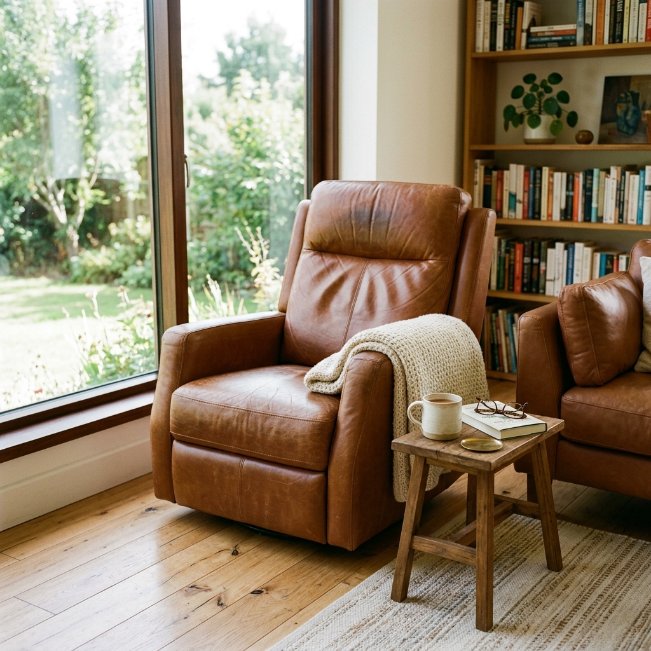
- Adds a comfortable, functional seating option
- Cognac tone brightens a darker brown color scheme
- Works well as a standalone accent piece
- Creates a dedicated relaxation spot within the room
A cognac leather recliner brings both comfort and color variation into a brown living room without disrupting the overall palette. Its lighter, warmer hue stands apart from deeper brown sofas, adding subtle contrast while still feeling like part of the same family of tones. This idea fits naturally within grey and brown living room ideas as well, since cognac leather softens cooler grey accents nearby. In my experience, homeowners often add this piece last, once the main sofa and rug are already in place, using it to fill a reading nook or unused corner.
Beyond aesthetics, a recliner serves a real functional purpose that sectionals and sofas don’t always cover comfortably. Positioning it near a window takes advantage of natural light for reading or relaxing during the day. A small side table nearby completes the look while adding practical surface space for a drink or book. This kind of dedicated seating corner is a small addition that makes a noticeable difference in how livable and personal the overall room feels.
Terracotta and Brown Palette
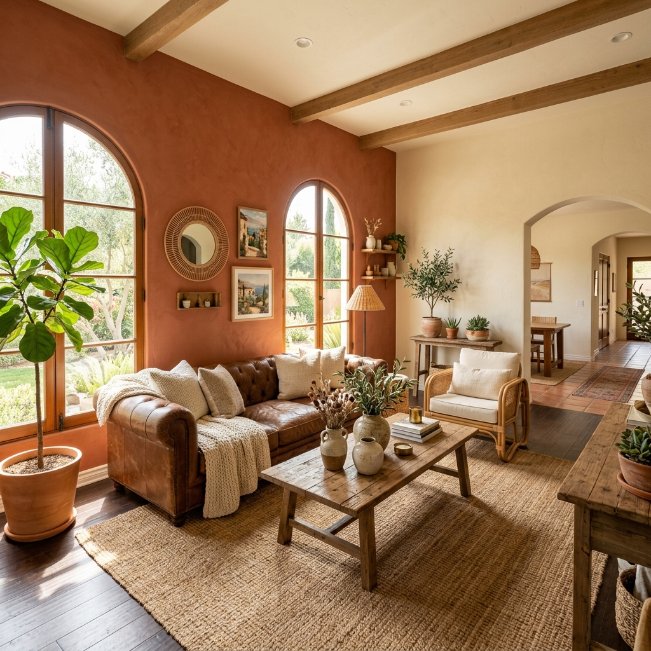
- Introduces warmth through color rather than texture
- Terracotta and brown share the same earthy undertones
- Creates a sun-drenched, Mediterranean-inspired feel
- Works well in rooms with limited natural light
Terracotta and brown share such similar warm undertones that combining them feels effortless rather than styled. A terracotta accent wall behind a brown leather sofa creates a sun-washed, grounded feeling that suits both bright rooms and spaces that don’t get much natural light. This pairing works particularly well for red and brown living room ideas, since terracotta offers that same warmth in a softer, more muted way. That’s why many designers recommend this combination for north-facing rooms that tend to feel cooler or dimmer throughout the day.
Layering in natural materials like jute rugs and wooden furniture reinforces the earthy, sun-baked feel this color pairing is known for. Ceramic vases or ceramic accents on the coffee table add another subtle textural layer that complements the terracotta tone without competing with it. This palette works especially well for anyone drawn to Mediterranean or desert-inspired interiors, since it brings warmth and richness into a space using color alone, without requiring bold pattern or heavy furniture to make an impact.
Grey Walls with Brown Furniture
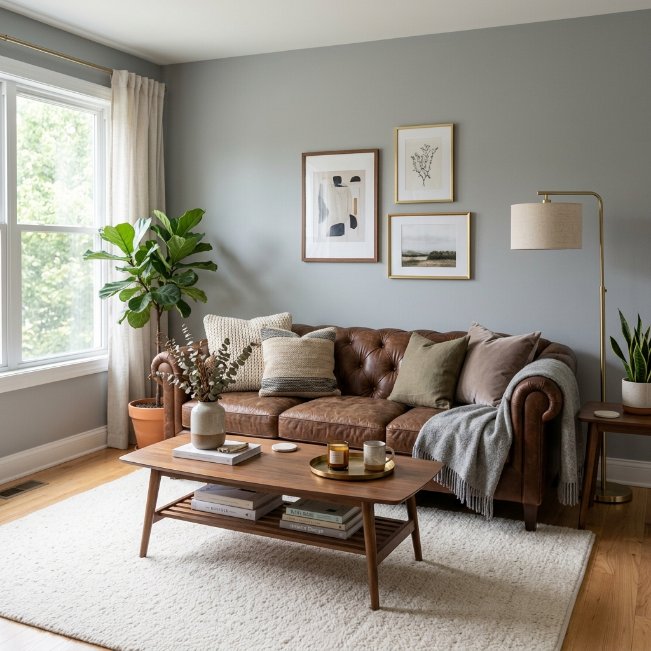
- Balances warm and cool tones in one cohesive space
- Grey keeps brown furniture from feeling too heavy
- Works well in rooms with limited natural light
- A versatile backdrop for changing decor styles over time
Grey and brown living room ideas remain popular for a simple reason: the pairing balances warmth and coolness in a way few other combinations manage. Soft grey walls create a neutral backdrop that lets brown leather or wood furniture stand out without feeling overwhelming. This works particularly well in smaller rooms, where an all-brown palette can sometimes feel closed in. I’ve noticed that choosing a grey with slightly warm undertones, rather than a stark cool grey, keeps the overall room feeling inviting rather than clinical or sterile.
This color combination also offers long-term flexibility that’s worth considering before repainting. Grey walls pair easily with nearly any accent color added later, whether that’s blush pink, mustard yellow, or deep green, which means the room can evolve without a full redesign. Brass or gold hardware bridges the two tones nicely, adding warmth back into the space. This makes grey and brown a smart foundational choice for anyone who likes to update their decor seasonally without repainting walls every time their style shifts.
Black Accents on Brown Base
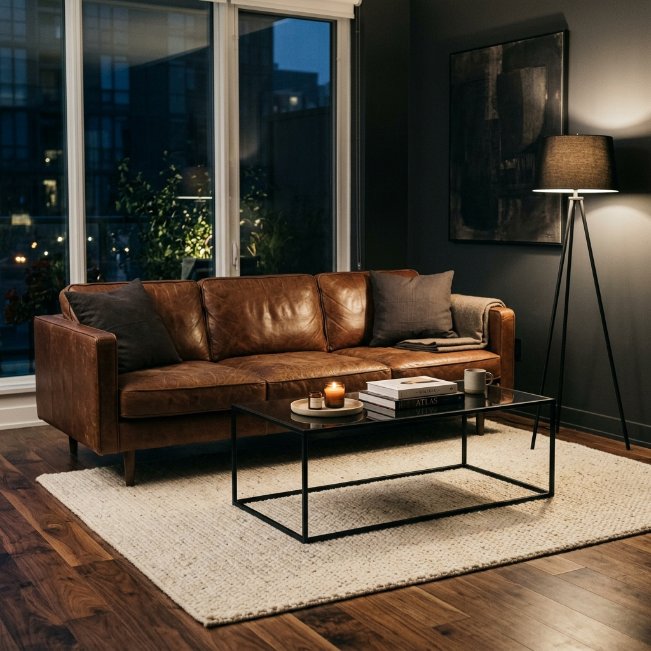
- Adds sharp, modern contrast to a warm brown base
- Black metal accents feel current without being cold
- Balances softness of leather or fabric furniture
- Works well in both small and open-concept spaces
Black and brown living room ideas bring a level of contrast that instantly modernizes a space without losing its warmth. Introducing black through a metal coffee table frame or floor lamp adds sharp definition against soft brown leather or fabric furniture. This combination photographs particularly well in evening light, when black accents catch shadow and brown tones glow warmly under lamplight. In my experience, this pairing works best when black stays limited to smaller accent pieces rather than large furniture, keeping the room from feeling too dark or heavy overall.
The key to making this palette work is restraint. A few well-placed black elements, like a picture frame, lamp base, or table legs, are usually enough to create contrast without overwhelming the warmth of brown furniture. This approach suits modern brown living room ideas especially well, since black hardware and fixtures read as clean and current. Pairing this with a cream or ivory rug keeps the overall look balanced, preventing the space from feeling too dark or visually heavy during daytime hours.
Open Shelving with Woven Baskets
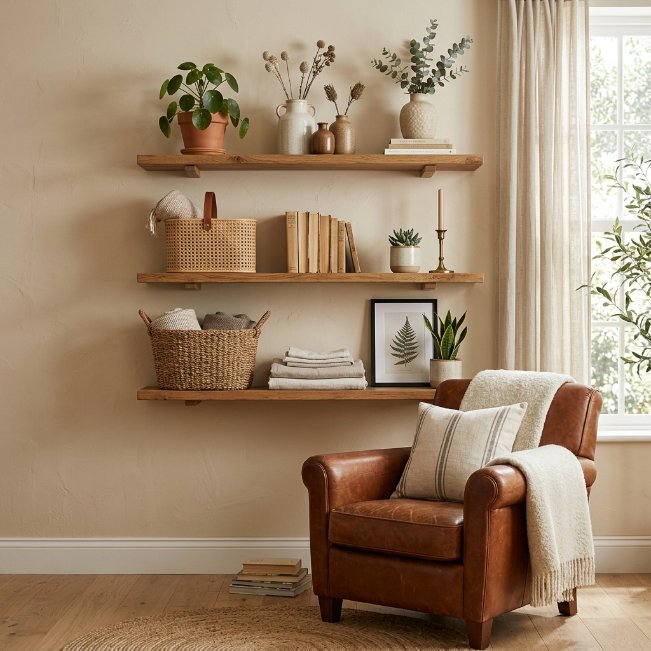
- Adds storage without visually crowding the room
- Woven baskets bring texture and hide everyday clutter
- Keeps styling flexible and easy to update seasonally
- Works well in smaller living rooms needing storage
Open shelving styled with woven baskets solves one of the most common living room struggles: storage that doesn’t look cluttered. Baskets hide remotes, blankets, or kids’ toys while adding natural texture that complements brown furniture nearby. This idea fits naturally into cream and brown living room ideas, since the wall color, shelving, and baskets all share soft, warm undertones. I’ve seen this work well in smaller apartments especially, where floor space is limited but vertical wall space often goes completely unused and unstyled.
Beyond function, open shelving offers an easy way to keep a room’s styling current without major changes. Swapping out a vase, plant, or decorative object takes minutes and instantly refreshes the look of the entire wall. This is far more practical than rearranging furniture or repainting every time your taste shifts. Positioning shelving near a seating area, rather than in an unused corner, also makes the storage genuinely useful for everyday items like books, remotes, or throw blankets that tend to pile up.
Camel Suede Ottoman
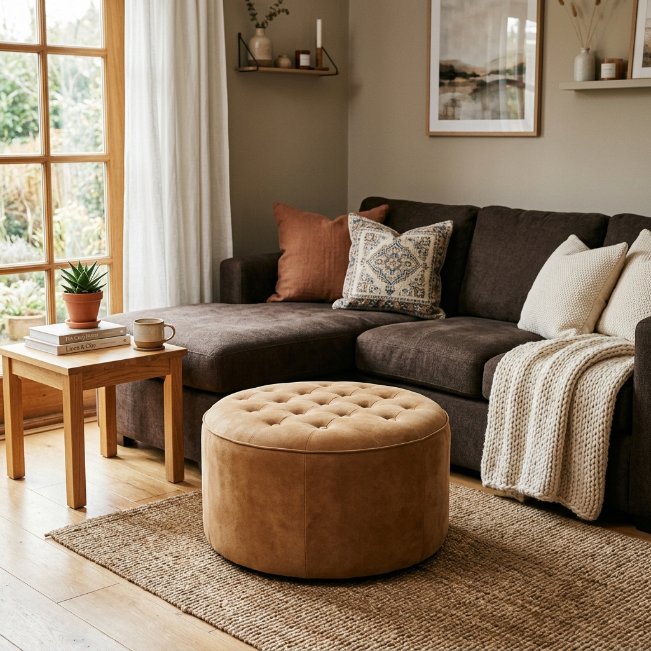
- Doubles as extra seating or a footrest
- Suede texture adds softness against leather or linen
- Camel tone bridges dark and light brown furniture pieces
- Compact size makes it ideal for smaller living rooms
A camel suede ottoman is a small piece that solves a surprisingly common problem: needing extra seating or surface space without committing to another full piece of furniture. Its soft texture contrasts nicely against leather or linen sofas, adding tactile warmth to the seating area. This works particularly well in tan brown living room ideas, where the goal is layering different shades of brown without creating visual flatness. In my experience, an ottoman is one of the easiest pieces to move around, making it genuinely useful for hosting guests or rearranging the room.
Beyond its flexibility, suede has a way of softening a room that leather alone can’t achieve. It catches light differently, creating a slightly muted, matte texture that balances glossier furniture nearby. Many ottomans also come with hidden storage, adding function without sacrificing style, which is especially useful in smaller apartments. Positioned in front of a sectional, it can double as a footrest during the day and extra seating in the evening, making it one of the more practical additions on this list.
Blue Accent Chairs
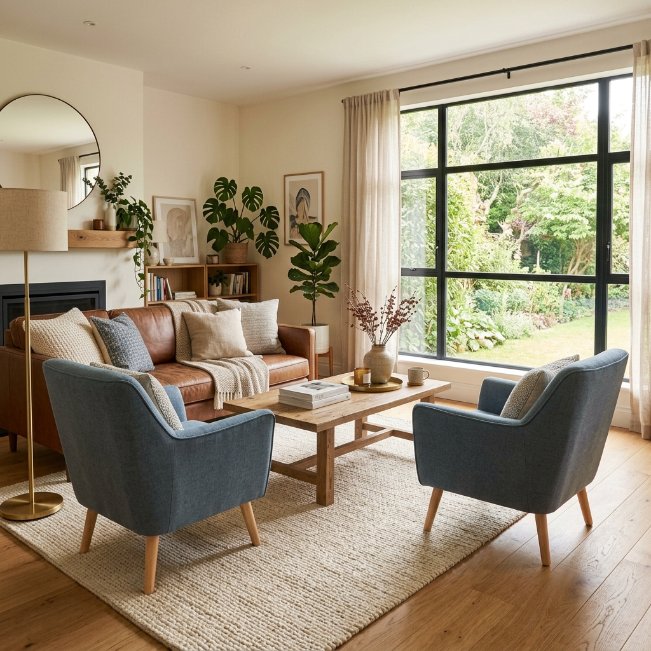
- Introduces cool color contrast into a warm brown room
- Blue and brown create a calming, balanced palette
- Chairs add flexible extra seating for conversation areas
- Works well in both traditional and transitional decor styles
Blue and brown living room ideas continue to trend because the two tones naturally balance each other, one warm and one cool, without ever feeling mismatched. Adding a pair of dusty blue accent chairs across from a brown leather sofa creates a defined conversation area while introducing color that feels calm rather than jarring. This pairing works especially well in navy blue and brown living room ideas as a softer entry point, since dusty or muted blue tones are easier to style around than bold navy walls.
I’ve noticed that symmetry plays a big role in why this combination photographs so well for Pinterest boards. Two matching chairs facing a sofa create a balanced, intentional layout that instantly looks more designed. Brass or wood accents nearby tie the cooler blue tones back into the room’s warmer brown base. This setup also works well functionally, since additional chairs provide flexible seating for gatherings without requiring a larger sectional or permanent furniture arrangement that limits how the room can be used.
Warm White Ceiling Beams
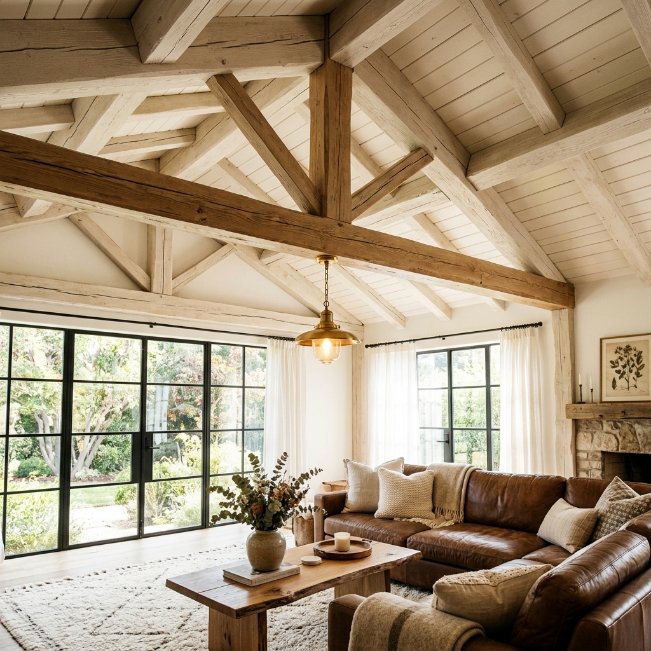
- Draws the eye upward, making ceilings feel taller
- Adds architectural warmth without heavy dark wood
- Balances brown furniture with a lighter overhead element
- Works especially well in farmhouse or transitional homes
Exposed ceiling beams painted in warm white add architectural charm to a brown living room without weighing the space down visually. Unlike dark stained beams, this lighter finish keeps the ceiling feeling open and airy, which matters most in rooms already anchored by brown furniture below. This detail suits white brown living room ideas particularly well, since the beams echo the same soft, warm white found in trim or wall accents elsewhere in the room. That’s why many designers recommend this look for farmhouse-style homes wanting warmth without heaviness.
The visual effect of beams also has a practical benefit: they draw the eye upward, making standard ceiling heights feel taller and more open. Paired with a brass pendant light, the beams add a subtle glow that highlights their texture in the evening. This combination works particularly well in open-concept spaces, where the ceiling detail helps define the living room as its own zone within a larger area, without requiring any walls or physical dividers to create that sense of separation.
Conclusion:
A brown living room isn’t just a color choice, it’s a feeling, and now you have 21 ways to create it in your own home. From cozy velvet textures to bold color pairings, every idea here is meant to be mixed, matched, and made your own. I’ve seen how small changes like a new throw pillow or a layered rug can completely shift the way a space feels, so don’t be afraid to start small and build from there. Save this post to your Pinterest board for later, try an idea this weekend, and pass it along to a friend who’s ready to fall in love with their living room again.