
Creating a calm, breezy retreat doesn’t have to feel overwhelming. These 23 coastal bedroom ideas show that even small, simple changes, like swapping in linen bedding or adding a woven accent, can completely reshape how a room feels. I’ve seen how these small shifts add up to a space that feels genuinely restful, not just styled for a photo. If even one of these ideas caught your eye, save this post to Pinterest so you can revisit it later, and try bringing it into your own space this week. Share it with a friend who’s dreaming of their own coastal retreat too.
Facebook
Twitter
LinkedIn
WhatsApp
23 Breezy Coastal Bedroom Ideas for a Serene Space
Introduction:
Ever walked into a bedroom and instantly felt calmer, like the ocean breeze followed you inside? That’s the magic a well-designed coastal bedroom can bring. If you’ve been searching for coastal bedroom ideas that feel fresh, relaxing, and easy to recreate, you’re in exactly the right place. In my experience, the most beautiful coastal spaces aren’t complicated or expensive, they’re built from a few thoughtful details layered together with intention. This guide walks through 23 simple, visually inspiring ideas you can use to transform your own bedroom into a serene, beach-inspired retreat. Whether you’re starting from scratch or refreshing a tired space, these ideas are designed to be practical, achievable, and genuinely restful.
Driftwood Accent Wall
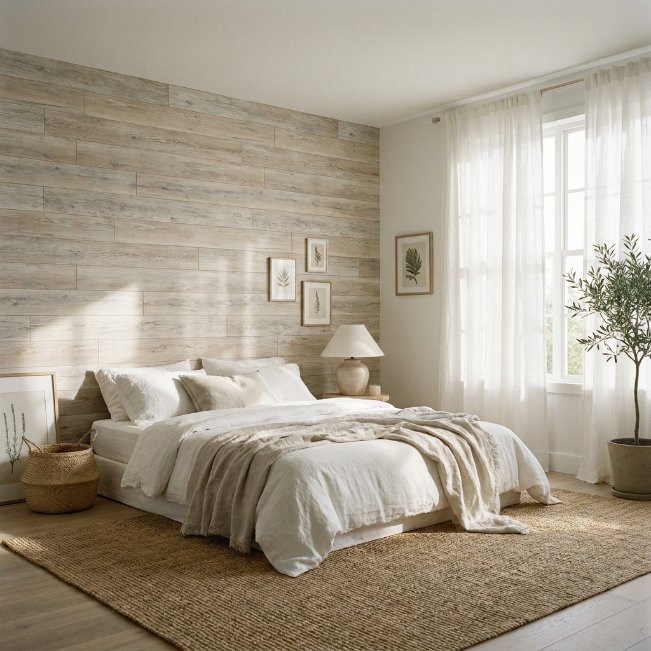
- Adds natural texture without overwhelming the space
- Brings warm, driftwood tones that soften a white bedroom
- Creates a focal point without heavy furniture
- Works well in small or large bedrooms alike
- Pairs easily with linen bedding and woven accents
Picture waking up to a wall that feels like it washed in from the shore. A driftwood accent wall instantly gives a coastal bedroom warmth and texture without adding clutter. It works because it draws the eye upward, making the room feel taller and more open. In my experience, this single feature can replace multiple decorative pieces since it already carries so much visual interest on its own. The muted tan and gray tones blend beautifully with white bedding, rope details, or linen curtains. It’s a simple upgrade that turns a plain wall into the heart of the room instantly.
This idea also solves a common decorating problem: bare, boring walls that feel unfinished. Instead of hanging multiple frames or shelves, a textured driftwood wall gives the space depth on its own. It reflects light differently throughout the day, creating shifting shadows that add movement to the room. Homeowners often notice their bedroom feels calmer and more grounded once this wall goes in. It pairs naturally with soft lighting and neutral furniture, letting the texture stay the star. This is one of those upgrades that photographs beautifully and feels genuinely better once you experience it in person every morning.
Linen Layered Bedding
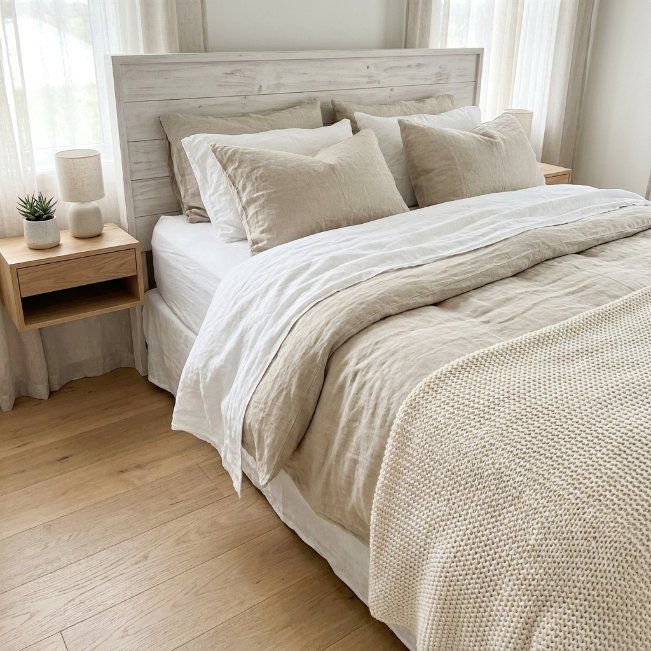
- Adds instant coziness without heavy patterns
- Keeps the color palette soft and beach-inspired
- Easy to switch up seasonally with new throws
- Gives the bed a relaxed, lived-in look
- Works with almost any coastal bedroom style
Nothing says relaxed coastal bedroom decor quite like a bed dressed in soft, wrinkled linen. Layered bedding adds texture and comfort without needing bold patterns or busy prints. It works because linen naturally has a lived-in, breezy quality that mirrors the feel of a beach house. I’ve noticed that homeowners who switch to linen sheets rarely go back to crisp cotton, simply because the relaxed look feels more inviting. Mixing white, sand, and soft blue tones keeps the palette calm. This layered approach makes the bed feel like the most comfortable spot in the entire home.
This idea solves the problem of a bedroom that looks nice but feels stiff or too formal. Linen bedding softens that look immediately, giving the room a relaxed, welcoming energy. It also photographs beautifully, since the natural creases and folds catch light in a flattering way. Many designers recommend layering different textures, like a waffle-knit throw over linen sheets, to add depth without clutter. The result is a bed that looks styled yet completely wearable day to day. This small styling choice often becomes the detail guests remember most about the room.
Rattan Headboard Nook
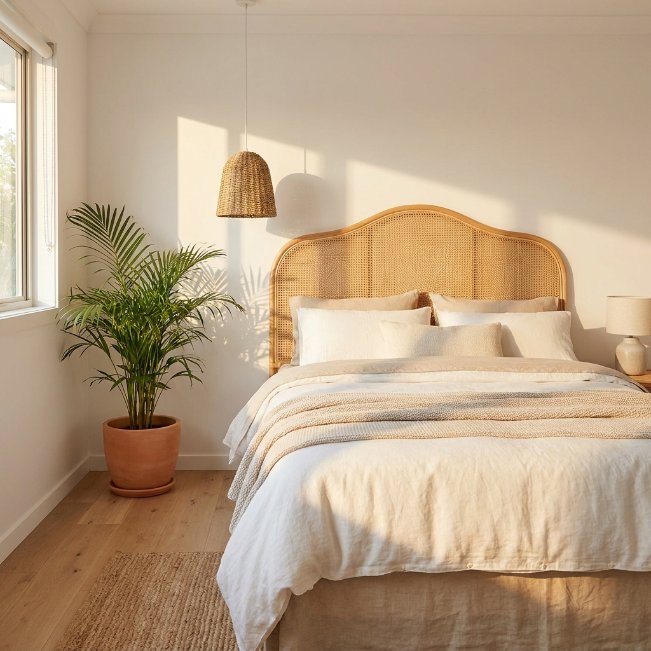
- Brings natural texture to the sleeping area
- Softens the room with warm, earthy tones
- Creates a boutique-hotel feel without a full remodel
- Pairs beautifully with white or linen bedding
- Adds visual interest above the bed instantly
A rattan headboard instantly turns a plain sleeping area into a designed focal point. This idea works so well because rattan brings warmth and natural texture without feeling heavy or overdone. It softens the hard lines of a typical bed frame and adds a handmade, organic touch that fits coastal bedroom furniture perfectly. In my experience, this single piece can make an entire room feel more finished, even if nothing else changes. The curved shapes commonly seen in rattan designs also add a gentle, calming visual rhythm above the bed that feels both stylish and effortless.
This idea also solves the problem of bedrooms that feel cold or unfinished near the headboard wall. Instead of leaving that space empty or hanging generic art, a rattan headboard fills it with texture and personality. It reflects natural light softly, creating gentle shadows that add warmth throughout the day. I’ve seen this work well in small bedrooms too, since rattan feels light rather than bulky. Pairing it with linen or cotton bedding keeps the whole space feeling airy and relaxed. It’s a detail that instantly signals thoughtful, intentional design to anyone who walks in.
Woven Jute Rug
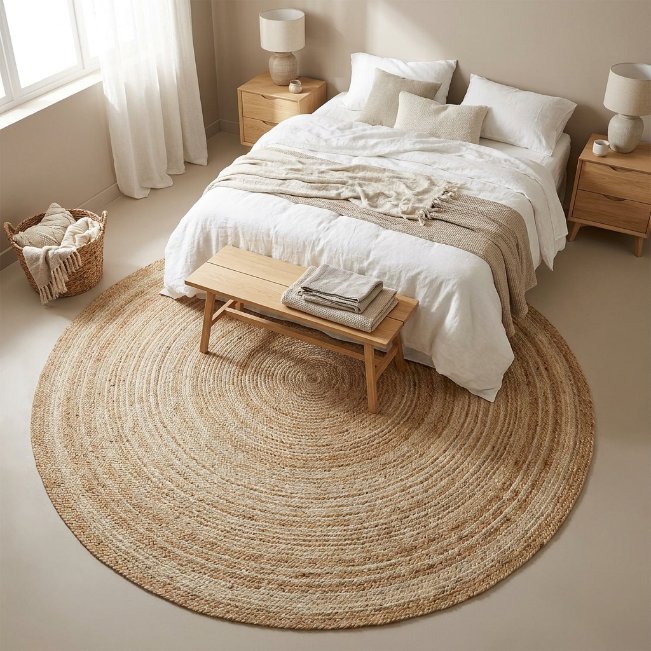
- Adds warmth and texture underfoot
- Balances a light, airy color scheme
- Hides wear better than flat weave rugs
- Brings an organic, earthy contrast to soft linens
- Affordable way to ground the whole room
A woven jute rug is one of the easiest ways to add warmth to a bedroom without changing the color scheme. This idea works because natural fiber rugs bring texture underfoot while keeping the space feeling light and breathable. In my experience, this simple swap makes a bare wood or tile floor feel instantly finished and inviting. The subtle pattern woven into jute also hides everyday footprints and shadows better than smooth, flat rugs. Layered under a bed frame or centered in an open floor area, it grounds the whole room and ties every other coastal element together beautifully.
This idea solves the common problem of bedrooms that feel cold or unfinished at floor level. A plain floor often makes even a well-decorated room look incomplete, and jute fixes that instantly. It reflects warm, earthy tones that pair naturally with linen, rattan, and driftwood accents already in the space. I’ve noticed that homeowners often underestimate how much a rug changes the overall mood of a room until they add one. It’s also a practical choice, since natural fibers tend to be durable and easy to maintain. This small addition makes the whole space feel complete and lived-in.
Ocean-Inspired Color Palette
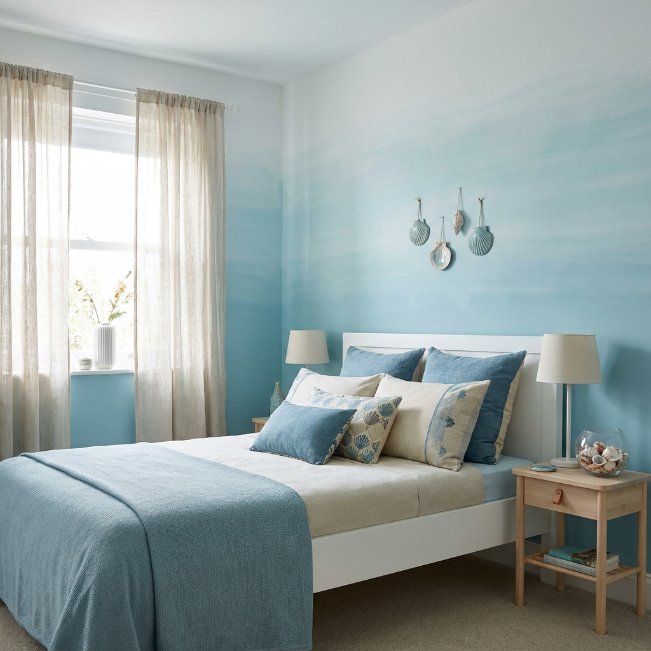
- Sets a calming, beach-like mood instantly
- Works well with both bold and soft accents
- Easy to apply through paint, textiles, or accessories
- Creates a cohesive look across the whole room
- Reflects light beautifully in sunny bedrooms
Choosing the right color palette can completely transform how a bedroom feels, and ocean-inspired tones do this effortlessly. Soft blues, sandy neutrals, and crisp whites work well together because they mimic the calming colors naturally found along the coast. It works so well because these shades reflect light beautifully, making even smaller bedrooms feel more open and airy. That’s why many designers recommend starting with color before choosing furniture, since it sets the tone for everything else in the room. A well-balanced ocean palette instantly makes a space feel peaceful, fresh, and connected to the outdoors.
This idea solves the challenge of a bedroom that feels visually busy or mismatched. Sticking to a soft, ocean-inspired palette keeps every element feeling connected, even when mixing different textures and furniture styles. It also makes future updates easier, since neutral coastal tones pair well with almost any new accent color. I’ve seen this work well in bedrooms of every size, from cozy guest rooms to larger primary suites. Choosing two or three main tones, then layering in texture, keeps the palette from feeling flat. The result is a space that feels calm, cohesive, and effortlessly put together.
Shiplap Wall Paneling
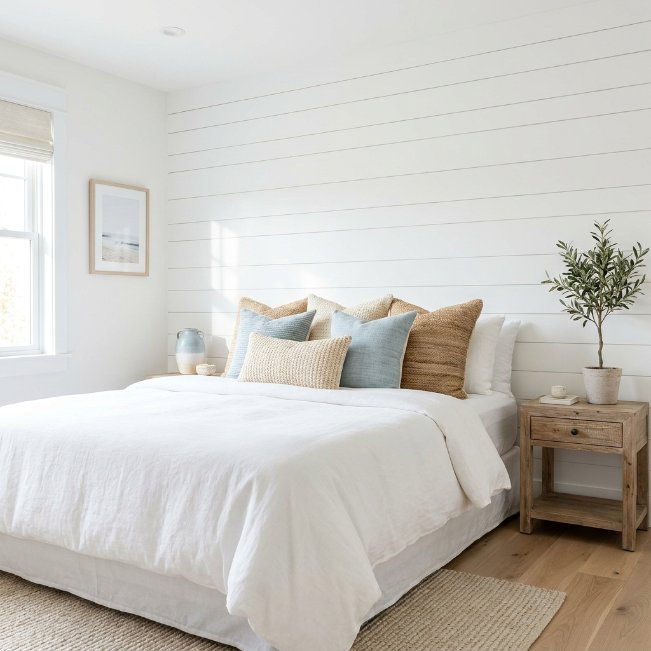
- Adds classic coastal architecture to any room
- Brightens the space with clean horizontal lines
- Works well painted white or soft neutral tones
- Pairs beautifully with natural wood furniture
- Gives a builder-grade room a custom feel
Shiplap paneling brings a timeless coastal architecture feel to a bedroom without requiring a full renovation. This idea works because the clean horizontal lines add visual interest while keeping the space feeling bright and open. It’s one of those details that instantly signals intentional design, even in a smaller or more budget-friendly room. In my experience, painting shiplap a soft white or warm neutral keeps the look airy rather than heavy. Whether used on a full wall or just behind the headboard, it creates texture without competing with other coastal bedroom furniture already in the space.
This idea also solves the problem of flat, builder-grade walls that lack character. Plain drywall often makes a room feel unfinished, and shiplap fixes that with minimal effort and cost. It reflects light in a subtle way, since the small shadow lines between each board add gentle depth throughout the day. Many designers recommend pairing shiplap with natural wood tones and soft textiles to avoid a cold or overly stark look. This detail works in both modern and traditional coastal bedrooms alike. It’s a simple upgrade that makes a lasting visual impact on the entire room.
Woven Pendant Light
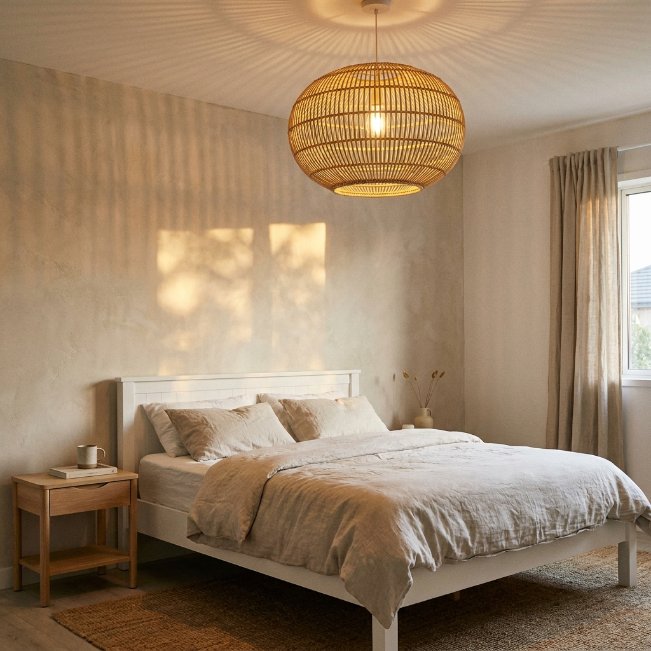
- Adds soft, natural texture overhead
- Casts warm, dappled lighting patterns
- Replaces bulky lamps with a sculptural piece
- Works well in low-ceiling or small rooms
- Brings a handcrafted, boutique feel
A woven pendant light instantly elevates a bedroom ceiling that often gets overlooked in the design process. This idea works because natural rattan or seagrass shades cast warm, dappled shadows that add movement and softness to the room. It’s a small change with a big visual payoff, especially in the evening when the light glows through the woven texture. In my experience, swapping a plain overhead fixture for a woven pendant instantly makes the room feel more curated and intentional. It also frees up nightstand space since it removes the need for a bulky table lamp beside the bed.
This idea solves the problem of overhead lighting that feels harsh or overly modern in a relaxed coastal space. A woven pendant softens that glare, creating a warmer and more inviting glow throughout the room. It reflects light in a way that feels organic rather than sharp, which suits the relaxed mood coastal bedrooms are known for. I’ve seen this work well even in bedrooms with lower ceilings, since the natural material keeps the fixture from feeling heavy. Paired with dimmable bulbs, it becomes a cozy focal point that transforms the entire feel of the room after sunset.
Whitewashed Wood Furniture
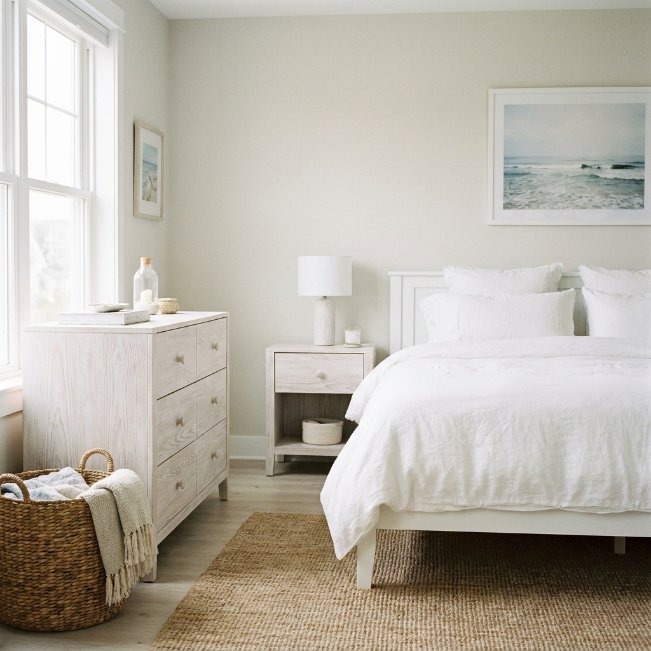
- Lightens the overall look of the room
- Keeps furniture feeling airy, not bulky
- Complements natural textures like rattan and jute
- Works well in both small and large bedrooms
- Adds subtle grain texture without heavy staining
Whitewashed wood furniture brings a soft, sun-bleached look that feels straight out of a beach cottage. This idea works because the light finish keeps pieces from feeling bulky or dark, even when they’re large dressers or nightstands. It’s one of the easiest ways to modernize older wood furniture without buying anything new. That’s why many designers recommend this update for homeowners on a budget who still want a coastal bedroom look. The subtle grain that shows through the whitewash adds texture without pulling focus away from other soft, layered details already in the room.
This idea also solves the problem of heavy, dark furniture that makes a bedroom feel smaller than it actually is. Whitewashing lightens the visual weight of each piece, helping the whole room feel more open and breathable. It reflects natural light beautifully, especially in bedrooms with big windows or lots of daytime sun. I’ve noticed that this finish also hides small scuffs and imperfections better than solid paint, which makes it practical for everyday furniture. Paired with linen bedding and woven textures, it completes a relaxed, cohesive coastal bedroom look without feeling overly styled.
Sheer Linen Curtains
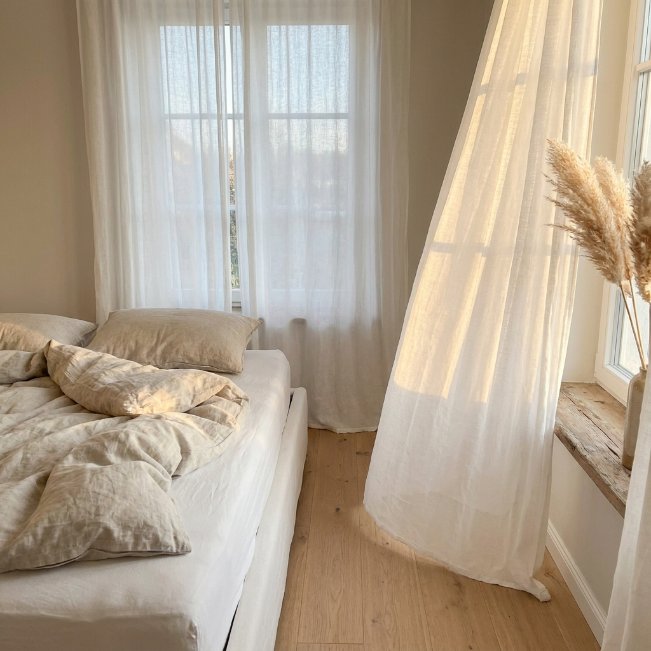
- Softens natural light throughout the day
- Adds movement with gentle, airy fabric
- Keeps windows feeling open, not closed off
- Pairs beautifully with wood and rattan tones
- Easy, affordable way to finish a room
Sheer linen curtains are one of the simplest ways to soften a bedroom window while still letting natural light pour in. This idea works because the lightweight fabric filters harsh sunlight into a soft, diffused glow that feels calming throughout the day. It’s a detail that instantly makes a room feel finished, even if the rest of the decor stays minimal. In my experience, this small addition often gets more compliments than larger furniture pieces, thanks to the soft movement it brings. Paired with a wood rod, it keeps the window area feeling natural and relaxed.
This idea solves the problem of windows that feel bare or overly exposed without blocking valuable daylight. Heavy curtains often darken a room, but sheer linen keeps the space bright while still adding privacy and softness. It reflects light gently, creating subtle shadows that shift throughout the day as the fabric moves. Many designers recommend layering sheer panels with a simple wood rod to keep the look effortless rather than fussy. This finishing touch ties the whole coastal bedroom together, making the space feel complete, breezy, and ready for relaxation at any time of day.
Nautical Rope Details
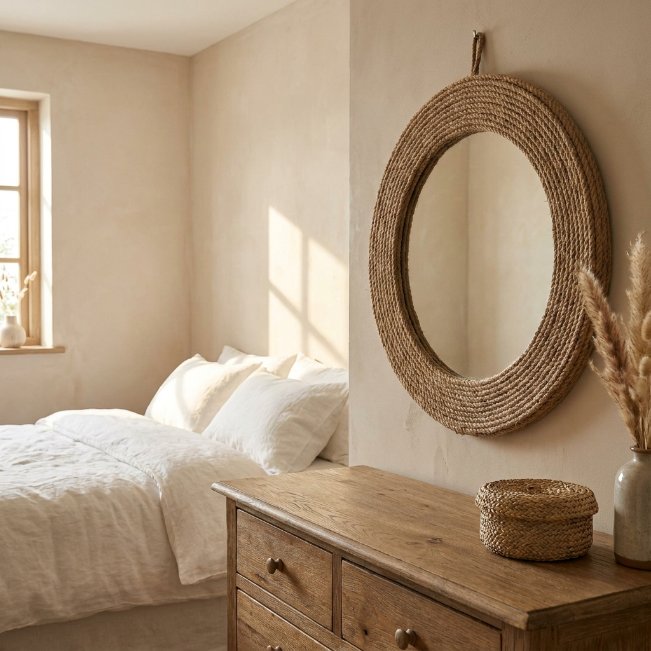
- Adds subtle seaside charm without feeling themed
- Works well on mirrors, lamps, or headboards
- Brings texture in small, easy doses
- Pairs naturally with wood and linen tones
- Inexpensive way to enhance existing decor
Nautical rope details bring a subtle sense of the seaside into a bedroom without making the space feel overly themed. This idea works because a thin rope wrap on a mirror frame, lamp base, or headboard adds texture in a small, controlled way. It’s one of those finishing touches that feels intentional rather than decorative for decoration’s sake. In my experience, small rope accents work best when paired with simple, neutral furniture, since the texture becomes the focal point rather than competing with busy patterns. This detail adds just enough character to remind you of the coast.
This idea solves the problem of decor that feels flat or too plain without adding clutter. A little rope detail goes a long way, giving existing furniture and accessories a fresh, coastal-inspired update. It reflects a handcrafted quality that pairs beautifully with natural wood tones and woven textures already in the room. I’ve noticed that homeowners often reach for this update last, once the bigger pieces are in place, since it’s an easy way to tie loose ends together. This small addition finishes the room with a relaxed, seaside charm that feels effortless rather than forced.
Layered Textured Pillows
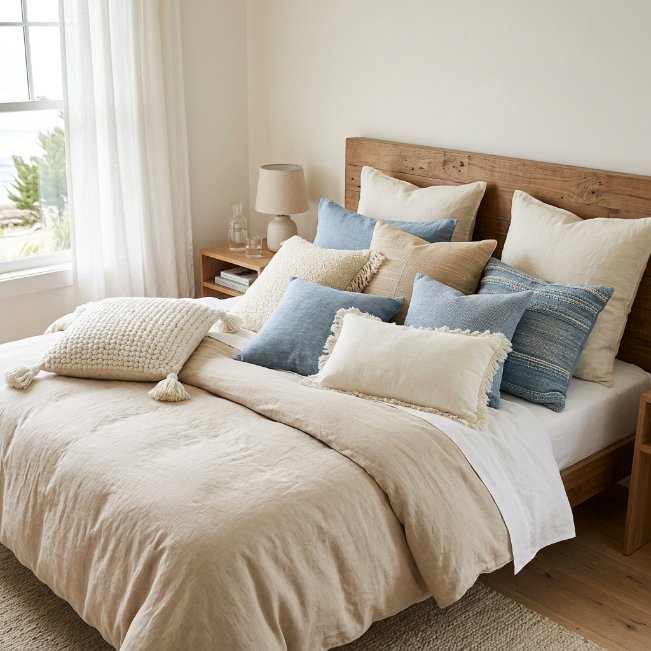
- Adds instant comfort and visual depth
- Mixes textures without clashing colors
- Easy to update with the seasons
- Makes the bed feel fuller and more inviting
- Simple way to tie the room’s palette together
Layered textured pillows turn a simple bed into the most inviting part of the room. This idea works because mixing different textures, like linen, knit, and woven cotton, adds depth without needing extra color. It’s an easy update that makes even a plain bed frame feel styled and complete. In my experience, keeping the color palette limited to two or three shades while varying the textures creates the most balanced look. This approach avoids the cluttered feeling that comes from too many patterns, while still giving the bed enough visual interest to feel finished and genuinely welcoming.
This idea solves the problem of a bed that looks flat or unfinished despite having nice bedding. Adding a mix of textures instantly gives the space more depth and comfort, both visually and physically. It reflects light differently across each fabric, creating subtle contrast that photographs beautifully for any coastal bedroom feature. Many designers recommend starting with two large pillows, then layering smaller accent pillows in front for balance. This simple styling trick works in bedrooms of every size and budget. It’s a detail that makes the whole room feel more finished in minutes.
Woven Storage Baskets
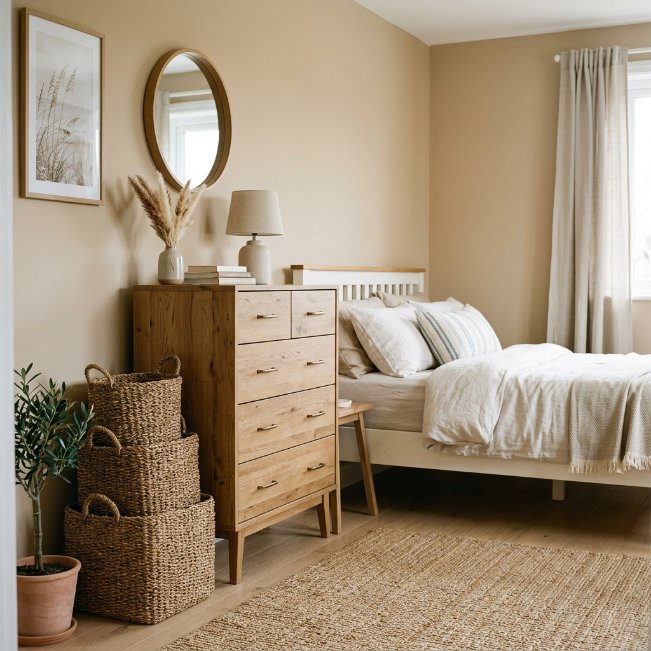
- Adds hidden storage without sacrificing style
- Brings natural texture to corners and shelves
- Keeps the room looking tidy and organized
- Works well under beds or beside dressers
- Affordable way to add coastal charm
Woven storage baskets solve two problems at once: they add natural texture while giving the room extra, much-needed storage. This idea works because baskets tuck away blankets, shoes, or extra pillows without looking like typical plastic bins. It’s a practical upgrade that still supports the relaxed, coastal bedroom look throughout the space. In my experience, using two or three different basket sizes creates a more natural, layered look than matching a single uniform set. Tucked under a bed, beside a dresser, or stacked in a corner, they quietly keep the room organized and visually calm.
This idea also solves the challenge of storage solutions that feel cold or overly industrial in a soft, relaxed bedroom. Woven baskets bring warmth instead, blending function with natural coastal texture. They reflect light softly, adding subtle shadow and depth to otherwise plain corners of the room. I’ve seen this work well in smaller bedrooms especially, since baskets keep everyday items out of sight without needing bulky furniture. Paired with linen, rattan, and driftwood accents, storage baskets complete the room’s texture story while solving a very real, everyday organizational need.
Wood Blade Ceiling Fan
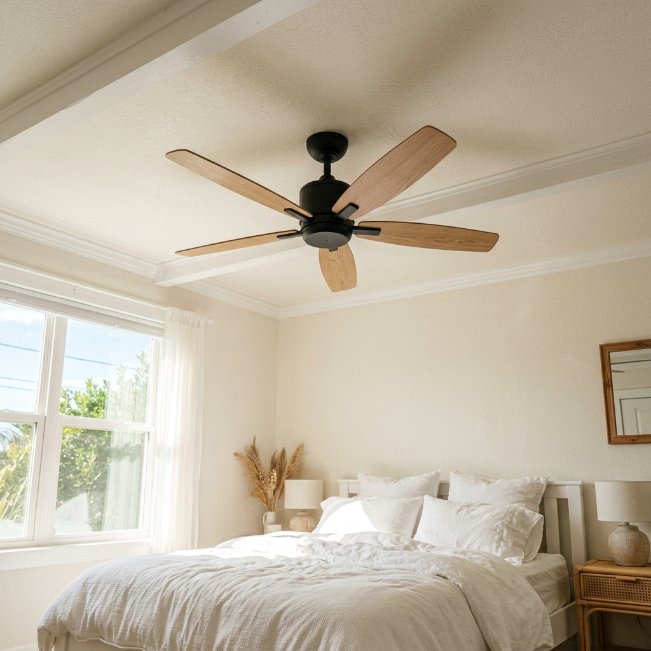
- Adds function without sacrificing style
- Brings warm wood tones to the ceiling
- Keeps the room cool during warmer months
- Works well in both modern and classic coastal spaces
- Replaces a plain fixture with real character
A wood blade ceiling fan brings function and style together in a way that plain fixtures rarely achieve. This idea works because natural wood tones soften the look of a fan, making it feel more like a design feature than a practical necessity. It’s especially useful in warmer climates, where coastal bedrooms rely on gentle airflow to stay comfortable without heavy air conditioning. In my experience, this small upgrade often gets overlooked until homeowners see how much warmth it adds to an otherwise plain ceiling. Paired with a matte black or brushed finish, it feels current while still relaxed.
This idea solves the problem of ceiling fixtures that feel outdated or purely functional with no visual appeal. A wood blade fan changes that instantly, adding texture to a part of the room that’s often ignored. It reflects the same natural materials found throughout the space, tying the ceiling into the overall coastal bedroom theme. I’ve noticed that homeowners are often surprised by how much a fan upgrade changes the feel of a room, even without touching the walls or furniture. This detail proves that even practical items can support a cohesive, relaxed design.
Coastal Gallery Wall
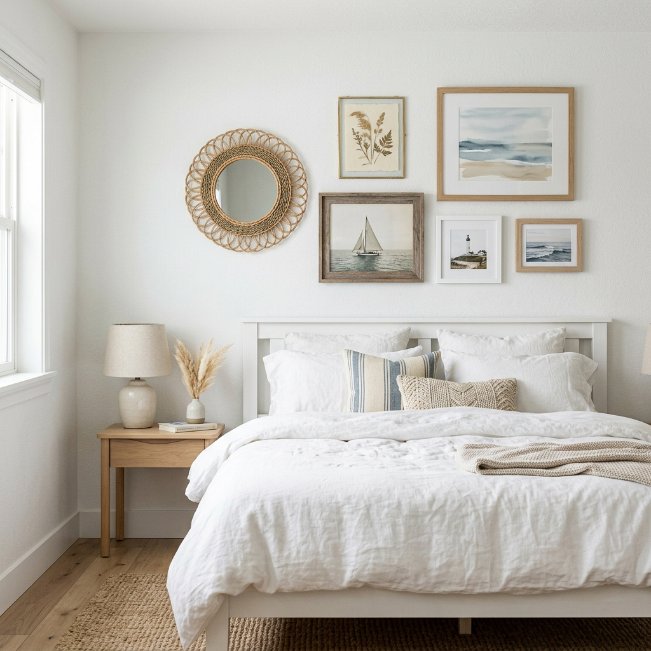
- Adds personality without overwhelming the space
- Mixes art, mirrors, and woven textures
- Creates a curated, collected-over-time feel
- Works above the bed or on an empty wall
- Easy to update as style evolves
A coastal gallery wall gives a bedroom personality without relying on one large, dominant piece of art. This idea works because mixing frames, mirrors, and small woven pieces creates a layered, collected look that feels personal and intentional. It’s a flexible option, since pieces can be swapped or rearranged as your style naturally evolves over time. In my experience, keeping the color palette consistent across all pieces, even with different shapes and textures, makes the wall feel curated rather than cluttered. This idea works especially well above a headboard, where a single piece of art often feels too plain.
This idea solves the problem of a blank wall that feels unfinished no matter what furniture surrounds it. A gallery arrangement fills that space with visual interest while still allowing the eye to rest between pieces. It reflects a relaxed, gathered-over-time feeling that mirrors how real homes naturally evolve. Many designers recommend starting with a large anchor piece, then building outward with smaller frames and textures. This approach keeps the wall balanced rather than random. The result is a wall that feels personal, layered, and full of quiet visual storytelling.
Grasscloth Wallpaper Accent
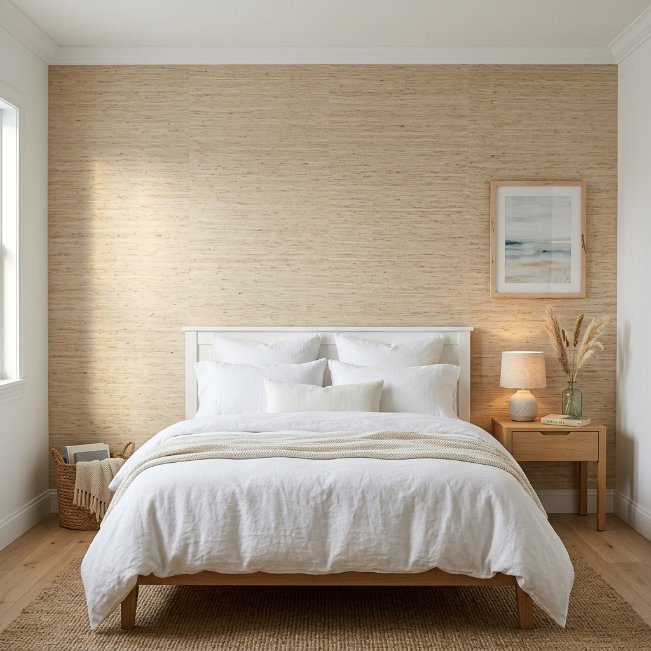
- Adds subtle texture without heavy pattern
- Brings warmth to an accent wall
- Works beautifully behind the headboard
- Pairs naturally with wood and linen tones
- Elevates the room without a full renovation
Grasscloth wallpaper adds a subtle layer of texture that paint alone simply can’t achieve. This idea works because the natural woven material brings warmth and depth to a single accent wall without overwhelming the room. It’s a popular choice behind the headboard, where it frames the bed and adds visual richness to an otherwise plain surface. In my experience, sticking to soft beige or sandy tones keeps the look calm rather than busy, letting the texture do most of the work. This detail elevates a bedroom instantly, giving it a designer feel without requiring a full renovation.
This idea solves the problem of a headboard wall that feels flat compared to the rest of a well-styled room. Grasscloth wallpaper fixes that with subtle texture that catches light differently throughout the day. It reflects warmth and softness, unlike smooth painted walls that can sometimes feel cold or sterile. I’ve seen this work well in both small and large bedrooms, since the texture adds interest without demanding attention or overwhelming the color scheme. Paired with linen bedding and natural wood furniture, this wallpaper choice completes the coastal bedroom look with quiet, understated elegance that feels timeless.
Canopy Bed Frame
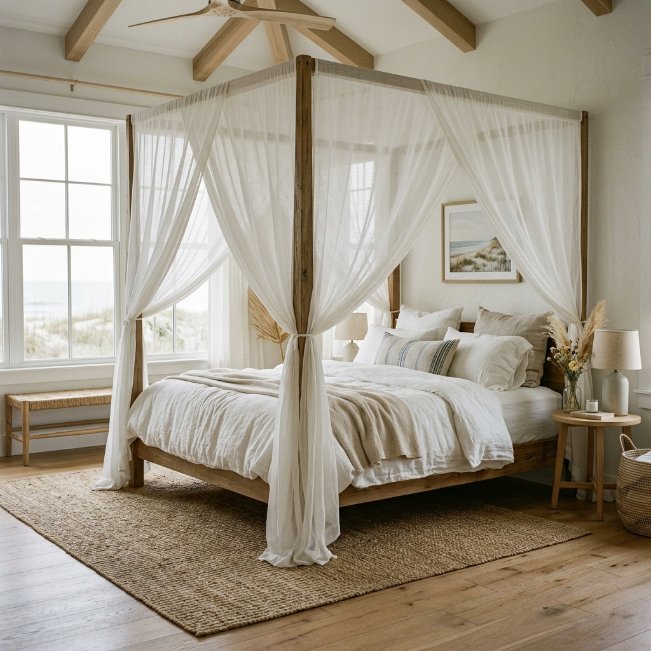
- Adds a dreamy, airy focal point
- Softens the room with flowing fabric
- Creates height without heavy furniture
- Works well with sheer or linen drapes
- Elevates a simple bed into a statement piece
A canopy bed frame instantly transforms a simple bedroom into a soft, dreamy retreat. This idea works because the vertical lines draw the eye upward, adding height and drama without requiring a large room. Draping the frame with sheer or linen fabric keeps the look airy rather than heavy, which fits the relaxed coastal bedroom aesthetic perfectly. In my experience, this piece often becomes the centerpiece of the entire room, with everything else styled to support it. Even a basic wood frame, left mostly bare, adds architectural interest that a standard bed simply cannot achieve on its own.
This idea solves the problem of a bed that feels plain or lost in a larger room. A canopy frame gives the bed presence and structure, making it the clear focal point the space needs. It reflects softness through flowing fabric, which moves gently with airflow and adds a sense of calm to the room. Many designers recommend keeping the surrounding furniture simple when using a canopy bed, so the frame itself doesn’t compete for attention. This approach creates a balanced, elegant look that feels both cozy and intentional, perfect for a relaxed coastal bedroom retreat.
Botanical Accent Plants
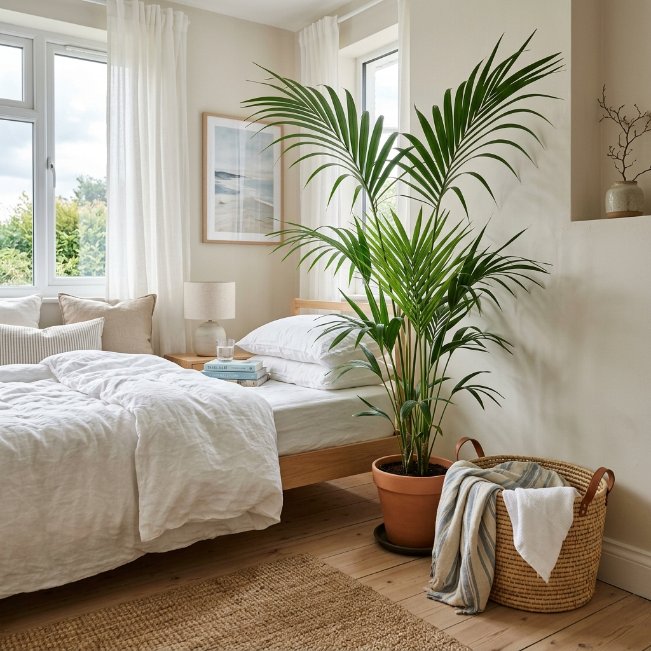
- Brings a fresh, natural element indoors
- Adds color without needing bold decor
- Softens hard lines of furniture and walls
- Easy and affordable way to add life
- Works on nightstands, corners, or windowsills
Adding a botanical accent plant brings life and color into a bedroom without needing bold patterns or busy decor. This idea works because greenery naturally softens the hard lines of furniture, walls, and flooring, creating a more organic, relaxed feel. It’s one of the simplest and most affordable updates on this list, yet it makes a noticeable difference in how fresh and finished a room feels. In my experience, taller plants placed in a corner add height and visual interest, while smaller potted plants on a nightstand bring a softer, more personal touch to the space.
This idea solves the problem of a room that feels sterile or overly styled without any natural elements. A single plant breaks up that stiffness, adding movement and organic texture that furniture alone can’t provide. It reflects the calming, natural inspiration behind coastal design, connecting the indoor space to the outdoors. I’ve noticed that even low-maintenance plants make a noticeable difference in how alive and welcoming a bedroom feels day to day. Paired with woven baskets or rattan accents, this small addition rounds out the room’s natural, breezy character beautifully.
Woven Bench Seating
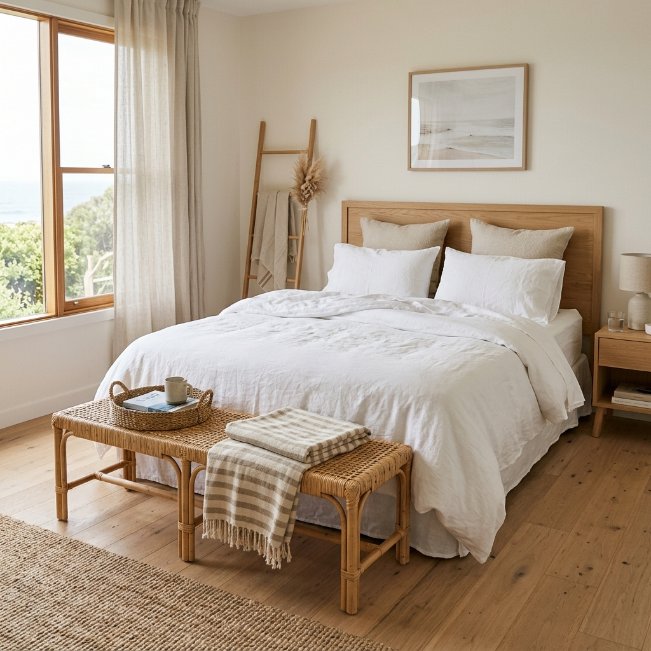
- Adds functional seating at the foot of the bed
- Brings natural texture to an often-overlooked spot
- Doubles as a spot for folded throws or bags
- Softens the visual weight of larger furniture
- Fits both small and spacious bedrooms
A woven bench at the foot of the bed adds both function and texture to a spot that’s often left empty. This idea works because it gives the room a practical landing space for shoes, bags, or folded throws, while still supporting the relaxed coastal bedroom look. It’s a detail that feels intentional rather than purely decorative, which is part of why it works so well in real, everyday homes. In my experience, a woven or rattan bench softens the visual weight of a larger bed frame, keeping the whole footprint of the furniture feeling light and open.
This idea solves the problem of an empty, awkward space at the foot of the bed that often goes unused. A bench fills that gap with purpose, adding seating while reinforcing the room’s natural material palette. It reflects the same woven textures found in headboards, pendants, or baskets, tying the whole room together visually. I’ve seen this work well in bedrooms of nearly every size, since benches come in various widths to fit the available space. This small addition makes the room feel more finished, functional, and thoughtfully designed from every angle.
Wood Beam Ceiling
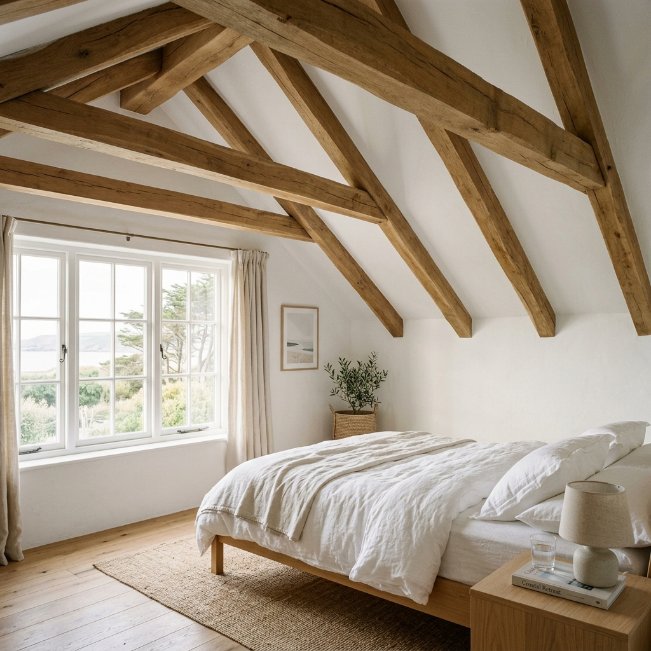
- Adds architectural charm overhead
- Brings warmth to an often-overlooked space
- Creates a cozy, cabin-meets-coast feel
- Works well with white or light walls
- Adds dimension without extra furniture
Exposed wood beams bring architectural charm to a part of the room that’s easy to overlook. This idea works because the natural wood tone adds warmth against white or light-colored walls, creating a cozy contrast that feels both rustic and coastal. It’s a detail that instantly elevates a plain ceiling into something worth noticing. In my experience, this feature works especially well in rooms with higher ceilings, where the beams add depth and prevent the space from feeling too empty overhead. Even a single accent beam can make a noticeable difference in how finished the room feels.
This idea solves the problem of ceilings that feel flat and forgettable compared to the rest of a styled room. Wood beams draw the eye upward, adding dimension without requiring any extra furniture or floor space. They reflect the same natural material story found in flooring, headboards, and furniture throughout coastal bedroom design. I’ve seen this work particularly well in converted attic spaces or rooms with slanted ceilings, where the beams highlight the architecture rather than hide it. This detail brings a cabin-meets-coast warmth that feels both grounded and relaxed.
Cane Dresser Accent
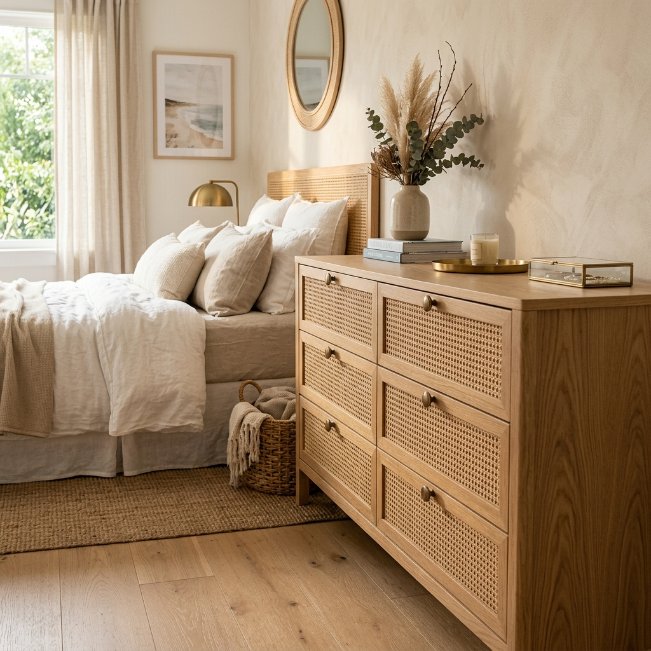
- Adds delicate texture to storage furniture
- Softens the look of a solid wood piece
- Brings a vintage, handcrafted charm
- Pairs well with brass or wood hardware
- Elevates a plain dresser instantly
A cane-front dresser adds delicate texture to a piece of furniture that’s often overlooked in the design process. This idea works because the woven inserts soften the solid, boxy look of a typical dresser, giving it a lighter, more handcrafted feel. It’s a detail that photographs beautifully thanks to the intricate pattern catching light in different ways throughout the day. In my experience, pairing cane furniture with brass or warm wood hardware creates a slightly vintage, collected look that fits coastal bedroom furniture especially well. This upgrade turns a purely functional piece into a genuine style statement.
This idea solves the problem of storage furniture that feels heavy or purely practical with no visual interest. Cane detailing lightens that look immediately, giving the dresser texture without adding bulk to the room. It reflects light through its woven pattern, creating subtle shadow play that adds movement to an otherwise static piece. Many designers recommend using cane furniture as a focal point paired with simpler, solid pieces elsewhere in the room to keep the balance right. This detail brings warmth and character to a bedroom without requiring a full furniture overhaul.
Warm Bedside Lamps
- Adds a soft, cozy glow in the evening
- Balances out overhead lighting
- Easy way to introduce texture or color
- Creates a relaxing pre-sleep atmosphere
- Works on nightstands or wall-mounted sconces
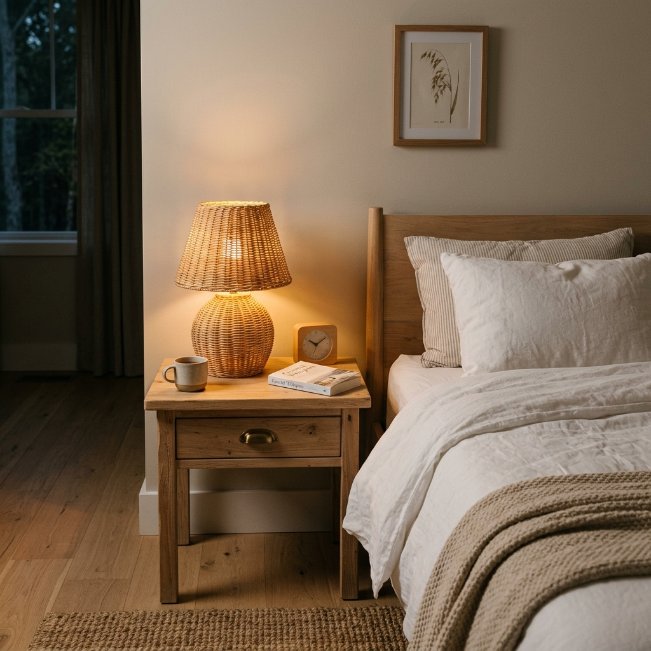
Warm bedside lamps do more than provide light, they set the entire mood of a bedroom in the evening. This idea works because soft, warm-toned bulbs create a relaxing glow that overhead lighting simply can’t replicate. It’s an easy and affordable update that makes a noticeable difference every single night. In my experience, choosing lamps with woven or textured shades adds another layer of natural material to the room, tying the lighting into the overall coastal bedroom look. This small detail becomes part of the nightly routine, signaling to the body that it’s time to slow down and relax.
This idea solves the problem of bedrooms that rely only on bright, overhead lighting with no softer options. Bedside lamps fix that by offering a gentler alternative for reading or winding down before sleep. They reflect a warm, golden tone that flatters the room’s natural materials far better than cool, harsh light. I’ve noticed that homeowners who add warm lamps on both sides of the bed create a more balanced, symmetrical look that also feels more functional for two people. This simple lighting choice makes the whole room feel calmer and more intentional after dark.
Wool Throw Blanket
- Adds cozy texture for cooler months
- Balances lightweight linen with warmth
- Easy accent color or pattern option
- Simple way to layer the bed further
- Doubles as a decorative folded accent
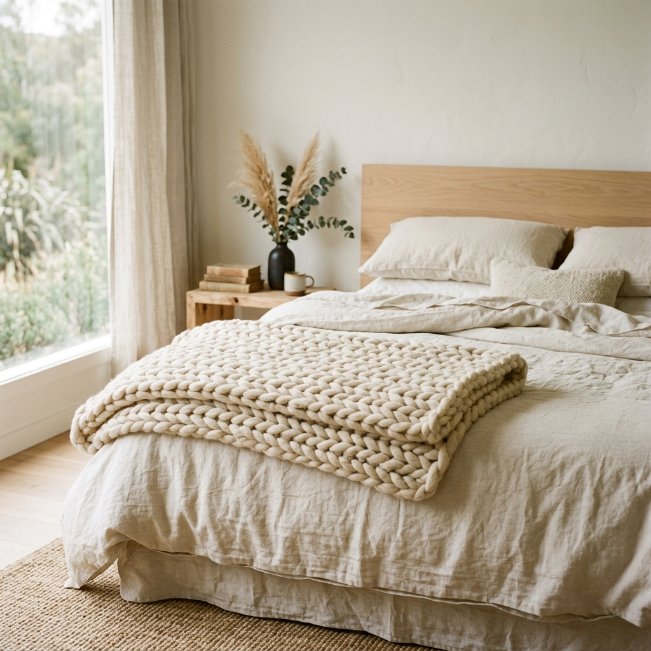
A wool throw blanket adds cozy texture to a coastal bedroom without disrupting its light, breezy feel. This idea works because the chunky knit contrasts beautifully with smooth linen sheets, giving the bed extra depth and warmth for cooler evenings. It’s a simple styling trick that instantly makes the bed look more finished and inviting. In my experience, folding the throw loosely at the foot of the bed, rather than perfectly straight, creates a more relaxed, natural look that fits the coastal aesthetic. This small layer becomes both a functional comfort item and a decorative styling piece.
This idea solves the problem of bedding that looks nice in warmer months but feels incomplete once the weather cools. A wool throw bridges that gap, adding practical warmth without covering up the lighter linen tones underneath. It reflects a lived-in, cozy quality that makes the bed feel genuinely inviting rather than just visually staged. Many designers recommend choosing a cream, oatmeal, or soft gray throw to keep the palette consistent with other coastal bedroom furniture. This finishing touch proves that comfort and style can absolutely work together in the same small detail.
Minimal Nightstand Styling
- Keeps the space feeling calm and uncluttered
- Highlights a few meaningful decor pieces
- Makes small rooms feel more spacious
- Easy to maintain day to day
- Completes the room’s relaxed, curated look
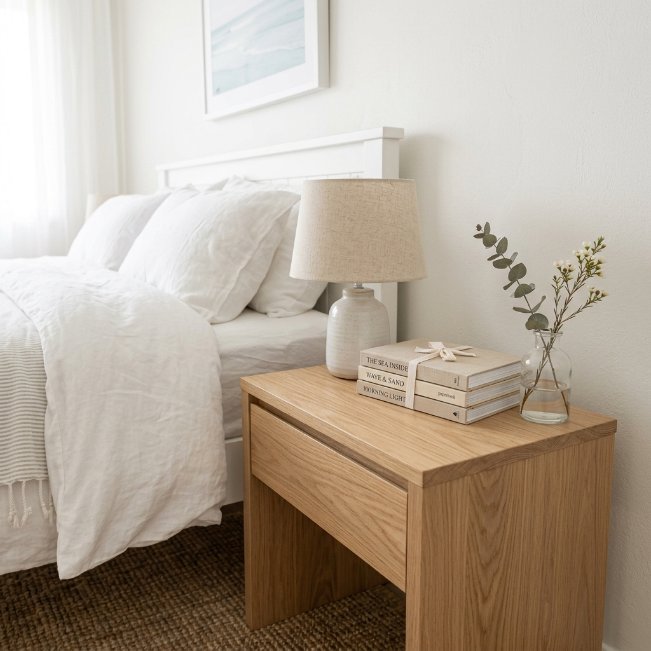
Minimal nightstand styling brings the whole coastal bedroom look together with a calm, uncluttered finish. This idea works because limiting each nightstand to two or three items keeps the space feeling open rather than crowded. It’s often the last styling step, but it makes a noticeable difference in how polished the entire room feels. In my experience, choosing one functional item, like a lamp, alongside one or two decorative pieces, such as a small vase or stack of books, creates balance without looking sparse. This simple approach keeps the eye moving smoothly through the room instead of stopping on clutter.
This idea solves the problem of nightstands that quietly become catch-alls for random items over time. Keeping the surface simple prevents that buildup, which helps the whole bedroom feel more spacious and restful. It reflects the same calm, intentional approach found throughout the rest of a well-designed coastal bedroom. I’ve noticed that this final styling step is often what separates a room that looks put together from one that simply has nice furniture. Paired with soft lighting and a few natural textures, minimal nightstand styling completes the room with quiet, lasting charm.